Indian Councils Act, 1861
Content
- Introduction
- Background and Causes
- Objectives
- Key Provisions
- Significance of the Act
- Limitations of the Act
- Conclusion
- FAQs
Introduction
The Indian Councils Act, 1861 occupies a significant position in the constitutional history of India. Enacted by the British Parliament in the aftermath of the Revolt of 1857, the Act represented a shift in British administrative policy from complete exclusion of Indians to limited association with governance. It sought to improve administrative efficiency, strengthen British control, and create a framework for involving selected Indians in legislative activities.
The Act is particularly important because it initiated the process of legislative decentralization, introduced the Portfolio System on a statutory basis, and laid the foundation for the gradual constitutional development that eventually culminated in representative institutions in India. Although the reforms were limited and primarily designed to safeguard British interests, the Act marked the beginning of a new phase in colonial administration.
Background
The immediate background of the Indian Councils Act, 1861 was the Revolt of 1857, which exposed the weaknesses of the existing administrative system. The revolt demonstrated that the British could no longer govern India effectively without securing the cooperation of influential sections of Indian society. The rebellion also highlighted the dangers of excessive centralization and the complete exclusion of Indians from the decision-making process.
Following the revolt, the British Parliament passed the Government of India Act, 1858, which transferred the administration of India from the East India Company to the British Crown. However, the transfer of power alone could not address the deeper administrative and political issues that had emerged. Consequently, the British government adopted a policy of associating Indians with administration while retaining effective control in British hands.
The Indian Councils Act, 1861 was enacted as part of this broader strategy. It was intended to secure the loyalty of Indian princes and elites, improve administrative efficiency, and restore a degree of legislative authority to the provinces. In this sense, the Act marked the beginning of the British policy of constitutional reforms in India, which later continued through the Indian Councils Acts of 1892 and 1909.
Objectives of the Indian Councils Act, 1861
The primary objective of the Act was to establish a more effective administrative system after the disturbances of 1857. The British government realized that some level of Indian participation in governance was necessary to maintain political stability. Therefore, the Act aimed to associate selected Indians with legislative work while ensuring that actual authority remained with the colonial administration.
Another important objective was to reverse the excessive centralization that had developed under earlier enactments such as the Regulating Act of 1773 and the Charter Act of 1833. The British administration recognized that local issues could be handled more efficiently if provinces were granted limited legislative authority.
The Act also sought to improve administrative efficiency by distributing governmental responsibilities among different members of the executive council. This objective was achieved through the formal recognition of the Portfolio System.
Key Provisions of the Act
Expansion of the Governor-General’s Legislative Council
One of the most important provisions of the Act was the enlargement of the Governor-General’s Legislative Council. The Governor-General was empowered to nominate additional members for legislative purposes. The number of such members could vary between six and twelve, and at least half of them were required to be non-official members.
The purpose of this expansion was to broaden the legislative base and provide opportunities for consultation before laws were enacted. However, these members participated only in legislative functions and had no role in executive decision-making. Consequently, the council remained primarily an advisory body under the control of the Governor-General.
Beginning of Indian Participation in Legislation
A significant feature of the Act was the inclusion of Indians in the legislative process. The Governor-General was authorized to nominate Indians as non-official members of the legislative council. In accordance with this provision, Lord Canning nominated prominent Indians such as the Raja of Benaras, the Maharaja of Patiala, and Sir Dinkar Rao.
This development marked the first formal recognition of Indian participation in legislative institutions created by the British. Although the representation was limited and largely symbolic, it established an important constitutional precedent that Indians could be associated with governance.
Introduction of the Portfolio System
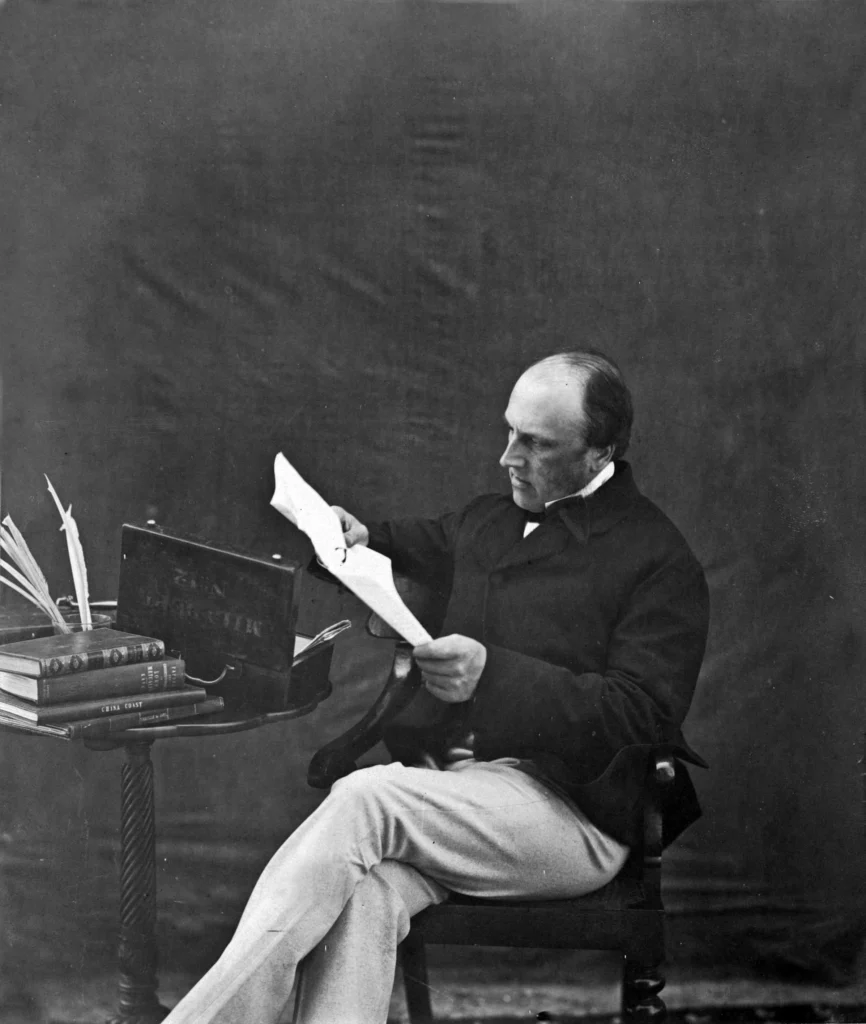
The Act formally recognized the Portfolio System that had already been introduced by Lord Canning. Under this arrangement, each member of the Executive Council was assigned a specific department such as finance, law, military affairs, public works, or revenue.
The member in charge of a department was authorized to take decisions regarding routine administrative matters without requiring the approval of the entire council. This significantly improved administrative efficiency by reducing delays and ensuring specialization in governance.
The Portfolio System introduced under the Act became the foundation of the modern cabinet system and remains one of the most enduring administrative innovations in Indian governance.
Legislative Devolution to Provinces
The Indian Councils Act, 1861 initiated the process of decentralization by restoring legislative powers to the Presidencies of Bombay and Madras. This represented a significant departure from the centralized system established under the Charter Act of 1833.
The restoration of legislative authority enabled provincial governments to frame laws relating to local matters and reduced their dependence on the central government. The Act also empowered the Governor-General to establish legislative councils in other provinces whenever necessary.
As a result, legislative councils were subsequently established in Bengal, the North-Western Provinces, and Punjab. This process laid the foundation for the future development of provincial autonomy in India.
Viceroy’s Ordinance-Making Power
While the Act introduced certain decentralizing features, it simultaneously strengthened executive authority by granting the Governor-General the power to issue ordinances during emergencies.
These ordinances possessed the force of law and could remain effective for a period of six months. The Governor-General could promulgate such ordinances without obtaining prior approval from the legislative council.
This provision demonstrated that despite the appearance of reform, the British government remained committed to maintaining strong executive control over the administration of India.
Power to Frame Rules and Conduct Legislative Business
The Act vested substantial authority in the Governor-General regarding the functioning of legislative councils. He was empowered to frame rules governing legislative procedures, regulate debates, and determine the conduct of council business.
This ensured that the legislative process remained firmly under executive supervision. Consequently, while councils existed, their functioning was heavily dependent on the authority and discretion of the Governor-General.
Significance of the Act
Beginning of Legislative Decentralization
The most important contribution of the Act was the initiation of legislative decentralization. By restoring legislative powers to the provinces, it reversed the centralizing tendencies that had characterized earlier constitutional arrangements.
This decentralization enabled provincial governments to address local concerns more effectively and laid the foundation for the later development of provincial autonomy. The process initiated by the Act eventually culminated in the federal framework introduced under the Government of India Act, 1935.
Formal Inclusion of Indians in Governance
The Act marked the beginning of Indian participation in legislative institutions. Although the representation was limited and restricted to a small number of elite Indians, it established the principle that Indians could be associated with governance.
This principle gained greater significance in subsequent decades as Indian political consciousness grew and demands for representative government intensified.
Improvement in Administrative Efficiency
The recognition of the Portfolio System brought greater efficiency and specialization to government administration. The allocation of departmental responsibilities enabled quicker decision-making and reduced administrative delays.
The system also introduced greater accountability by clearly defining the responsibilities of individual members of the executive council.
Foundation for Constitutional Development
The Indian Councils Act, 1861 occupies an important place in the constitutional evolution of India because it initiated a process that gradually expanded representative institutions.
Subsequent reforms such as the Indian Councils Act of 1892, the Morley-Minto Reforms of 1909, the Montagu-Chelmsford Reforms of 1919, and the Government of India Act of 1935 built upon the institutional framework established by the Act.
Thus, the Act served as the starting point of India’s constitutional journey towards representative government.
Limitations of the Act
- Despite its significance, the Act suffered from several serious limitations.
- The legislative councils created under the Act possessed very limited powers. They could not effectively scrutinize government policies, control the executive, or influence major administrative decisions. Their role was largely consultative and advisory.
- Indian representation remained purely nominative rather than elective. The nominated Indians were generally princes, landlords, and members of the elite class who were expected to support British policies. Consequently, the councils did not reflect public opinion or popular aspirations.
- The Act also failed to establish any form of responsible government. Real authority continued to remain concentrated in the hands of the Governor-General and the British executive. The Governor-General retained extensive powers, including the authority to veto legislation, issue ordinances, and regulate council proceedings.
- Furthermore, the councils had no control over financial matters. They could neither discuss the budget nor influence government expenditure. Even legislation approved by the council could ultimately be disallowed by the Secretary of State for India in Britain.
- As a result, the reforms introduced by the Act were often criticized as limited concessions intended to strengthen colonial rule rather than promote genuine political participation.
Conclusion
The Indian Councils Act, 1861 marked the beginning of a new phase in British India’s constitutional and administrative development. It introduced Indians into legislative councils, initiated legislative decentralization, and institutionalized the Portfolio System. While these reforms were modest and carefully controlled by the British administration, they established important constitutional principles that influenced subsequent political developments.
FAQs
Q1. What is the Indian Councils Act, 1861?
The Indian Councils Act, 1861 was a significant constitutional measure enacted by the British Parliament to improve the administration of India after the Revolt of 1857.
Q2. Why was the Indian Councils Act, 1861 enacted?
It was enacted to associate Indians with the administration and to secure the cooperation of Indian elites after the Revolt of 1857.
Q3. What were the main features of the Indian Councils Act, 1861?
Expansion of the Governor-General’s Legislative Council
Introduction of non-official members in legislative councils
Beginning of legislative decentralization
Restoration of legislative powers to Bombay and Madras Presidencies
Recognition of the Portfolio System
Q4. What is the Portfolio System?
The Portfolio System involved assigning specific departments to members of the Governor-General’s Executive Council for efficient administration.
Q5. Who introduced the Portfolio System in India?
Lord Canning introduced the Portfolio System, which later became the basis of modern cabinet governance.
Click on the question to see the Answers
Visit LevelUp IAS- Click Here