


UPSC relevant Questions. Expert Evaluation. Targeted Feedback.
Become mains ready through answer-writing under the expert guidance of Karandeep Sir.
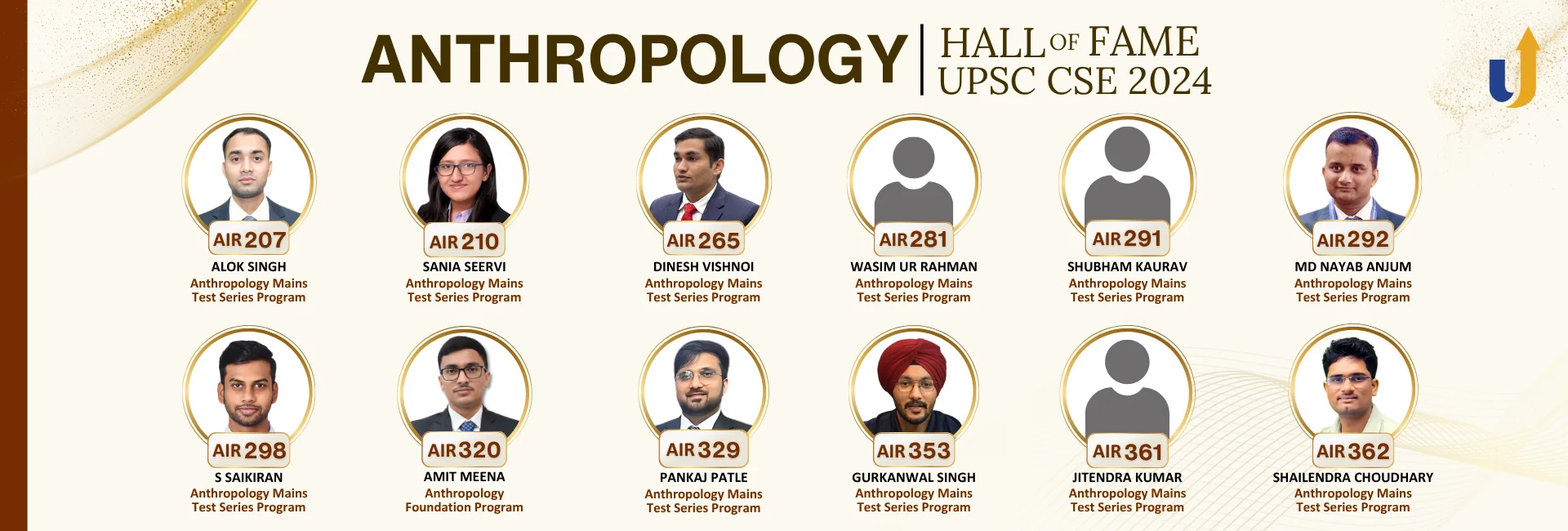
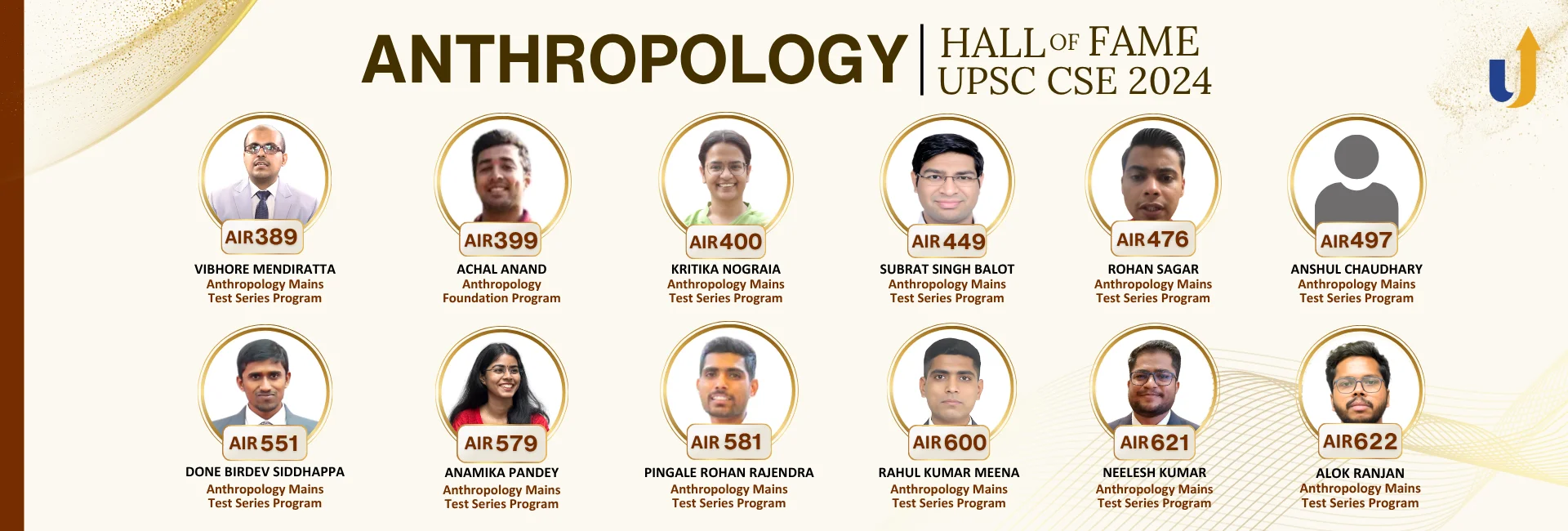
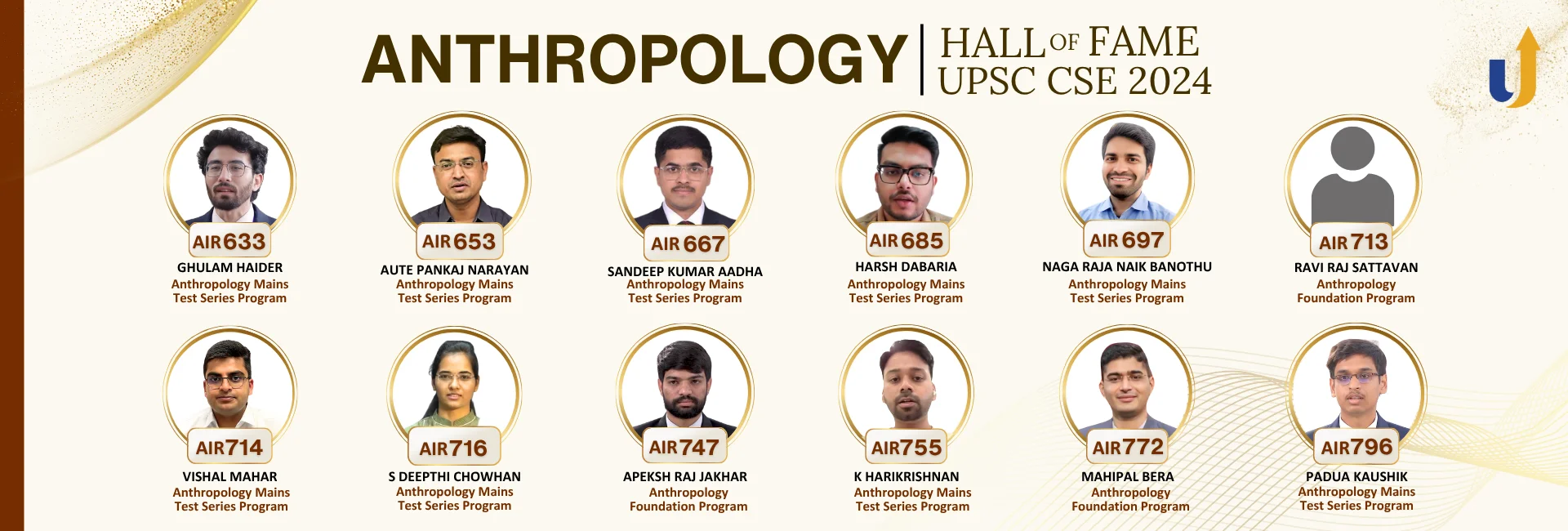
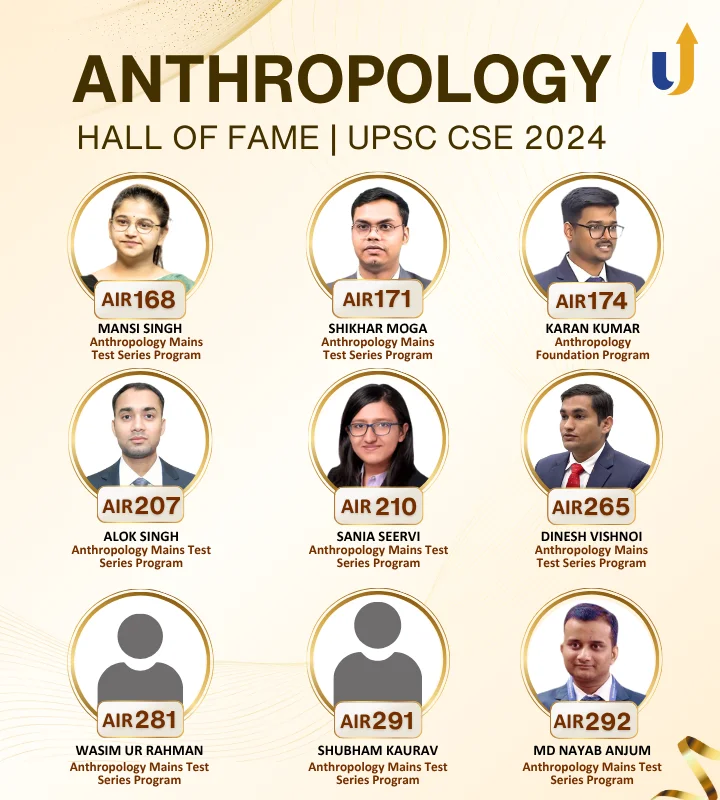
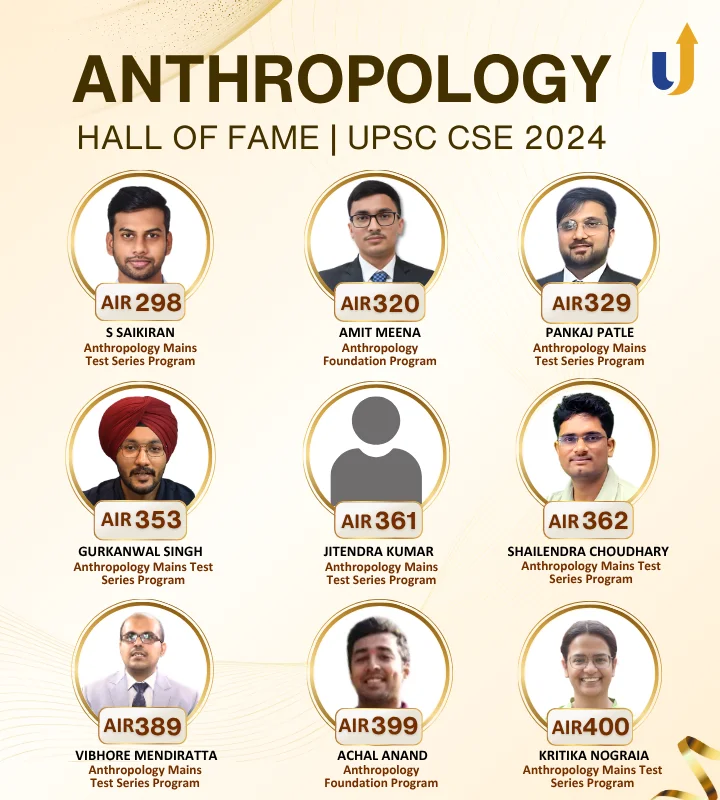
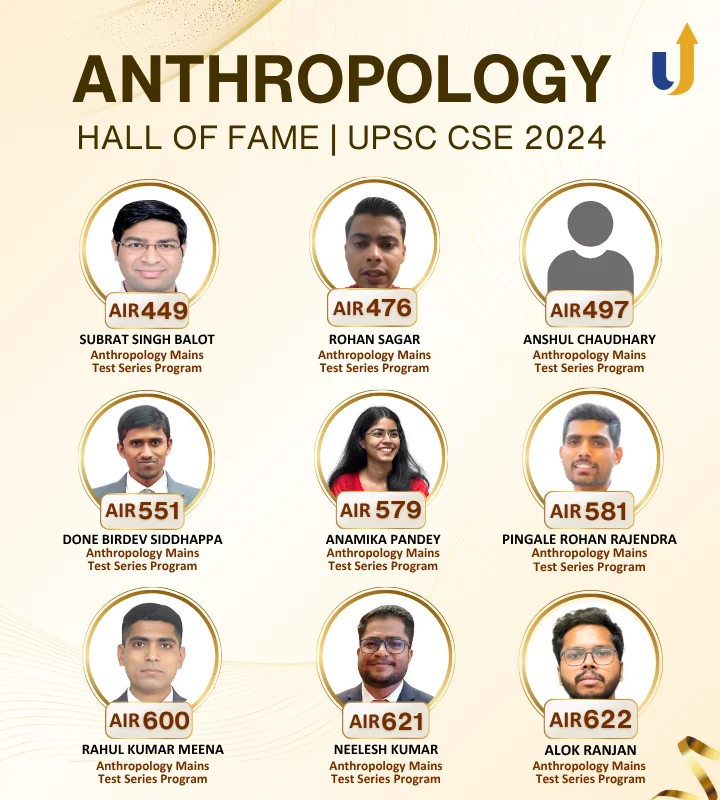
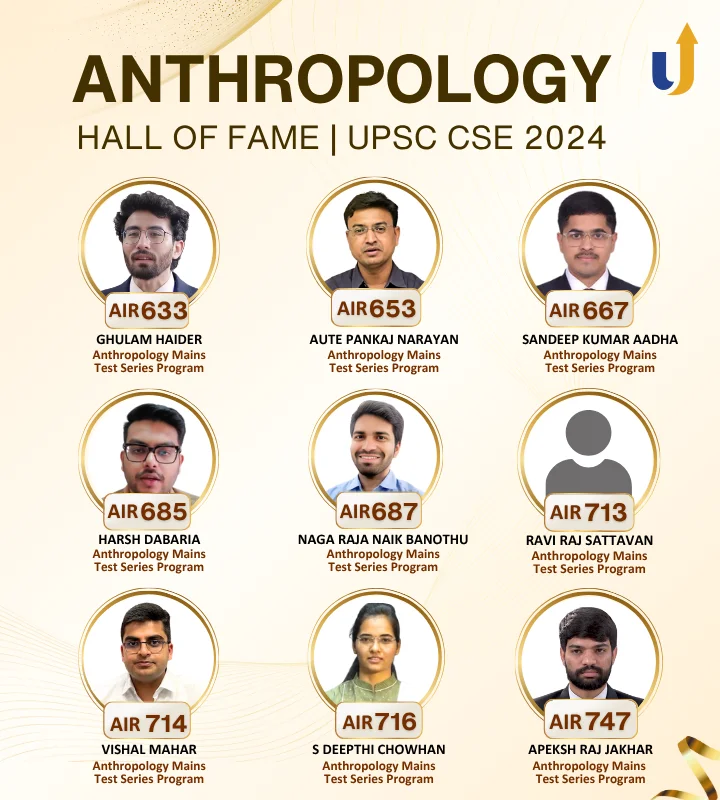
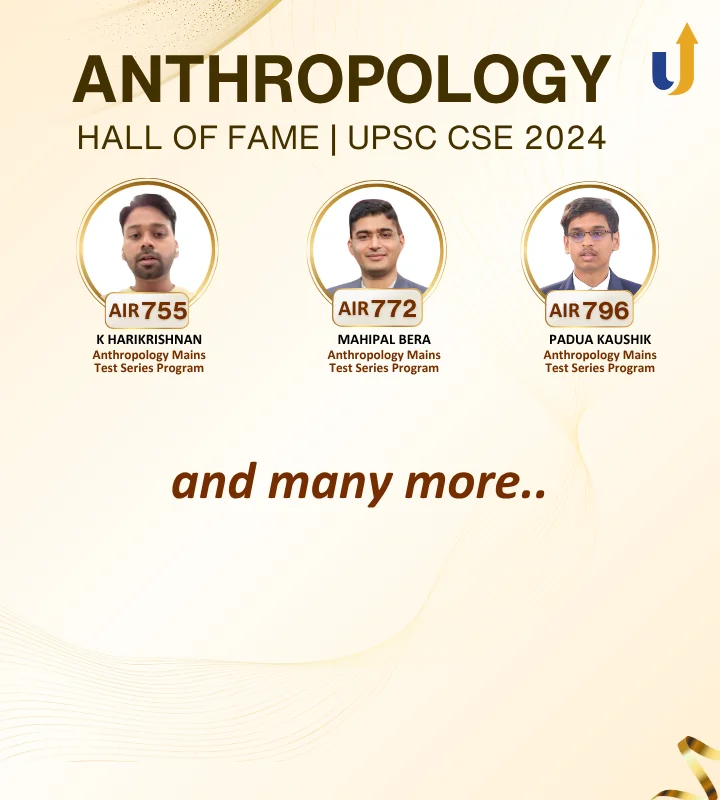
What sets apart the toppers who had Karandeep Sir as their mentor and guide?
In the Daily Answer-writing and Mentorship Program, students learn to write smarter, not just more. With questions formulated based on current UPSC pattern and video solutions, comprehensive revision of the Anthropology syllabus becomes easy.
Learn how to write high-scoring answers which guarantee above average marks. Each day that you write, each question that you decode, you get one mark closer to seeing your name in the list. The program is designed to cover Paper I and Paper II thematically. Mini tests have been designed to get you in the practice of writing tests.
The expert guidance of Karandeep Sir (mentor to 150+ rankers), helps you sharpen your answer writing skills, making you battle tested and ready to answer any question that UPSC throws at you.
This program focusing on consistent writing, detailed reviews, and a syllabus-synced plan is ideal for aspirants aiming for 250 + in Anthropology.
Perfect for aspirants who know the Anthropology syllabus, but need the strategy, structure, and mentorship to translate it into high-scoring answers.
Program Details
- Start Date: 27th October, 2025
- Details: Daily 3 Questions (5 Days in a week)
- Duration: 2.5 Months (comprehensively covering both Paper 1 and Paper 2)
- Validity: Course Last Day + 15 Days
- One Zoom Doubt Solving Sessions in a Week
Delivery Modes
- Online: 2 Views
Admission Closed
Got questions? Let's talk!
Fill out the form & connect 1-1 with us
Why choose DAMP by Karandeep Sir?

Anthropology through Answer-writing
- Consistent and daily answer writing practice:
- Helps you develop skills of decoding the demand of the question, writing in a clear, concise, precise, well structured, and presentable manner.

Targeted Optional Practice
- Well-planned answer writing:
- Cover the syllabus comprehensively through an easy to follow schedule.

Curated for UPSC
- Designed by Karandeep Sir:
- Based on recurrent themes in Anthropology, inspired by previously asked questions.

Targeted Feedback
- Guaranteed improvement:
- Our feedback on your answers is not generic, it is customized for you, making sure that your answers become well-above average.

Value Addition
- Answer discussion:
- Build conceptual clarity, develop interlinking ability, analyse and decode questions for effective answer writing.

Confidence boost
- Build discipline:
- Through daily practice build speed and coherence in answer writing, keep track of your improvement, and get the exam ready confidence.
Who Should Join?
Expert Guidance under Karandeep Sir.

Break the barrier
⏩ UPSC aspirants struggling with average marks in Anthropology mains and looking to break the 230–250+ barrier.

Practice makes perfect
⏩ Students who have completed the Anthropology syllabus but lack a structured answer writing approach.

Get exam ready
⏩ Candidates who haven’t appeared for mains yet and want to be exam-ready through comprehensive evaluation and feedback.

The perfect Guide
⏩ Aspirants seeking expert guidance from Karandeep Sir, who has mentored 155+ UPSC rankers with his curated strategy.

Master the trend
⏩ Students who want to master analytical and applied Anthropology questions, aligned with the latest UPSC trends.
LevelUp IAS Anthropology DAMP
Why join LevelUp IAS Anthropology DAMP?
- Master Anthropology Optional Answer Writing: Consistent daily practice ensures that you develop the ability to write clear, concise, and high-scoring answers under exam conditions.
- Targeted UPSC Optional Preparation: With a structured daily schedule, your preparation becomes more focused, covering the entire syllabus in a disciplined manner.
- UPSC level questions curated by Karandeep sir based on thematically selected topics ensuring coverage of the entire syllabus. These are mixed with Anthropology Optional previous year questions.
- Personalised Mentorship: Direct feedback ensures continuous improvement, making sure your answers meet the standards required for scoring high in UPSC Mains.
- Comprehensive Learning through video discussions and model answers provide deeper insights into building conceptual clarity, developing interlinkages, and applying critical analysis, all while enhancing your ability to approach and present answers effectively.
- Stay Consistent & Confident: The routine of daily answer writing and weekly assessments keeps you on track and helps build exam-day confidence.
Who Should Join?
- Aspirants looking to strengthen their Anthropology optional preparation with structured practice.
- Those who have completed the syllabus but need guidance in answer writing and revision.
- Aspirants who are unable to take their Anthropology score beyond 280 marks.
- Students who want to ensure their Anthropology preparation is up to UPSC standards with personalised mentorship.
Program Highlights
Daily Answer Writing Practice:
- 1 question to be submitted daily for evaluation.
- 1 additional practice question daily for extra preparation.
Time-bound Evaluation:
- All submitted answers are evaluated within 24 hours with personalized feedback.
- Evaluation process follows UPSC standards and current trends.
Video Discussions & Model Answers:
- Get in-depth video discussions for both daily questions along with model answers to understand structure and approach.
Full-Length Test:
- 2 comprehensive test covering the entire syllabus, to be submitted within 7 days from release.
Syllabus Coverage:
- The program comprehensively covers the entire UPSC Anthropology syllabus for both Paper 1 & Paper 2.
Regular Zoom Sessions for Doubts:
- Weekly Zoom sessions with the mentor for doubt resolution, ensuring clarity on all topics and questions.
Features
Program Inclusion
Schedule
Note
Refund Policy
i) Daily Answer Writing Practice:
- Daily 3 questions.
- 2 of these would be evaluated.
- 1 for self-improvement.
- Daily 3 questions.
ii) Evaluation:
- Time bound evaluation, within 24 hours.
- Comprehensive evaluation process to make you mains ready.
iii) UPSC relevant questions:
- Clear your basics through self practice questions.
- Evaluate your understanding through tailor-made analytical questions, curated by Karandeep Sir.
iv) Discussion:
- In-depth video discussion of all three questions with value addition.
- Model answers would be provided for all three.
v) Tests:
- 5 mini tests scheduled fortnightly, flexibility till end of course.
- 2 full length tests at the end of course.
vi) Doubt Session:
- Weekly zoom session with Karandeep sir.
- Question will be released at 12:00 pm (Afternoon)
- Answer can be uploaded till 12:00 pm (Next Day Afternoon)
- Answer Discussion video and Model answer will be released at 12:00 pm (Next Day Afternoon)
- Answer Discussion video can be viewed a maximum of 2 times
- The course validity will not be extended under any circumstances
|
DAMP Anthropology 2026 |
|
|
DATE |
MICRO- TOPICS |
|
Monday, October 27, 2025 |
Unit 6: Anthropological theories |
|
Tuesday, October 28, 2025 |
Unit 6 Anthropological theories: |
|
Wednesday, October 29, 2025 |
Unit 5 Religion: Anthropological approaches to the study of religion (evolutionary, psychological and functional); monotheism and polytheism; sacred and profane; myths and rituals; forms of religion in tribal and peasant Societies (animism, animatism, fetishism, naturism and totemism); religion, magic and science distinguished; magico-religious functionaries (priest, shaman, medicine man, sorcerer and witch) |
|
Thursday, October 30, 2025 |
Unit 5 Religion: Anthropological approaches to the study of religion (evolutionary, psychological and functional); monotheism and polytheism; sacred and profane; myths and rituals; forms of religion in tribal and peasant Societies (animism, animatism, fetishism, naturism and totemism); religion, magic and science distinguished; magico-religious functionaries (priest, shaman, medicine man, sorcerer and witch) |
|
Friday, October 31, 2025 |
Unit 3 Economic Organization: Meaning, scope and relevance of economic anthropology; Formalist and Substantivism debate; Principles governing production, distribution and exchange (reciprocity, redistribution and market), in communities, subsisting on hunting and gathering, fishing, swiddening, pastoralism, horticulture, and agriculture; globalization and indigenous economic systems |
|
Saturday, November 1, 2025 |
|
|
Sunday, November 2, 2025 |
|
|
Monday, November 3, 2025 |
Unit 4 Political Organization and Social Control: Band, tribe, chiefdom, kingdom and state; concepts of power, authority and legitimacy; social control, law and justice in simple Societies. |
|
Tuesday, November 4, 2025 |
Unit 2.1 The Nature of Culture: The concept and Characteristics of culture and civilization; Ethnocentrism vis-a-vis cultural Relativism. |
|
Wednesday, November 5, 2025 |
Unit 2.2 The Nature of Society: Concept of Society; Society and Culture; Social Institution; Social groups; and Social stratification |
|
Thursday, November 6, 2025 |
Unit 2.3 Marriage: Definition and universality; Laws of marriage (endogamy, exogamy, hypergamy, hypogamy, incest taboo); Type of marriage (monogamy, polygamy, polyandry, group marriage). Functions of marriage; Marriage regulations (preferential, prescriptive and proscriptive); Marriage payments (bride wealth and dowry) |
|
Friday, November 7, 2025 |
Unit 2.4 Family:Definition and universality; Family, household and domestic groups; functions of family; Types of family (from the perspectives of structure, blood relation, marriage, residence and succession); Impact of urbanization, industrialization and feminist movements on family. |
|
Saturday, November 8, 2025 |
|
|
Sunday, November 9, 2025 |
Mini Test 1 Paper 1 Unit 2.1, 2.2, 2.3, 2.4, 3, 4, 5, 6 |
|
Monday, November 10, 2025 |
Unit 2.5 Kinship: Consanguinity and Affinity; Principles and types of descent (Unilineal, Double, Bilateral Ambilineal); Forms of descent groups (lineage, clan, phratry, moiety and kindred); Kinship terminology (descriptive and classificatory); Descent, Filiation and Complimentary Filiation; Decent and Alliance |
|
Tuesday, November 11, 2025 |
Unit 7 Culture, language and communication: Nature, origin and characteristics of language; verbal and non-verbal communication; social context of language use. |
|
Wednesday, November 12, 2025 |
Unit 8 Research methods in Anthropology: |
|
Thursday, November 13, 2025 |
Unit 8 Research methods in Anthropology: |
|
Friday, November 14, 2025 |
Unit 9.1 Human Genetics: Methods and Application: Methods for study of genetic principles in man-family study (pedigree analysis, twin study, foster child, co-twin method, cytogenetic method, chromosomal and karyo-type analysis), biochemical methods, immunological methods, D.N.A. technology and recombinant technologies. |
|
Saturday, November 15, 2025 |
|
|
Sunday, November 16, 2025 |
|
|
Monday, November 17, 2025 |
Unit 9.2 Mendelian genetics in man-family study, single factor, multifactor, lethal, sub-lethal and polygenic inheritance in man. |
|
Tuesday, November 18, 2025 |
Unit 9.3 Concept of genetic polymorphism and selection, Mendelian population, Hardy-Weinberg law; causes and changes which bring down frequency-mutation, isolation, migration, selection, inbreeding and genetic drift. Consanguineous and non-consanguineous mating, genetic load, genetic effect of consanguineous and cousin marriages |
|
Wednesday, November 19, 2025 |
Unit 9.4 Chromosomes and chromosomal aberrations in man, methodology. (a) Numerical and structural aberrations (disorders). (b) Sex chromosomal aberration- Klinefelter (XXY), Turner (XO), Super female (XXX), intersex and other syndromic disorders. (c)Autosomal aberrations- Down syndrome, Patau, Edward and Cri-du-chat syndromes. (d) Genetic imprints in human disease, genetic screening, genetic counselling, human DNA profiling, gene mapping and genome study |
|
Thursday, November 20, 2025 |
Unit 9.5 Race and racism, biological basis of morphological variation of non-metric and characters. Racial criteria, racial traits in relation to heredity and environment; biological basis of racial classification, racial differentiation and race crossing in man |
|
Friday, November 21, 2025 |
Unit 9.6 Age, sex and population variation as genetic marker: ABO, Rh blood groups, HLA Hp, transferring, Gm, blood enzymes. Physiological characteristics-Hb level, body fat, pulse rate, respiratory functions and sensory perceptions in different cultural and socio-economic groups. |
|
Saturday, November 22, 2025 |
|
|
Sunday, November 23, 2025 |
Mini Test 2 Paper 1 Unit 2.5, 7, 8, 9.1-9.6 |
|
Monday, November 24, 2025 |
Unit 9.7 Concepts and methods of Ecological Anthropology: Bio-cultural Adaptations—Genetic and Non-genetic factors. Man’s physiological responses to environmental stresses: hot desert, cold, high altitude climate |
|
Tuesday, November 25, 2025 |
Unit 9.8 Epidemiological Anthropology: Health and disease. Infectious and non-infectious diseases, Nutritional deficiency related diseases |
|
Wednesday, November 26, 2025 |
Unit 10 Concept of human growth and Development: Stages of growth-pre-natal, natal, infant, childhood, adolescence, maturity, senescence. Government strives to have a workforce which reflects gender balance and women candidates are encouraged to apply. Factors affecting growth and development genetic, environmental, biochemical, nutritional, cultural and socio-economic. Ageing and senescence. Theories and observations-Biological and chronological longevity. Human physique and somatotypes. Methodologies for growth studies. |
|
Thursday, November 27, 2025 |
Unit 11 |
|
Friday, November 28, 2025 |
Unit 12 Applications of Anthropology: Anthropology of sports, Nutritional anthropology, Anthropology in designing of defence and other equipment’s, Forensic Anthropology, Methods and principles of personal identification and reconstruction, Applied human genetics—Paternity diagnosis, genetic counselling and eugenics, DNA technology in diseases and medicine, serogenetics and cytogenetics in reproductive biology. |
|
Saturday, November 29, 2025 |
|
|
Sunday, November 30, 2025 |
|
|
Monday, December 1, 2025 |
Unit 1 |
|
Tuesday, December 2, 2025 |
Unit 1 |
|
Wednesday, December 3, 2025 |
Unit 1.4 Human Evolution and emergence of Man: (a) Biological and Cultural factors in human
evolution. (b) Theories of Organic Evolution (Pre-Darwinian, Darwinian, and Post-Darwinian). (c)
Synthetic theory of evolution; Brief outline of terms and concepts of evolutionary biology
(Doll’s rule, Cope’s rule, Gause’s rule, parallelism, convergence, adaptive
radiation, and mosaic evolution). |
|
Thursday, December 4, 2025 |
Unit 1.7 The biological basis of Life: The Cell, DNA structure and replication, Protein
Synthesis,
Gene, Mutation, Chromosomes, and Cell Division. |
|
Friday, December 5, 2025 |
Unit 1.6 Phylogenetic status, characteristics and geographical distribution of the following: (a) Plio-preleistocene hominids in South and East Africa-Australopithecines. (b) Homo erectus: Africa (Paranthropus), Europe (Homo erectus (heidelbergensis), Asia (Homo erectus javanicus, Homo erectus pekinensis. (c) Neanderthal man - La-chapelle-aux-saints (Classical type), Mt. Carmel (Progressive type). (d) Rhodesian man. (e) Homo sapiens - Cro Magnon, Grimaldi and Chancelede. |
|
Saturday, December 6, 2025 |
|
|
Sunday, December 7, 2025 |
Mini Test 3 Paper 1 Unit 9.7, 9.8 10, 11, 12, 1.1, 1.2, 1.3, 1.4, 1.5, 1.6, 1.7 |
|
Monday, December 8, 2025 |
Unit 1.1 Evolution of the Indian Culture and Civilization - Prehistoric (Palaeolithic, Mesolithic, Neolithic and Neolithic-Chalcolithic), Protohistoric (Indus Civilization). Pre-Harappan, Harappan and post-Harappan cultures. Contributions of the tribal cultures to Indian civilization |
|
Tuesday, December 9, 2025 |
Unit 1.2 Palaeo-Anthropological evidence from India with special reference to Siwaliks and
Narmada
basin (Ramapithecus, Sivapithecus and Narmada Man). |
|
Wednesday, December 10, 2025 |
Unit 2 Demographic profile of India - Ethnic and linguistic elements in the Indian population and their distribution. Indian population - factors influencing its structure and growth |
|
Thursday, December 11, 2025 |
Unit 3 |
|
Friday, December 12, 2025 |
Unit 3 |
|
Saturday, December 13, 2025 |
|
|
Sunday, December 14, 2025 |
|
|
Monday, December 15, 2025 |
Unit 4 Emergence, growth and development in India—Contributions of the 18th, 19th and early 20th Century scholar-administrators. Contributions of Indian anthropologists to tribal and caste studies. |
|
Tuesday, December 16, 2025 |
Unit 4 Emergence, growth and development in India—Contributions of the 18th, 19th and early 20th Century scholar-administrators. Contributions of Indian anthropologists to tribal and caste studies. |
|
Wednesday, December 17, 2025 |
Unit 5 |
|
Thursday, December 18, 2025 |
Unit 5 |
|
Friday, December 19, 2025 |
Unit 6 |
|
Saturday, December 20, 2025 |
|
|
Sunday, December 21, 2025 |
Mini Test 4 Paper 2 Unit 1.1, 1.2, 1.3, 2, 3, 4, 5 |
|
Monday, December 22, 2025 |
Unit 6 |
|
Tuesday, December 23, 2025 |
Unit 7 |
|
Wednesday, December 24, 2025 |
Unit 7 |
|
Thursday, December 25, 2025 |
Unit 8 |
|
Friday, December 26, 2025 |
Unit 9 |
|
Saturday, December 27, 2025 |
|
|
Sunday, December 28, 2025 |
|
|
Monday, December 29, 2025 |
Unit 9 |
|
Saturday, January 3, 2026 |
|
|
Sunday, January 4, 2026 |
Mini Test 5 Paper 2 Unit 6, 7, 8, 9 |
|
Sunday, January 25, 2026 |
Full Length Test Paper 1 |
|
Sunday, January 25, 2026 |
Full Length Test Paper 2 |
All our lectures are under the license of copyright protection, under the Copyright Act 1957 (the Act), supported by the Copyright Rules 1958 (the Rules), International Copyright Order, 1999 and Copyright Act in 2012. So copying our videos, illegal piracy, downloads, sharing, distribution etc. are strictly not allowed. We will take strict legal action against people doing so.
We have embedded tracking of video usage with the location, IP and we collect data on the video usage to check if there are any suspicious downloads of video happening with some third-party software. In such cases, the culprits will not be given any warning from our end; instead, strict legal action will be enforced.
Sharing of the user’s login and password is strictly prohibited. If any student is found doing so, his account would be suspended, and we will file a legal case of data theft and piracy against the student. Please do not share logins with your friends; else you will be in deep trouble.
There is access limit for each student – based on the course validity (date mentioned in the course features) and the total duration for which a student can watch any particular video (two times of the length of the video). Under no circumstance requests to extend the validity or increase the view duration will be entertained.
You may be mandatorily required to register the device from which you will be permitted to access the student portal to consume the online services. LevelUP IAS withholds the right to keep the number of devices registered limited.
Students are advised to have minimum internet speed of 2 Mbps for smooth experience. For mobile, videos run efficiently on 4G networks.
Please find the link to our refund policy below:
At LevelUp IAS, we are committed to providing quality education and ensuring student satisfaction. However, we understand that situations may arise where a refund is necessary. Below are the guidelines for our refund policy:
(1) Refund Eligibility
- Full Refund: Students are eligible for a full refund if they withdraw from the course within the first 7 days after the starting date of the course. The request must be submitted in writing.
- Partial Refund after 7 days:
- General Studies Foundation Program: If a student withdraws after the commencement of the course, then they are eligible for the refund on the pro-rata basis. The details of pro-rata basis are as follows:
- Day 8 to Day 30: Maximum of 75% Refund eligible
- Day 30 to 50% course duration: Maximum of 50% Refund eligible
- After 50% course duration: Zero refund
- Note: duration is measured from the day of commencement of the course and not from the date of admission.
- All other course above course with price of 10,000 (exclusive of GST): If a student withdraws after the commencement of the course, then they are eligible for the refund on the pro-rata basis. The details of pro-rata basis are as follows:
- Day 8 to Day 30: Maximum of 75% Refund eligible
- After Day 30: Zero refund
- Note: duration is measured from the day of commencement of the course and not from the date of admission.
- General Studies Foundation Program: If a student withdraws after the commencement of the course, then they are eligible for the refund on the pro-rata basis. The details of pro-rata basis are as follows:
- Zero Refund: Please note that a student is considered completely ineligible for refunds under following circumstances:
- If the price of a course is less than or equal to Rs. 10,000 (exclusive of GST)
- If admission is done at a discounted price or during promotional offers,
- If admission is done with a partial payment plan with an installment facility.
- It the course is a transferred course from some other original course.
- If the courses are already-recorded modules, then such courses are not eligible for any kind of refund.
(2) Procedure to Request a Refund
- All refund requests must be submitted in writing via email to info@levelupias.com.
- No request made verbally, in person, on phone call, through messages or over any social media platform will be entertained. Only duly emailed requests will be entertained.
- The request must include the student’s name, course name, date of enrolment, and the reason for requesting a refund. Also, a student must attach any additional supporting document of evidence required.
- The date of refund request will be the date on which all the valid documents are received by the institute, which are needed for the approval.
(3) Processing Time
- Institute will take upto 15 days to process the request of the refund, upon complete reception of all the necessary information.
- Thereafter, the refunds will be processed within 15 business days from the date of the refund request approval.
- The refund will be issued using the original payment method unless otherwise agreed upon.
(4) Non-Refundable Fees
- Registration fees, administrative charges, and any other non-tuition fees are non-refundable.
(5) Policy on Course Transfers:
(a) Transfer Type: This policy applies to the following types of course transfers:
- From an online course to an offline course.
- From an offline course to an online course.
- From one course to another course.
- From one individual to another individual.
(b) Transfer Fee: A flat fee of Rs. 10,000 will be charged for any course transfer, regardless of the type of transfer or the specific course involved.
(c) Payment Terms: The transfer fee must be paid in full at the time of the transfer request. The transfer will not be processed until the fee is received.
(d) Non-Refundable: The transfer fee is non-refundable, even if the transfer is later canceled by the student.
(e) Eligibility: Transfers are subject to availability and approval by the institute. The institute reserves the right to deny transfer requests based on course capacity, scheduling conflicts, or other relevant factors.
(6) Amendments
- LevelUp IAS reserves the right to amend this refund policy at any time. Changes will be available for the students through the official website.
For any questions or concerns regarding this refund policy, please contact our administrative office at Contact Us.









Features
Schedule
Note
- 2.5 Months : Paper 1 [5 Weeks], Paper 2 [5 Weeks] or Total 10 Weeks
- Video discussion of both questions will be provided
- 1 Question Daily for Answer Writing Practice (which will be evaluated)
- 1 Question Daily for Answer Writing Practice (for self-practice only)
- Daily evaluation within 24 hours of the submission
- Two Full Length Comprehensive Test (to be submitted in 7 days)
- 5 Days a week | Completely Online Module
- Comprehensive Coverage of Entire Anthropology Syllabus
- Regular Zoom session
All our lectures are under the license of copyright protection, under the Copyright Act 1957 (the Act), supported by the Copyright Rules 1958 (the Rules), International Copyright Order, 1999 and Copyright Act in 2012. So copying our videos, illegal piracy, downloads, sharing, distribution etc. are strictly not allowed. We will take strict legal action against people doing so.
We have embedded tracking of video usage with the location, IP and we collect data on the video usage to check if there are any suspicious downloads of video happening with some third-party software. In such cases, the culprits will not be given any warning from our end; instead, strict legal action will be enforced.
Sharing of the user’s login and password is strictly prohibited. If any student is found doing so, his account would be suspended, and we will file a legal case of data theft and piracy against the student. Please do not share logins with your friends; else you will be in deep trouble.
There is access limit for each student – based on the course validity (date mentioned in the course features) and the total duration for which a student can watch any particular video (two times of the length of the video). Under no circumstance requests to extend the validity or increase the view duration will be entertained.
You may be mandatorily required to register the device from which you will be permitted to access the student portal to consume the online services. LevelUP IAS withholds the right to keep the number of devices registered limited.
Students are advised to have minimum internet speed of 2 Mbps for smooth experience. For mobile, videos run efficiently on 4G networks.
GET IN TOUCH
- Start Date: 6th Nov, 2023
- Details: Daily 1 Question (5 Days in a week)
- Duration: 10 Weeks
- Validity: Final date of the program + 15days
- Delivery Mode: Online
- Online (Live + 2 Views)