


Anthropology Foundation Batch 2027
Karandeep Singh Sir - the name in Anthropology Optional
Learn from the best!
As results have proven, again and again, Anthropology remains one of the most successful optionals. It has a small and well-defined syllabus. It is easy to understand, has a high scoring potential. The one element which gives you the perfect combination for an All India Rank is the right guidance.
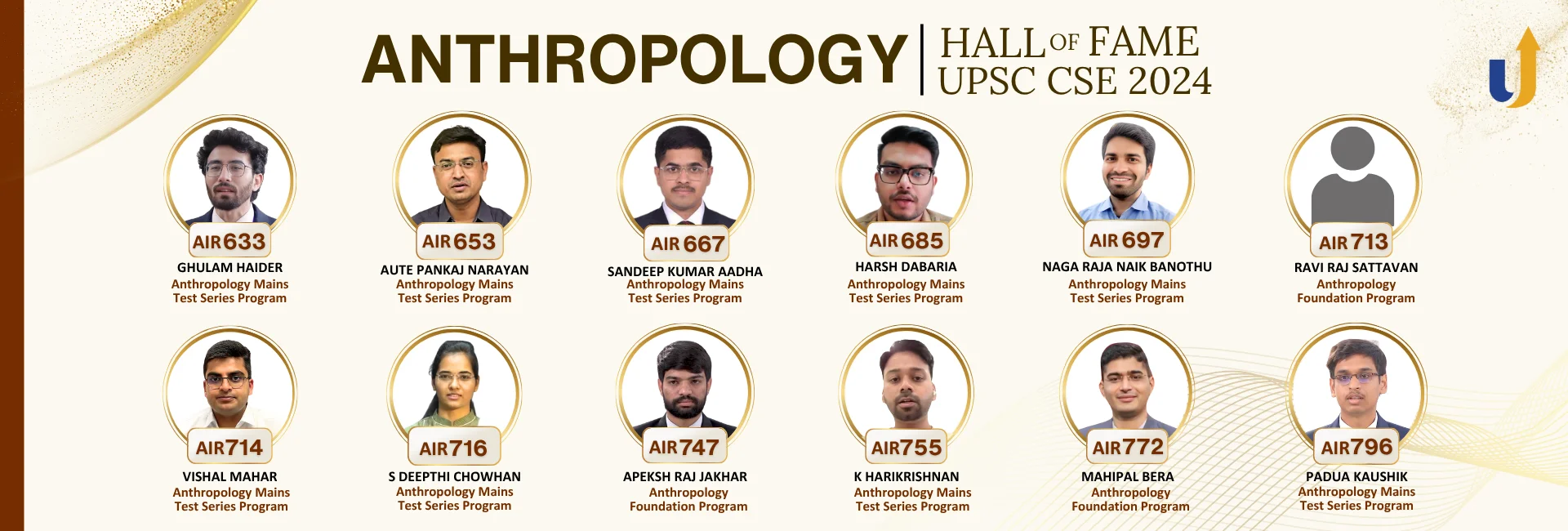
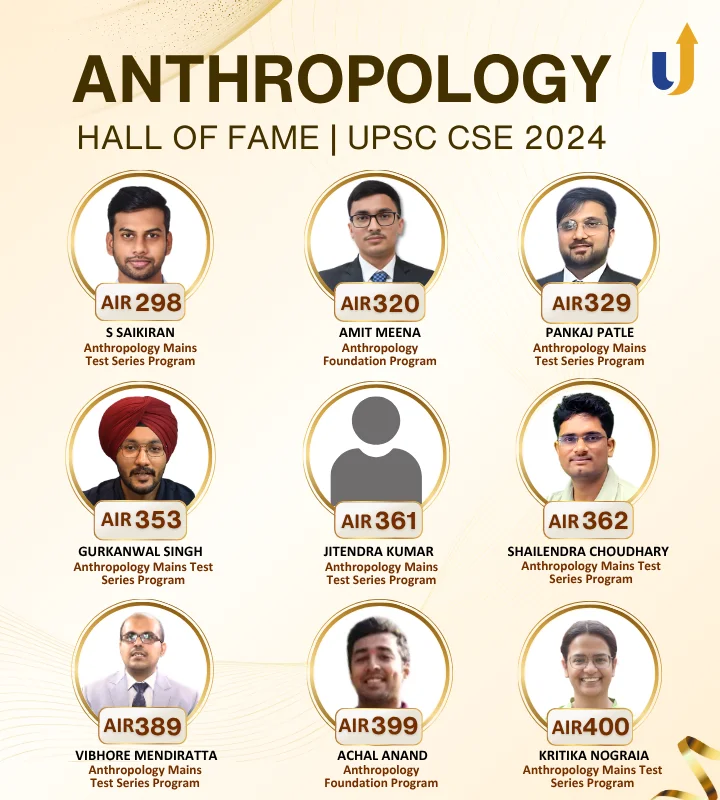
Karandeep Singh Sir, at LevelUp IAS, is that element. With a record breaking result of teaching and mentoring 250+ rankers over the years, he is the one stop solution for Anthropology optional. His classes are interactive, his teaching style simple and engaging, and the syllabus is completed in an exam-oriented manner. The study material is up-to-date and answer-writing is taught alongside the course. Learning from Karandeep Sir also helps the students in developing analytical approaches, necessary for approaching the changing pattern of questions in civil services mains exam.
Click here to join LevelUP IAS Anthropology Telegram Group
Why Karandeep Sir?

Exam oriented approach

Time bound completion of course

Comprehensive syllabus coverage
Focus on conceptual understanding

Interactive, easy to understand classes

Up to date study material

Personalized attention, individual mentoring
Regular doubt sessions
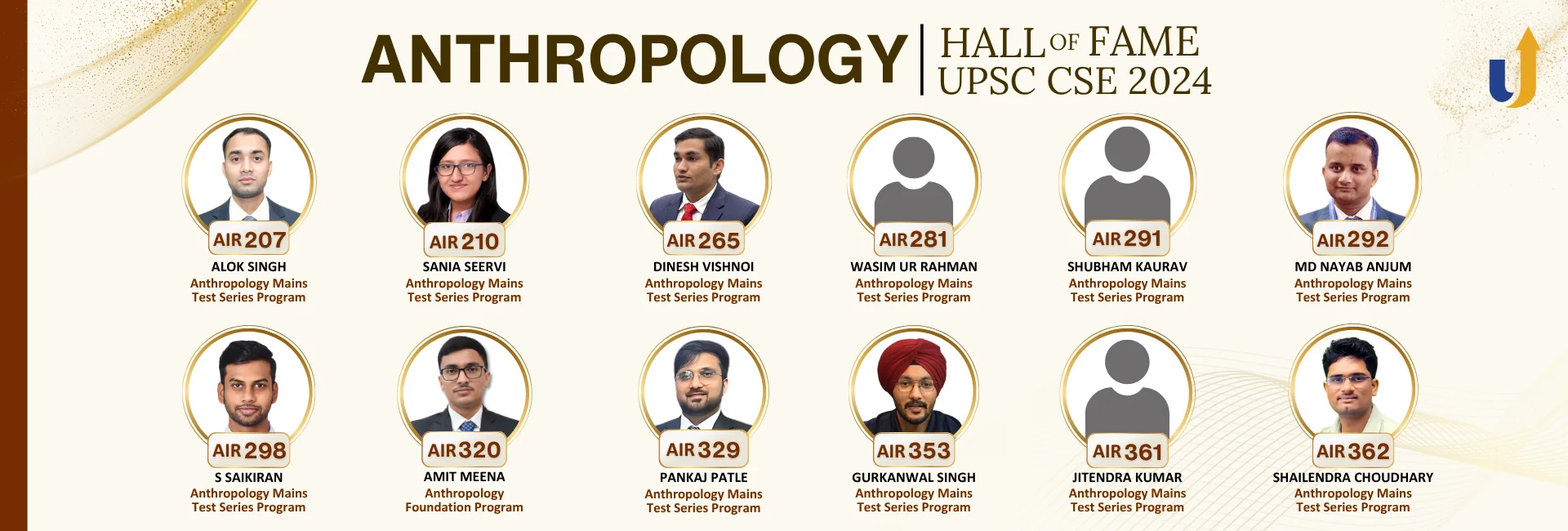
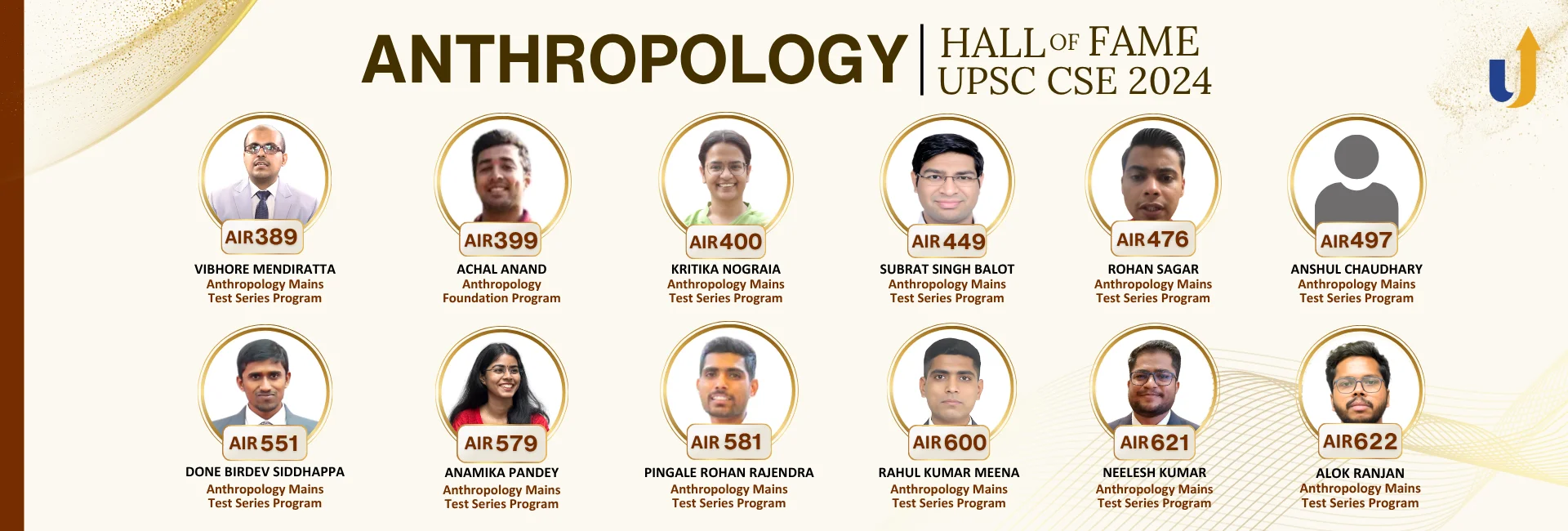
Check Our Anthropology Gallery


Who Should Join the Anthropology Foundation 2027-28?
⏩ Students who want to complete the entire syllabus in a comprehensive and well-designed manner.
⏩ Students appearing for UPSC CSE 2027-28.
⏩ Students who want to get a decisive edge in the competition.
History Optional CLASS


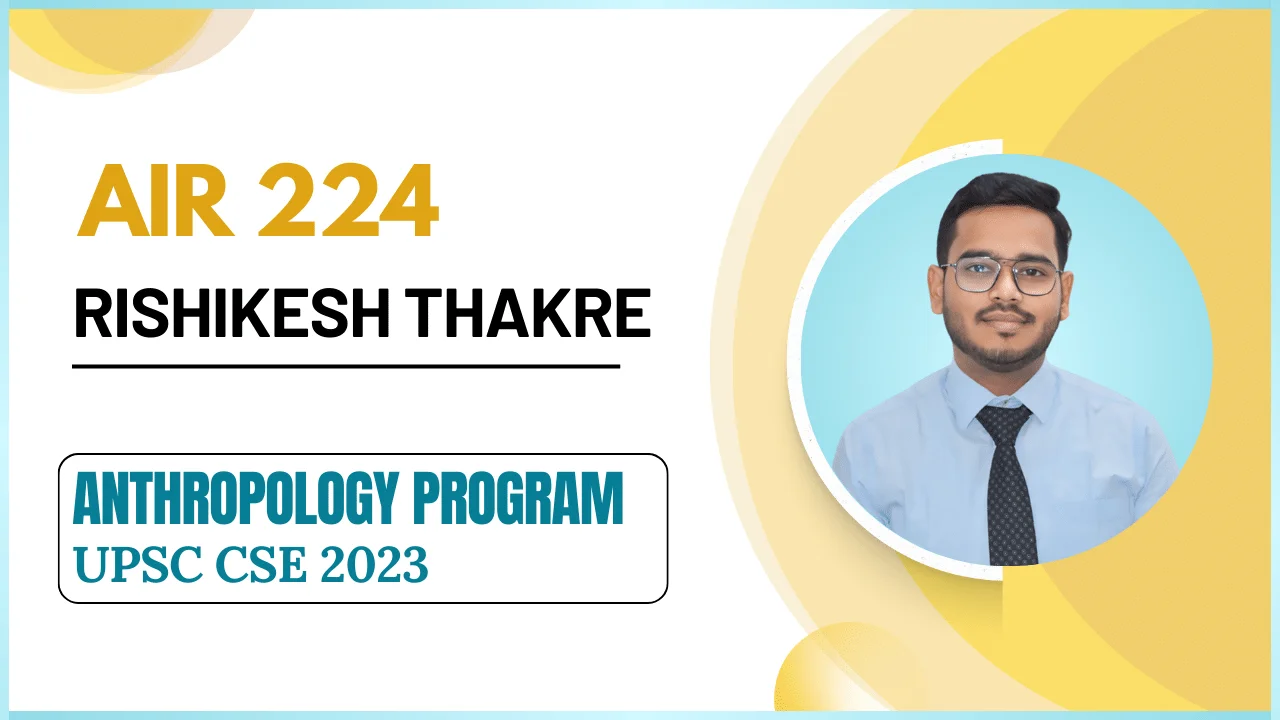
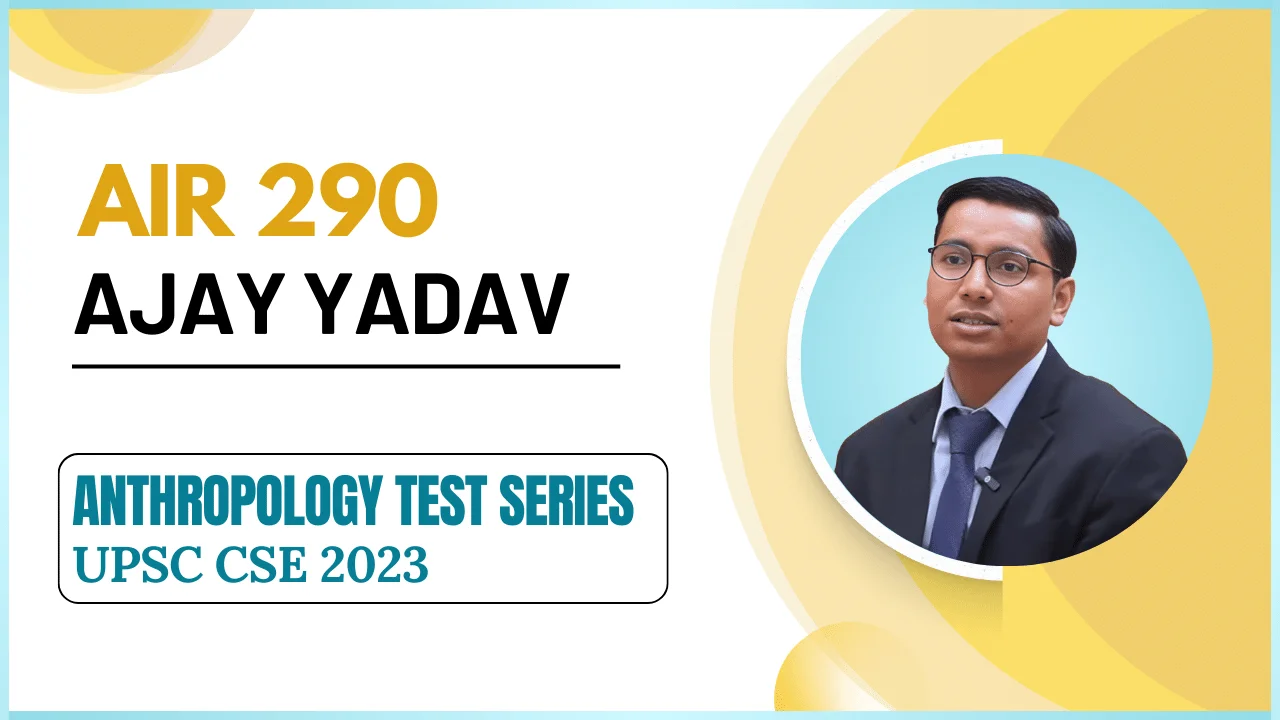
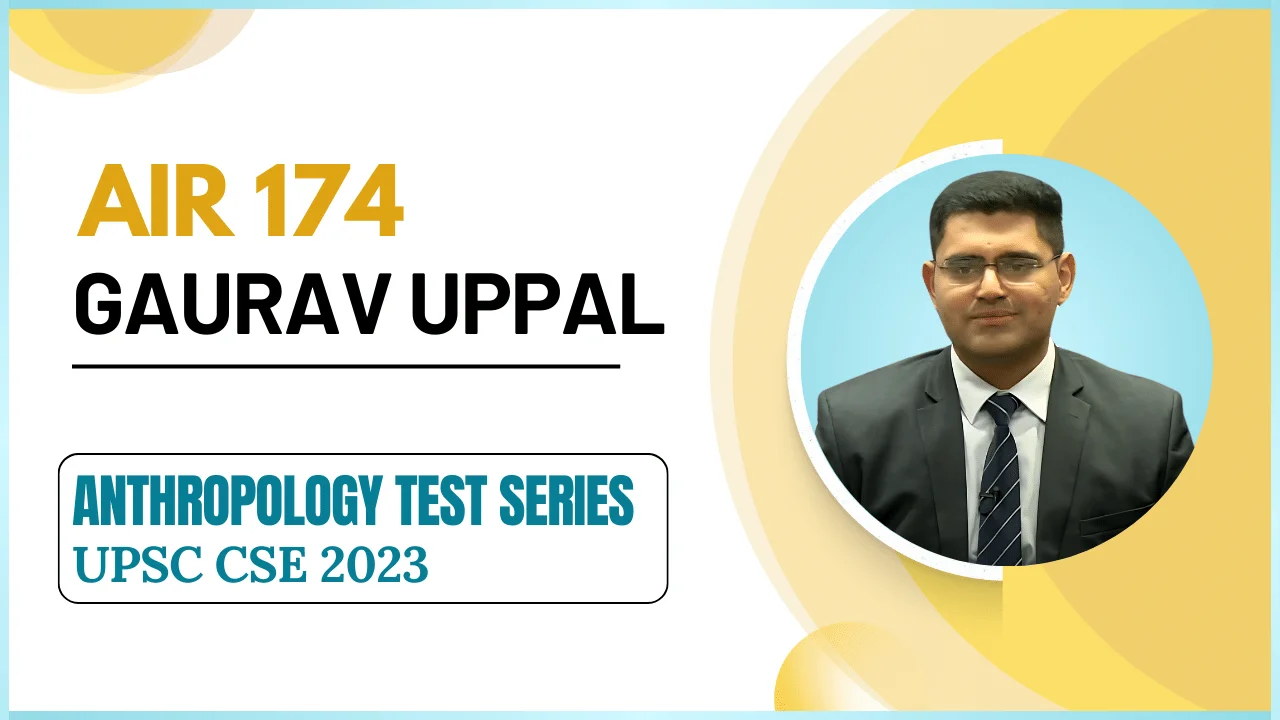
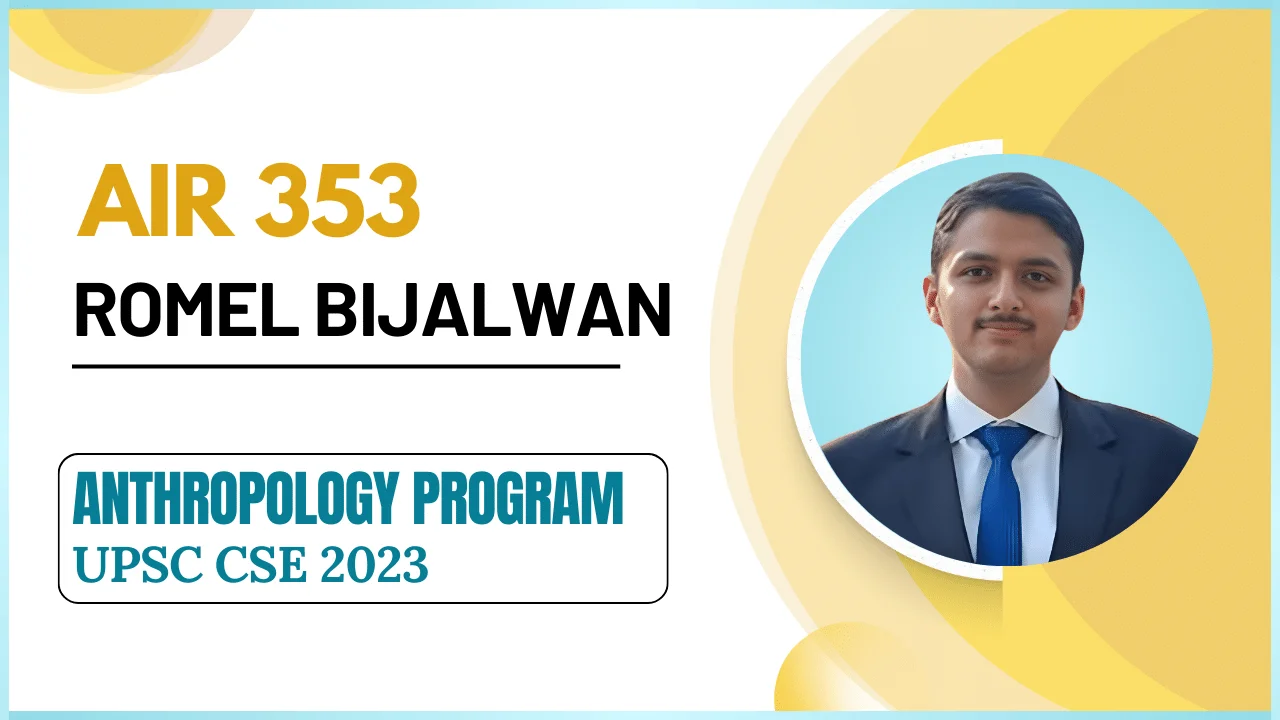
Why UPSC Toppers TRUST Karandeep Sir ?
Watch Karandeep sir's orientation session of last batch
Program Details
- Start Date: 20th April 2026
- Batch Timing: 5 PM - 7:30 PM
- Class Schedule: 5 Days/Week (Monday to Friday)
- Duration: 6 Months
- Doubt Session: Weekly (Online Students)
- validity: 31st October 2026
Delivery Modes
- OFFLINE or ONLINE (LIVE)
Note: Student can watch each recorded lecture a maximum of two times within 48 hours from the time it is uploaded on the portal.
- Offline (Limited to 200 Seats)
Anthropology Foundation Batch 2027
Course Fee
Offline Mode: ₹ 48,000 + GST
Online Mode: ₹ 43,000 + GST
OFFLINE ADMISSION CLOSED
Anthropology Foundation Batch + GS Foundation Batch 2027
Course Fee
Offline Mode: ₹ 1,90,000 + GST
Online Mode: ₹ 1,40,000 + GST
Got questions? Let's talk!
Fill out the form & connect 1-1 with us
Features
Other Details
Note
Refund Policy
- Comprehensive coverage of the whole syllabus on time
- Interactive discussions to build theoretical and conceptual understanding
- Relevant examples and case studies from everyday life
- Focus on developing an anthropological perspective
- Simultaneous discussion of previous year questions in the class
- Inputs for answer writing
- Personalized attention and mentoring
- Well curated class-material
- Total 6 tests: 4 sectional + 2 full length tests
- Live Class Timings: Monday to Friday – 5 PM - 7:30 PM PM
- Offline/Classroom students will “NOT” have access to Online Recorded classes.
- Handouts – Hard Copy for Offline students and Soft Copy for Online Students.
- Students will get Karandeep Sir’s contact number too for doubt clearing.
- The course will be valid till the validity of last lecture.
- The course validity end date, will be same for all the students, irrespective of their admission date.
- Online students can watch each class video a maximum of three times (1 Live + 2 Times Recorded).
- Each recorded class video will be available on the same day evening.
- The recorded class will be available for 48 Hours after the LIVE Class is completed.
All our lectures are under the license of copyright protection, under the Copyright Act 1957 (the Act), supported by the Copyright Rules 1958 (the Rules), International Copyright Order, 1999 and Copyright Act in 2012. So copying our videos, illegal piracy, downloads, sharing, distribution etc. are strictly not allowed. We will take strict legal action against people doing so.
We have embedded tracking of video usage with the location, IP and we collect data on the video usage to check if there are any suspicious downloads of video happening with some third-party software. In such cases, the culprits will not be given any warning from our end; instead, strict legal action will be enforced.
Sharing of the user’s login and password is strictly prohibited. If any student is found doing so, his account would be suspended, and we will file a legal case of data theft and piracy against the student. Please do not share logins with your friends; else you will be in deep trouble.
There is access limit for each student – based on the course validity (date mentioned in the course features) and the total duration for which a student can watch any particular video (two times of the length of the video). Under no circumstance requests to extend the validity or increase the view duration will be entertained.
You may be mandatorily required to register the device from which you will be permitted to access the student portal to consume the online services. LevelUP IAS withholds the right to keep the number of devices registered limited.
Students are advised to have minimum internet speed of 2 Mbps for smooth experience. For mobile, videos run efficiently on 4G networks.
Please find the link to our refund policy below:
At LevelUp IAS, we are committed to providing quality education and ensuring student satisfaction. However, we understand that situations may arise where a refund is necessary. Below are the guidelines for our refund policy:
(1) Refund Eligibility
- Full Refund: Students are eligible for a full refund if they withdraw from the course within the first 7 days after the starting date of the course. The request must be submitted in writing.
- Partial Refund after 7 days:
- General Studies Foundation Program: If a student withdraws after the commencement of the course, then they are eligible for the refund on the pro-rata basis. The details of pro-rata basis are as follows:
- Day 8 to Day 30: Maximum of 75% Refund eligible
- Day 30 to 50% course duration: Maximum of 50% Refund eligible
- After 50% course duration: Zero refund
- Note: duration is measured from the day of commencement of the course and not from the date of admission.
- All other course above course with price of 10,000 (exclusive of GST): If a student withdraws after the commencement of the course, then they are eligible for the refund on the pro-rata basis. The details of pro-rata basis are as follows:
- Day 8 to Day 30: Maximum of 75% Refund eligible
- After Day 30: Zero refund
- Note: duration is measured from the day of commencement of the course and not from the date of admission.
- General Studies Foundation Program: If a student withdraws after the commencement of the course, then they are eligible for the refund on the pro-rata basis. The details of pro-rata basis are as follows:
- Zero Refund: Please note that a student is considered completely ineligible for refunds under following circumstances:
- If the price of a course is less than or equal to Rs. 10,000 (exclusive of GST)
- If admission is done at a discounted price or during promotional offers,
- If admission is done with a partial payment plan with an installment facility.
- It the course is a transferred course from some other original course.
- If the courses are already-recorded modules, then such courses are not eligible for any kind of refund.
(2) Procedure to Request a Refund
- All refund requests must be submitted in writing via email to info@levelupias.com.
- No request made verbally, in person, on phone call, through messages or over any social media platform will be entertained. Only duly emailed requests will be entertained.
- The request must include the student’s name, course name, date of enrolment, and the reason for requesting a refund. Also, a student must attach any additional supporting document of evidence required.
- The date of refund request will be the date on which all the valid documents are received by the institute, which are needed for the approval.
(3) Processing Time
- Institute will take upto 15 days to process the request of the refund, upon complete reception of all the necessary information.
- Thereafter, the refunds will be processed within 15 business days from the date of the refund request approval.
- The refund will be issued using the original payment method unless otherwise agreed upon.
(4) Non-Refundable Fees
- Registration fees, administrative charges, and any other non-tuition fees are non-refundable.
(5) Policy on Course Transfers:
(a) Transfer Type: This policy applies to the following types of course transfers:
- From an online course to an offline course.
- From an offline course to an online course.
- From one course to another course.
- From one individual to another individual.
(b) Transfer Fee: A flat fee of Rs. 10,000 will be charged for any course transfer, regardless of the type of transfer or the specific course involved.
(c) Payment Terms: The transfer fee must be paid in full at the time of the transfer request. The transfer will not be processed until the fee is received.
(d) Non-Refundable: The transfer fee is non-refundable, even if the transfer is later canceled by the student.
(e) Eligibility: Transfers are subject to availability and approval by the institute. The institute reserves the right to deny transfer requests based on course capacity, scheduling conflicts, or other relevant factors.
(6) Amendments
- LevelUp IAS reserves the right to amend this refund policy at any time. Changes will be available for the students through the official website.
For any questions or concerns regarding this refund policy, please contact our administrative office at Contact Us.
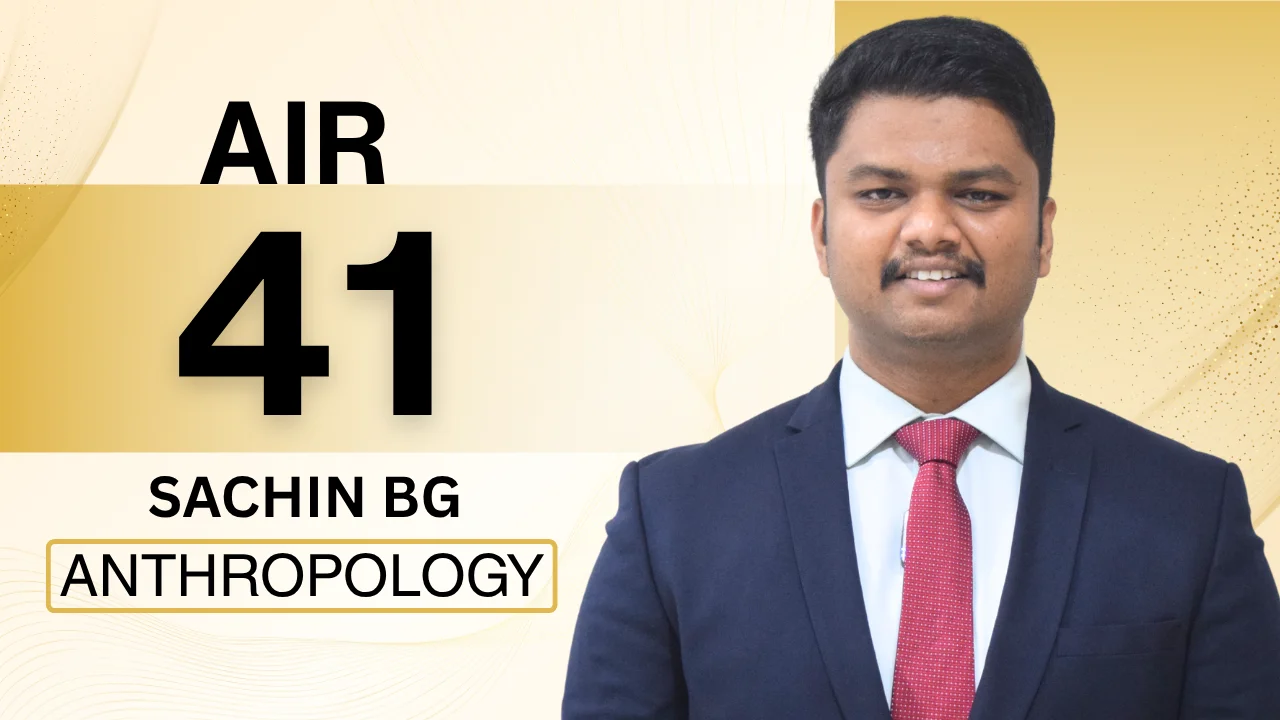
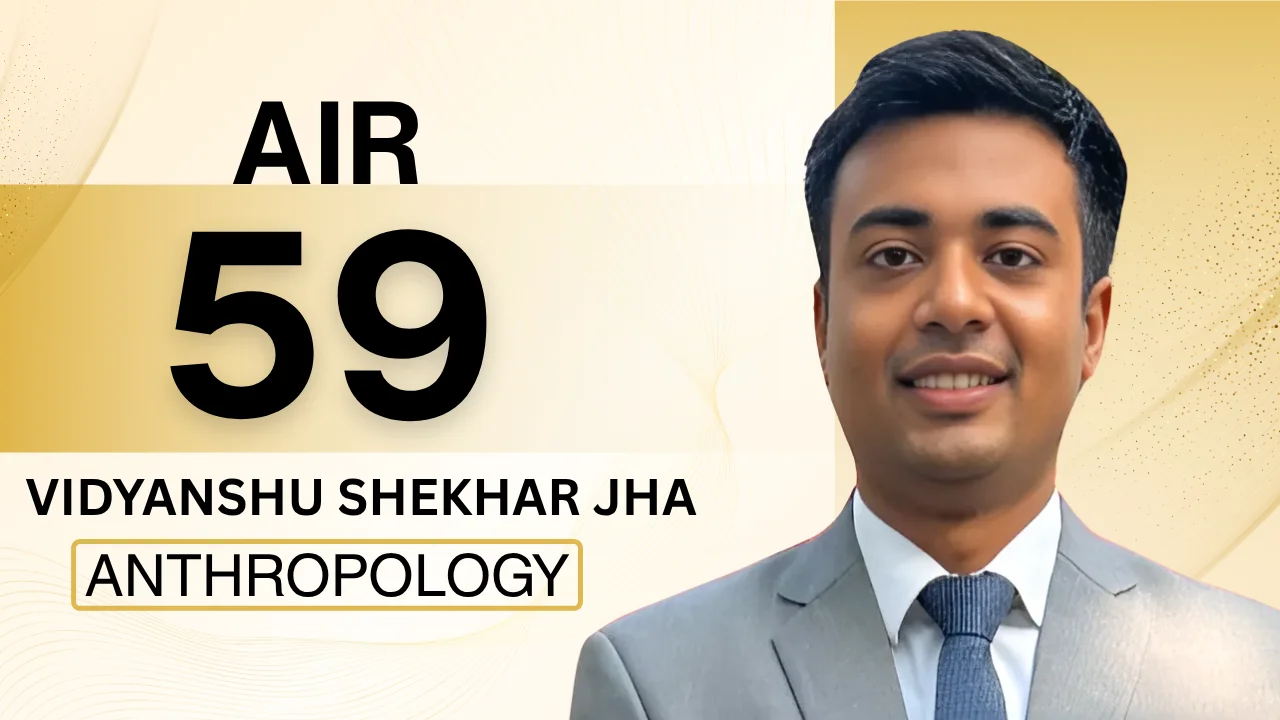
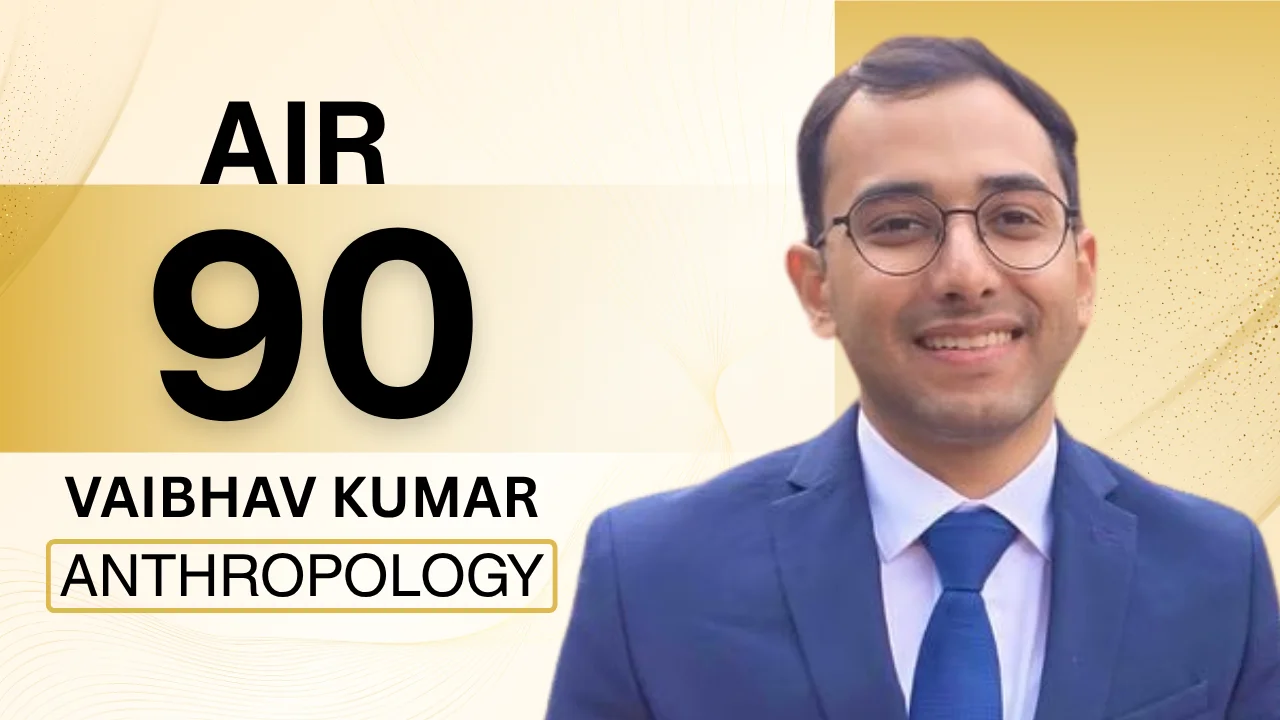
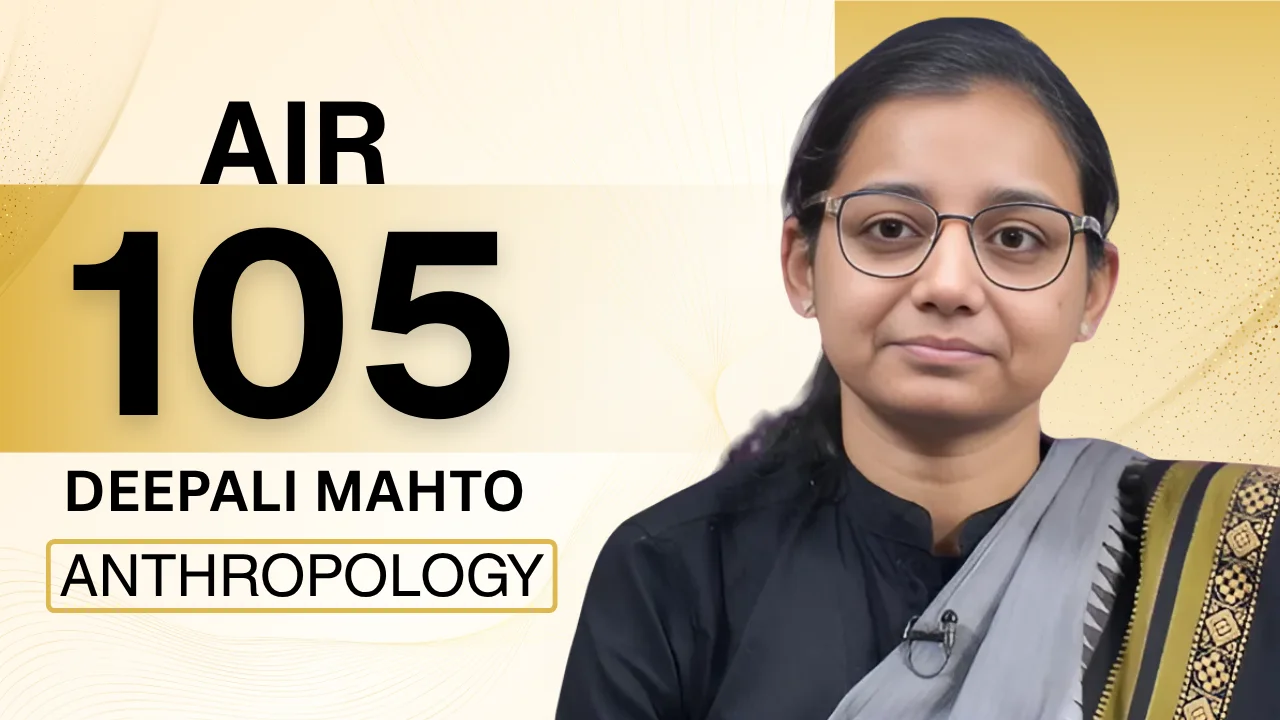
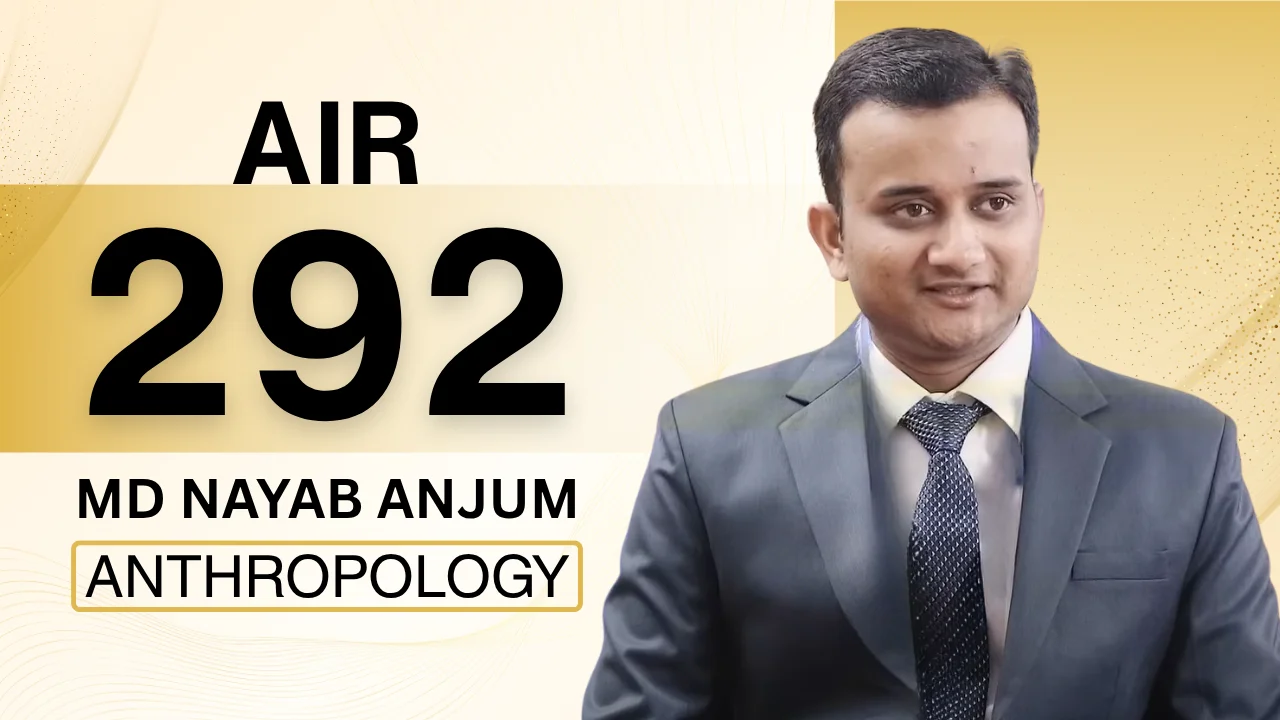
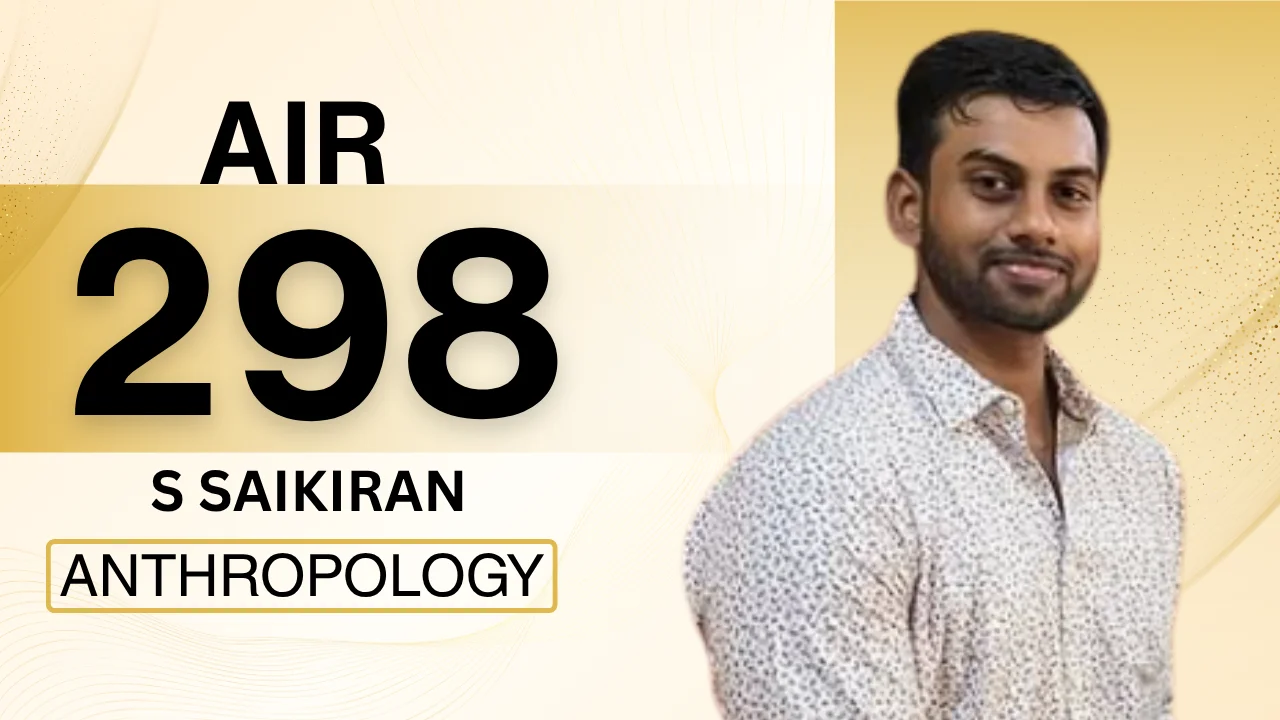
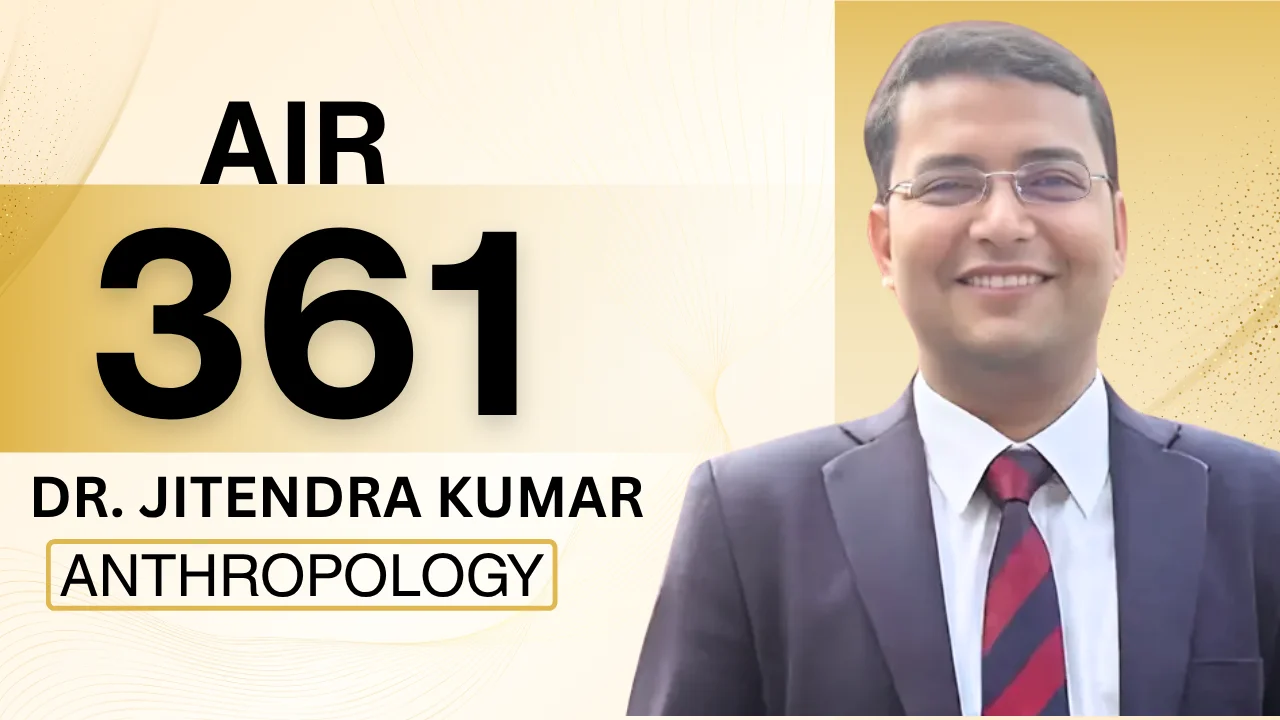
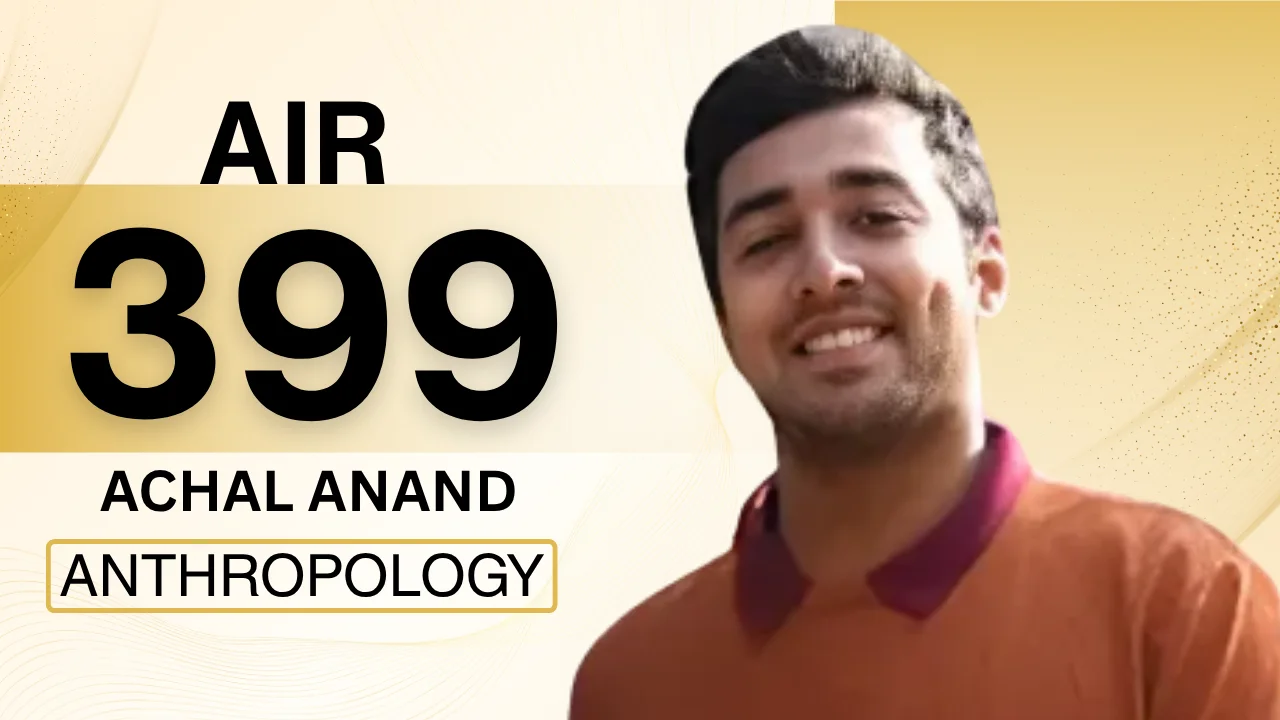
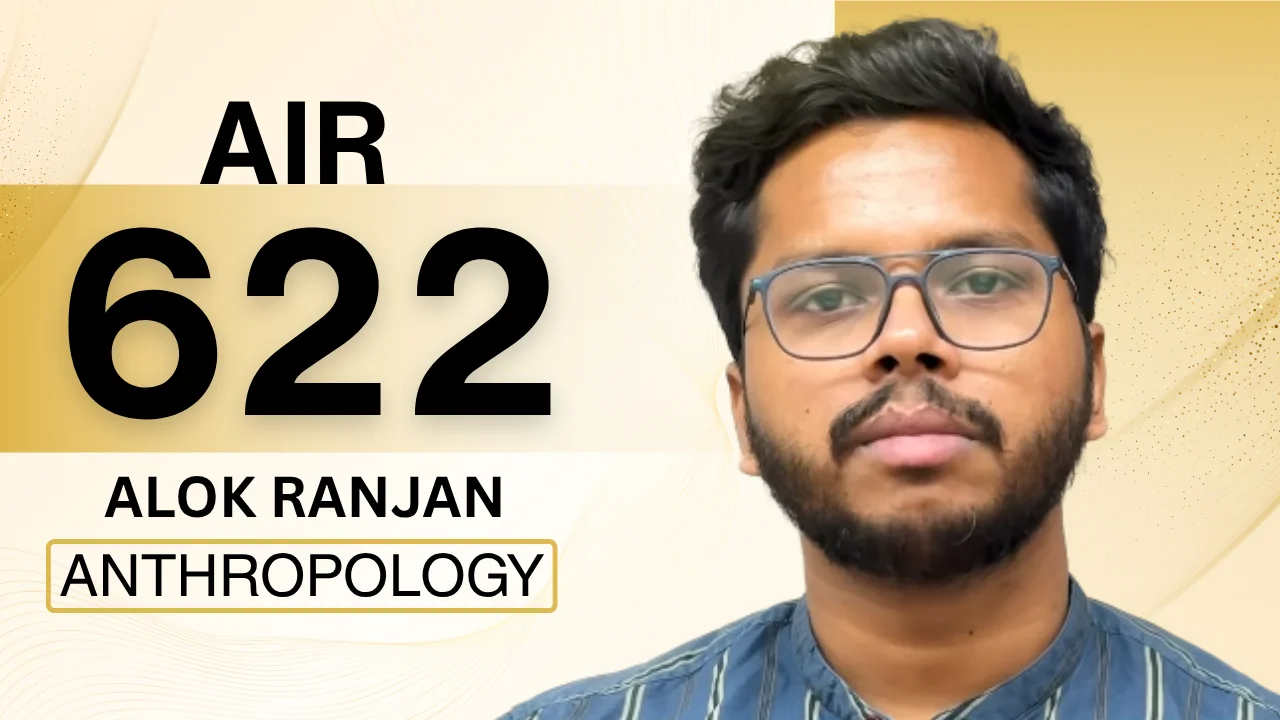
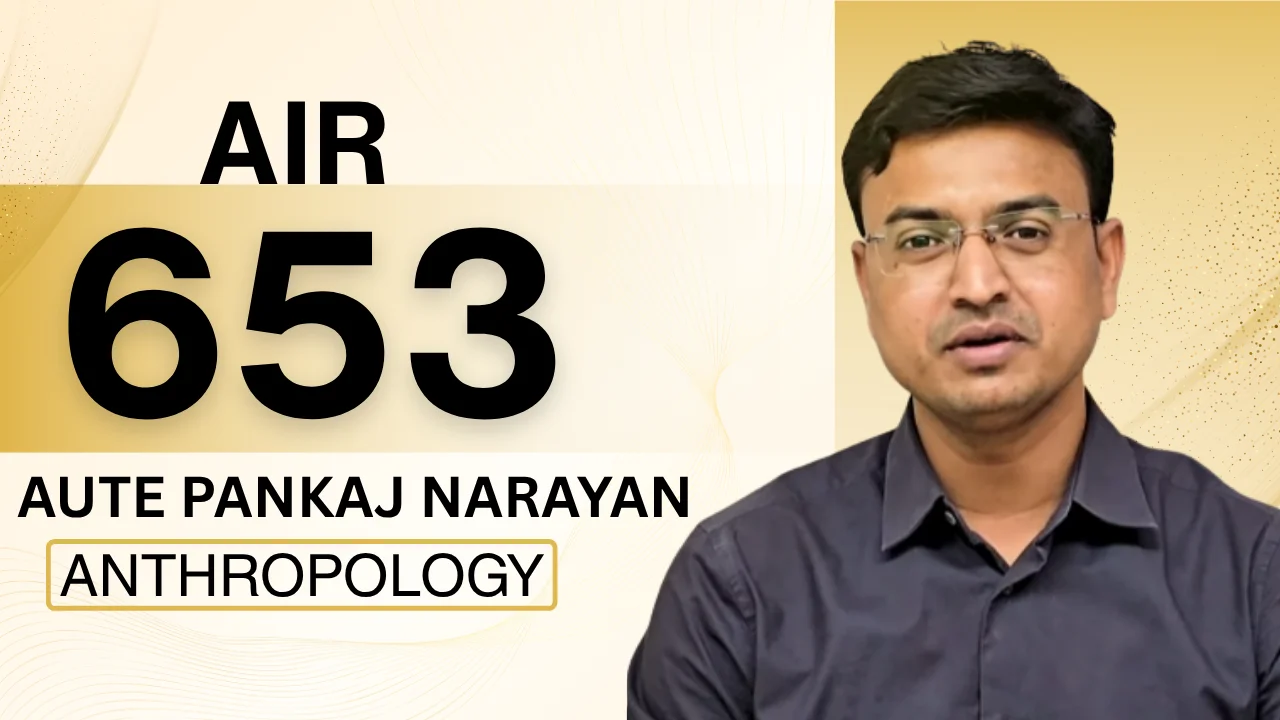
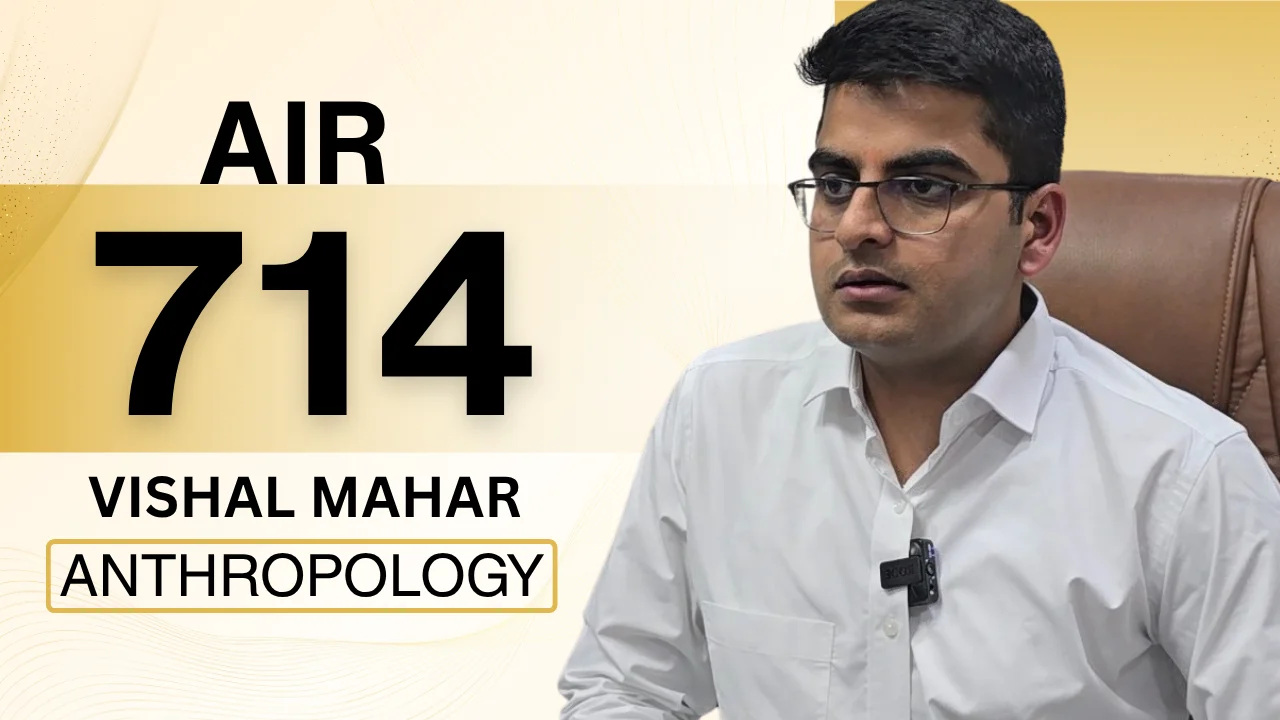
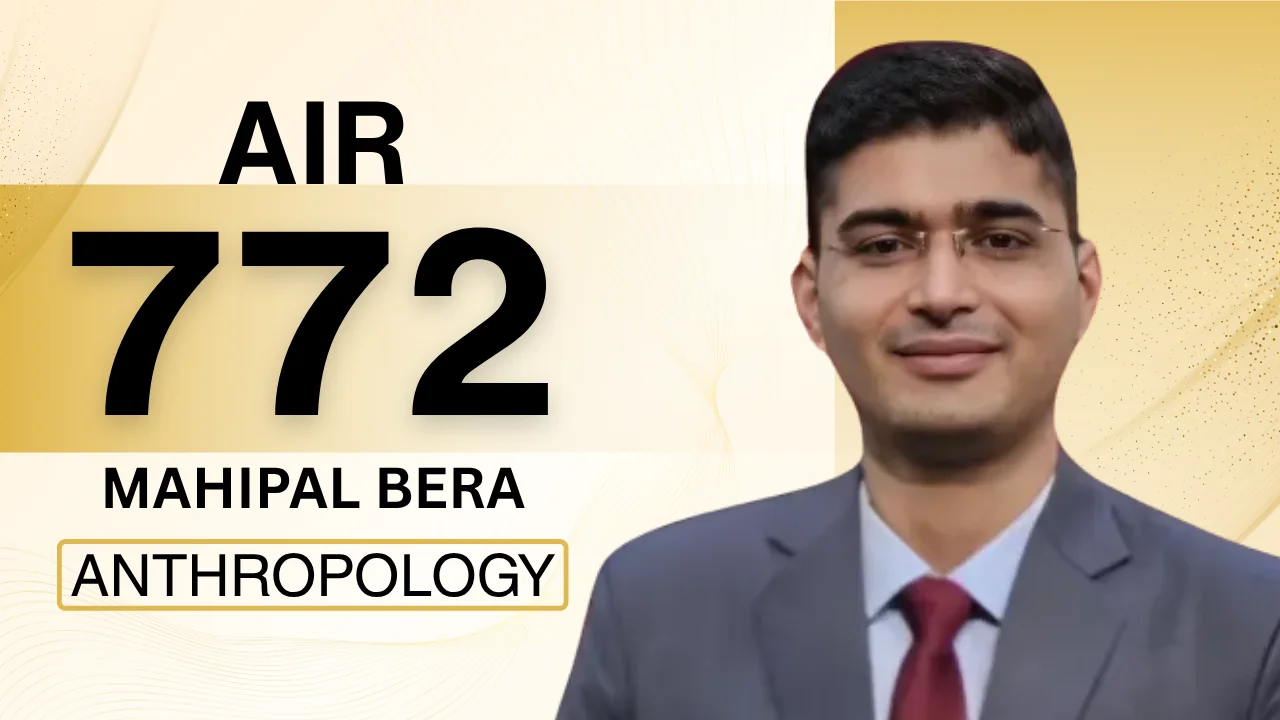
UPSC Topper's Videos























Compilation of the List of FAQs on Anthropology Optional
Yes, Anthropology is a scoring optional in UPSC. It has a balance of static and dynamic topics, science and humanities, facts and application. The subject is easy to understand, and many questions repeat year on year. This makes Anthropology a safe and reliable optional compared to others.
The Anthropology optional syllabus is short and well-defined. Unlike other optionals where topics spill over, here everything is clearly listed. Past year UPSC papers show frequent repetition of topics. That makes the syllabus easier to cover and revise quickly.
Yes. Anthropology can be completed in 6 months with classes, tests, and at least two revisions. This makes it one of the fastest to complete optional subjects.
No. Anthropology optional does not need any prior background. Many toppers have been from engineering, arts, and commerce backgrounds. The subject is general in nature and can be understood easily with the help of base knowledge that you have developed reading NCERTs in 9th and 10th standard, especially the biology part (remember the chapter, Heredity and Evolution?)
Yes, Anthropology is still a high-scoring optional in UPSC. On average, students score between 240–280 marks with decent preparation. Strong writing, relevant examples, and case studies help you cross over the line to 300s. While competition is intense, Anthropology continues to give an edge.
Keep your Anthropology booklist small. Standard books + class notes + PYQs are enough. From our end we suggest you go for Karandeep sir’s class notes and study material. Go through toppers copies available on our website. Don’t overload, stick to your base notes and revise them multiple times. Utilise the extra time in writing PYQs.
Self-study works if you’re disciplined, already have good notes, and can practice writing regularly. Coaching helps when you are starting fresh. The structured preparation helps you crack the code in time, and helps you work smarter rather than only harder.
Keep it simple. Start with class notes + handouts. Then, add PYQs, diagrams, and current examples. From our end we ask you to not get into collecting content. The class notes provided are enough. Any further reading can be done from the handouts which have content from all the major sources like basic texts, IGNOU, and epg-Pathshala.
Diagrams and flowcharts make your answer quick and clear. Case studies add depth. Even simple flowcharts can add dynamism to your monotonous answers.
PYQs are gold for Anthropology. Nearly 60–70% of questions are repeated in some form. Analyse them topic-wise, mark recurring themes, and practice writing those answers multiple times. This will help you prioritise what to study and what to skip. Refer to the booklet on our website.
Pick the most relevant current affairs areas—tribal policy, health, environment, governance. Collate data on FRA patta allocations, PESA, NHFS data, recent schemes, and committee reports. These would come in handy, especially in Paper 2. Even one current example per answer makes it stand out.
Keep a daily slot for optional, even during GS-heavy phases. For example, 3 hours Anthropology + 6 hours GS. At the beginning, give more time to optional, since it is a fairly new subject for you to study, later maintain a balance between both.