China’s Panda Diplomacy
Content
Introduction
‘Panda diplomacy’ refers to the People’s Republic of China’s long-standing practice of loaning giant pandas to foreign countries as a symbol of friendship and diplomatic goodwill. Giant pandas, found only in China and regarded as national treasures, have been used by successive Chinese governments to cultivate soft power across Asia, Europe, and the Americas. However, recent developments reveal that this once effective tool of soft power is facing limitations and unintended diplomatic backlash, especially amid heightened geopolitical tensions and rising nationalist sentiments.
Origins and Evolution of Panda Diplomacy
- The use of pandas in diplomacy dates back centuries, but modern panda diplomacy emerged in the 1970s, a period when China was seeking to mend and forge international relationships.
- In 1972, China gifted two pandas to the United States following President Richard Nixon’s historic visit, a gesture that helped symbolise a thaw in Sino-American relations. Shortly thereafter, pandas were also sent to Japan, France, and the United Kingdom.
- Initially, pandas were outright gifts reflecting China’s desire for recognition and partnership in the world. However, as panda populations in the wild declined and global conservation awareness increased, China shifted in 1984 to long-term loan agreements.
- Under this model, pandas were loaned to foreign zoos typically for 10-15 years, with host countries paying “conservation fees” in the range of up to US$1 million annually. These fees supported research and conservation initiatives in China and underscored the economic as well as diplomatic dimensions of these arrangements.
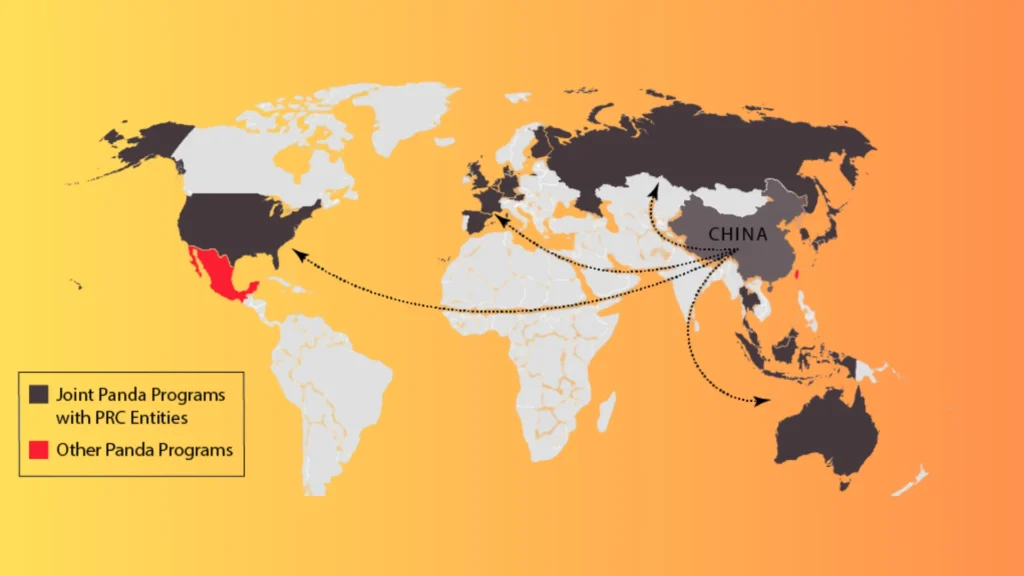
Over the decades, China’s panda diplomacy expanded widely; by 2019, about 21 countries and territories had pandas on loan. However, that number has since declined, with only around 16 nations currently engaged in panda host agreements.
Diplomatic Uses and Soft Power Appeal
Panda diplomacy has been prized for several characteristics:
- Symbol of Peace and Friendship: The giant panda’s gentle demeanour and universal appeal make it a powerful symbol of goodwill and cultural exchange. Many nations popularised their diplomatic ties with China through pandas, drawing large public interest and media coverage.
- Tourism and Cultural Attraction: Hosting pandas has historically boosted footfall in zoos, enhancing tourism and fostering public interest in both conservation and bilateral relations.
- Conservation Collaboration: Panda loans often include shared research and conservation programmes between Chinese and foreign zoological institutions, fostering scientific cooperation.
For decades, this unique brand of animal diplomacy helped soften perceptions of China abroad and provided a cultural counterbalance to broader geopolitical competition.
Emerging Challenges: Panda Diplomacy as a Liability
Despite its historical successes, panda diplomacy is increasingly being tested as a diplomatic tool, particularly in contexts where political relations are strained.
1. Nationalist Backlash and Political Sensitivities
A core challenge is national sentiment within China. The giant panda is not just a wildlife species but a national treasure, deeply embedded in Chinese cultural identity. Chinese public opinion can be intensely protective of pandas, viewing them as symbols of national pride. When pandas hosted abroad are perceived to be mistreated, or when diplomatic relations with host countries sour, public backlash can erupt.
For instance, when a panda died of natural causes at a zoo in the United States in 2023, photos of its companion appearing undernourished sparked speculation on Chinese social media about mistreatment. Some commentators framed it as a symbol of broader geopolitical tension or mismanagement, leading to public criticism of both the host institution and diplomatic partners.
2. Strained Relations with Host Countries
The recent recall of two pandas (Xiao Xiao and Lei Lei) from Japan ahead of schedule illustrates how panda diplomacy can be caught in the crosscurrents of diplomatic friction. Tensions between Tokyo and Beijing over regional security issues, including comments by Japanese leaders about military responses to possible conflicts involving Taiwan, prompted China to bring back its panda ambassadors early. The recall was widely interpreted not merely as a conservation move but as a diplomatic signal amid deteriorating bilateral ties.
Such actions risk turning pandas into pawns in political disputes rather than symbols of friendship. If pandas are perceived as leverage or tools of coercion, their appeal as soft power diminishes.
Giant Panda
- The giant panda (Ailuropoda melanoleuca) is endemic to mountainous forest ecosystems of China, mainly in Sichuan, Shaanxi, and Gansu.
- It inhabits temperate forests with dense bamboo, which forms the primary component of its diet.
- According to the International Union for Conservation of Nature Red List, the species is classified as Vulnerable.
- Major threats include habitat fragmentation, climate change affecting bamboo availability, and low reproductive rates.
- As an umbrella and flagship species, panda conservation supports broader forest ecosystem protection and biodiversity preservation.
Conclusion
China’s panda diplomacy has been an innovative and iconic form of soft power, rooted in cultural symbolism and historical precedence. It succeeded for decades in fostering engagement, goodwill, and cooperation across continents. Yet, in an era of politicised international relations and heightened nationalist scrutiny, its limitations are increasingly evident. The recent recall of pandas amid Sino-Japanese tensions and public reactions to animal welfare controversies demonstrate that panda diplomacy can no longer be relied upon as a universally effective diplomatic tool.
As China navigates its role on the global stage, the evolution of panda diplomacy from a celebrated symbol of friendship to a potentially fragile diplomatic instrument highlights the complexity of soft power in a world of competing interests and sensitivities.