Ancient History for UPSC: Complete Topic-wise Notes
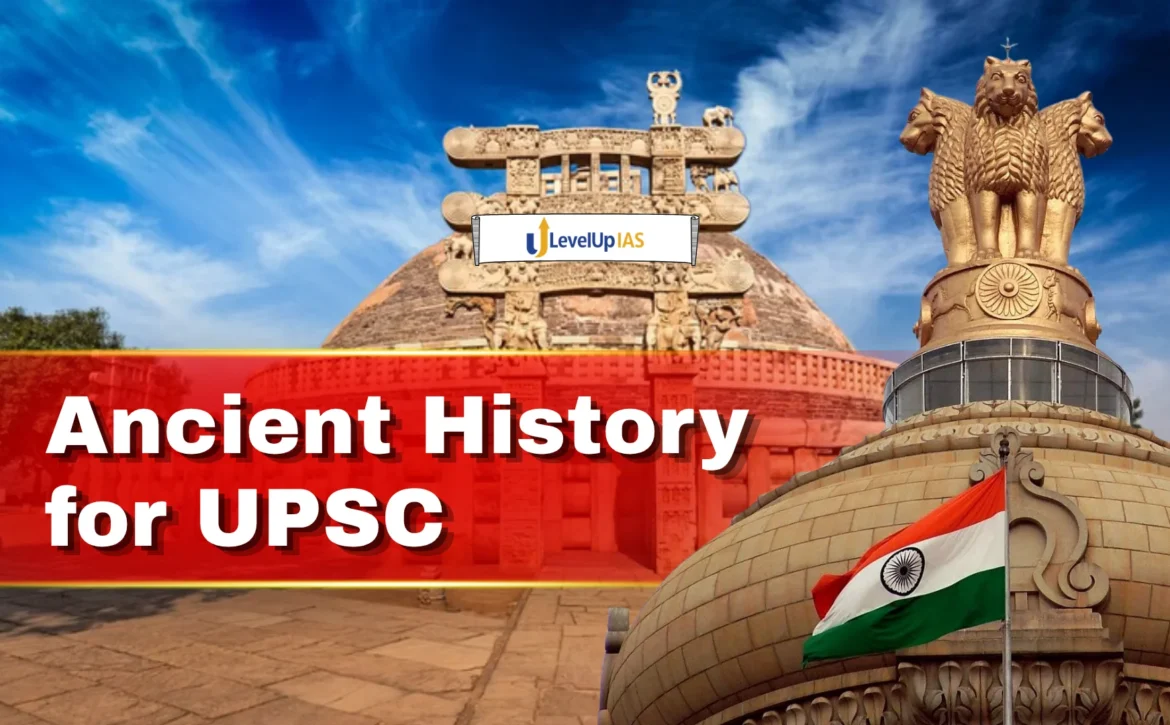
Ancient History forms a foundational component of the UPSC Civil Services Examination, covering the evolution of early human societies, the rise of civilizations, and the development of political, economic, and cultural institutions in India. From the prehistoric period to the Gupta Age and Sangam literature, this section is essential for building conceptual clarity for both Prelims and Mains.
Prehistoric Period
The prehistoric period marks the earliest phase of human existence, characterized by the use of stone tools and gradual cultural evolution.
Indus Valley Civilization
The Indus Valley Civilization represents one of the world’s earliest urban cultures, known for its advanced town planning, drainage systems, and trade networks.
Vedic Period
The Vedic period saw the transition from pastoral to agrarian society and laid the foundation of Indian social and religious institutions.
Mahajanapadas and Rise of States
This period marks the emergence of territorial states and the rise of powerful kingdoms, especially Magadha.
Religious Movements
The 6th century BCE witnessed the rise of heterodox sects that challenged Vedic traditions and reshaped Indian philosophy.
Mauryan Empire
The Mauryan Empire was the first major political unification of India, known for its centralized administration and Ashoka’s policy of Dhamma.
Post-Mauryan Period
This period witnessed the emergence of several regional powers and increased interaction with foreign cultures.
Gupta Period
The Gupta Age is often referred to as a classical age due to significant developments in science, art, literature, and administration.
Sangam Age
The Sangam Age provides insights into early South Indian society, polity, and culture through Tamil literature.
Art and Culture (Ancient, Medieval and Modern History)
Ancient India witnessed remarkable developments in architecture, sculpture, and religious monuments.
Visit LevelUp IAS- Click Here