
Mains Articles
Citizenship Provisions in the Constitution (Articles 5-11)
Content
- Introduction
- Meaning and Nature
- Constitutional Provisions
- Citizenship Act, 1955
- Modes of Acquiring Indian Citizenship
- Loss of Citizenship
- Overseas Citizenship of India (OCI)
- Conclusion
- FAQs
Introduction
Citizenship refers to the legal status through which a person is recognized as a member of a sovereign state. It establishes a legal relationship between the individual and the state and grants certain civil, political, and constitutional rights. In return, citizens owe allegiance and certain duties toward the nation.
In India, the Constitution provides for a single citizenship system, unlike countries such as the United States which follow dual citizenship. The provisions relating to citizenship are contained in Part II of the Constitution under Articles 5 to 11. These articles only dealt with citizenship at the commencement of the Constitution on 26 January 1950. The Constitution empowered Parliament to make laws regarding acquisition and termination of citizenship in the future, which led to the enactment of the Citizenship Act, 1955.
Meaning and Nature of Indian Citizenship
The Indian Constitution establishes a uniform and single citizenship for the entire country. Every citizen is only an Indian citizen and there is no separate state citizenship. This system promotes national unity and integration in a federal polity.
Citizens are full members of the Indian state and enjoy all civil and political rights provided under the Constitution. Non-citizens or aliens do not enjoy all these rights. Aliens may either be friendly aliens, belonging to countries having friendly relations with India, or enemy aliens, belonging to countries at war with India.
The Constitution does not explicitly define the term “citizenship,” but it identifies the persons who became citizens at the commencement of the Constitution.
Constitutional Provisions Relating to Citizenship
Article 5 – Citizenship at the Commencement of the Constitution
Article 5 lays down the conditions for citizenship at the commencement of the Constitution. A person became a citizen of India if he or she had a domicile in the territory of India and fulfilled any one of the following conditions: the person was born in India, either parent was born in India, or the person had been ordinarily residing in India for at least five years before 26 January 1950.
The concept of domicile was important because it reflected the intention of permanent residence in India.
Article 6 – Citizenship of Migrants from Pakistan
Article 6 dealt with persons who migrated from Pakistan to India during Partition. Those who migrated before 19 July 1948 became citizens automatically if they or their parents or grandparents were born in undivided India and they had ordinarily resided in India.
Persons migrating after 19 July 1948 were required to register themselves before becoming Indian citizens.
This provision recognized the humanitarian and political realities arising from Partition.
Article 7 – Citizenship of Persons Migrating to Pakistan
Article 7 denied citizenship to persons who migrated from India to Pakistan after 1 March 1947. However, if such persons later returned to India with a permit for resettlement or permanent return, they could become citizens under conditions laid down by law.
This provision was introduced to deal with complex migration issues arising during Partition.
Article 8 – Citizenship of Indians Residing Abroad
Article 8 granted citizenship rights to persons of Indian origin residing outside India. A person whose parents or grandparents were born in India could register as an Indian citizen through the Indian diplomatic or consular mission in that country.
This provision recognized the connection of the Indian diaspora with India.
Article 9 – Voluntary Acquisition of Foreign Citizenship
Article 9 states that a person voluntarily acquiring citizenship of another country shall cease to be an Indian citizen. India does not permit dual citizenship in the full constitutional sense.
Thus, acquisition of foreign nationality leads to termination of Indian citizenship.
Article 10 – Continuance of Citizenship Rights
Article 10 guarantees that every person recognized as a citizen under Articles 5 to 9 shall continue to remain a citizen subject to laws made by Parliament.
This ensured continuity and legal protection of citizenship rights.
Article 11 – Power of Parliament
Article 11 empowers Parliament to regulate citizenship matters through legislation. Under this power, Parliament enacted the Citizenship Act, 1955, which governs acquisition, termination, and other matters related to citizenship.
This article gives flexibility to the Indian state to adapt citizenship laws according to changing circumstances.
Citizenship Act, 1955
The Citizenship Act, 1955 was enacted by the Parliament under the powers provided by Article 11 of the Constitution. While Articles 5 to 11 only dealt with citizenship at the commencement of the Constitution, the Citizenship Act provides detailed provisions regarding the acquisition, determination, and termination of Indian citizenship after 26 January 1950.
The Act lays down the legal framework for acquiring citizenship through birth, descent, registration, naturalization, and incorporation of territory. It also specifies the conditions under which Indian citizenship can be lost through renunciation, termination, or deprivation.
Over time, the Act has been amended several times to address changing political, demographic, and security concerns. Major amendments were made in 1986, 1992, 2003, 2005, 2015, and 2019.
The 1986 amendment restricted citizenship by birth to curb illegal migration. The 2003 amendment introduced the concept of illegal migrants and provided for the National Register of Citizens (NRC) and Overseas Citizenship of India (OCI). The 2005 amendment formally introduced OCI provisions to strengthen India’s connection with the Indian diaspora.
One of the most debated amendments was the Citizenship (Amendment) Act, 2019 (CAA). It provided a fast-track route to Indian citizenship for Hindu, Sikh, Buddhist, Jain, Parsi, and Christian migrants from Pakistan, Afghanistan, and Bangladesh who entered India before 31 December 2014 after facing religious persecution.
The Citizenship Act, 1955 remains the principal law governing citizenship matters in India and plays an important role in issues related to migration, national identity, constitutional rights, and internal security.
Modes of Acquiring Indian Citizenship
| Mode of Acquisition | Provision | Key Conditions / Features |
| By Birth | Citizenship by birth is granted to a person born in India if both parents are Indian citizens, or if one parent is an Indian citizen and the other is not an illegal migrant. | The rules have been amended over time to prevent illegal migrants from automatically obtaining citizenship. |
| By Descent | A person born outside India can acquire Indian citizenship if either parent is an Indian citizen. | The birth must generally be registered at an Indian Mission or Consulate within one year of birth. After one year, permission from the Ministry of Home Affairs (MHA) is required. |
| By Registration | Certain categories of people can acquire citizenship through registration. | Includes persons of Indian origin residing in India for 7 years, spouses of Indian citizens, and OCI cardholders fulfilling prescribed conditions. |
| By Naturalization | A foreigner may acquire Indian citizenship after fulfilling conditions laid down in the Third Schedule of the Citizenship Act, 1955. | Conditions include residence in India for a specified period, good character, and knowledge of a language listed in the Eighth Schedule. Citizenship is granted by the Central Government. |
| By Incorporation of Territory | When a new territory becomes part of India, the Government of India specifies who among the residents will become Indian citizens. | Citizenship is granted from the date notified by the Central Government. Example: Integration of Goa, Puducherry, and Sikkim into India. |
| Special Provision under Assam Accord | Special provisions were introduced through the Citizenship (Amendment) Act, 1985 for migrants in Assam. | Persons who came to Assam before 1 January 1966 were recognized as citizens, while those arriving between 1 January 1966 and 25 March 1971 had to register themselves. |
Loss of Citizenship
The Citizenship Act, 1955 provides three methods through which Indian citizenship may be lost.
Renunciation
An Indian citizen may voluntarily renounce citizenship through a formal declaration. Minor children of such persons also lose citizenship but may resume it upon attaining adulthood.
Termination
Indian citizenship automatically terminates when a person voluntarily acquires citizenship of another country. This provision is not applicable during times of war.
Deprivation
The Central Government may deprive a person of citizenship acquired through registration or naturalization under conditions such as fraud, disloyalty to the Constitution, unlawful trade with enemy countries during war, or imprisonment.
Overseas Citizenship of India (OCI)
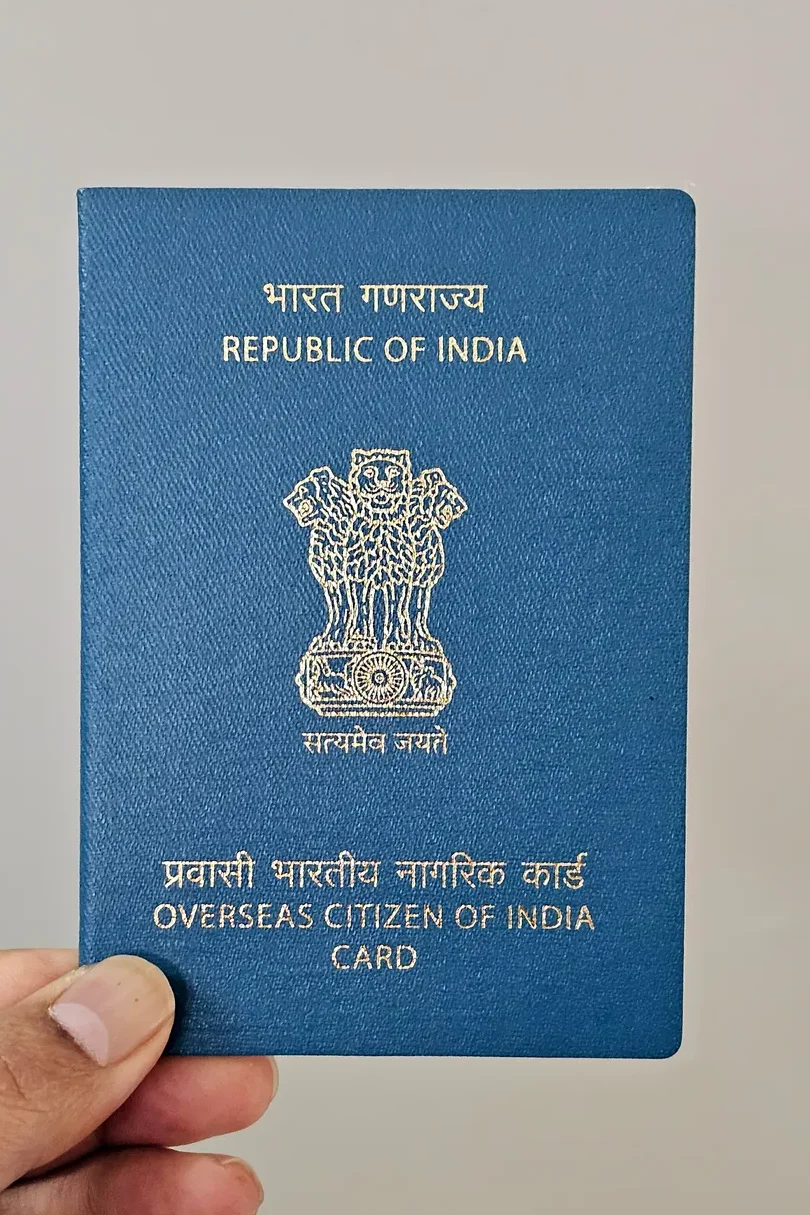
Overseas Citizenship of India (OCI) is a special immigration status provided by the Government of India to persons of Indian origin and their spouses, allowing them to live and work in India indefinitely. However, OCI is not equivalent to dual citizenship because the Indian Constitution permits only single citizenship.
- OCI cardholders enjoy multiple benefits such as a lifelong multiple-entry visa to India, exemption from police registration for long-term stay, and parity with NRIs in areas like education, financial matters, and economic activities, thereby strengthening India’s connection with its global diaspora.
- Despite these benefits, OCI holders do not enjoy political rights in India. They cannot vote in elections, contest elections, hold constitutional offices such as President or Vice-President, or purchase agricultural and plantation land in the country.
- The Citizenship Act also provides for renunciation of OCI status, under which an OCI holder of full age and capacity may voluntarily surrender the status through a formal declaration, and in such cases the OCI status of minor children linked to that person also ceases.
- The Central Government possesses the power to cancel OCI registration if it was obtained through fraud or concealment of facts, if the person shows disaffection towards the Constitution of India, or if the individual acts against the sovereignty, integrity, and security interests of India during times of conflict or war.
- An NRI (Non-Resident Indian) refers to an Indian citizen residing abroad for employment, business, education, or other purposes while continuing to retain Indian citizenship, whereas a PIO (Person of Indian Origin) refers to a foreign citizen who either previously held Indian citizenship or whose ancestors were Indian nationals.
Conclusion
The citizenship provisions under Articles 5 to 11 form the constitutional foundation of membership in the Indian state. They addressed the immediate challenges arising from Partition while providing flexibility to Parliament to regulate citizenship in the future. Through the Citizenship Act, 1955 and subsequent amendments, India has continuously adapted its citizenship framework to changing political, demographic, and security concerns. Citizenship remains closely linked with constitutional rights, national identity, and democratic participation in India.
FAQs
Q1. Which Articles of the Constitution deal with citizenship?
Citizenship provisions are covered under Articles 5 to 11 in Part II of the Constitution of India.
Q2. What does Article 5 provide?
Article 5 grants citizenship to persons who had domicile in India at the commencement of the Constitution and fulfilled specified conditions related to birth, parentage, or residence.
Q3. What is the significance of Articles 6 and 7?
Article 6 deals with citizenship rights of persons migrating from Pakistan to India.
Article 7 concerns persons who migrated to Pakistan but later returned to India.
Q4. What does Article 8 provide?
Article 8 grants citizenship rights to persons of Indian origin residing abroad if they register with Indian diplomatic missions.
Q5. What is mentioned in Articles 9 and 10?
Article 9 states that voluntary acquisition of foreign citizenship leads to loss of Indian citizenship.
Article 10 guarantees continuity of citizenship subject to parliamentary law.
Click on the question to see the Answers
Visit LevelUp IAS- Click Here
Related reads.
How to Read NCERTs for UPSC: Subject-Wise Strategy & Notes Making
22 Jun 2026 10 min
PSIR Topper's Answer Copies
22 Jun 2026 1 min
Sociology Optional PYQs (2009-2024)
22 Jun 2026 1 min
Philosophy Optional PYQs
22 Jun 2026 1 min
PSIR Optional PYQs
22 Jun 2026 1 min
History Optional PYQs (2009-2025) – Free PDF & Video
22 Jun 2026 1 min
Put it into practice
Reading is step one.
Turn what you've just read into exam-ready answers with mentor-led practice and our structured test series.