India-France Special Global Strategic Partnership

Content
- Why in News
- Evolution of India-France Relations
- Special Global Strategic Partnership
- Key Areas of Cooperation
- Strategic Goals and Global Cooperation
- Strategic Significance for India
- Challenges
Why in News
India and France have recently elevated their bilateral relationship to a Special Global Strategic Partnership amid evolving global strategic dynamics, technological change, and the need for resilient cooperation in economic, defence, technological, and geopolitical arenas. This enhancement builds on decades of growing ties and reflects a shared commitment to strategic autonomy, multipolarity, and global stability.
Historical Evolution of India-France Relations
- Diplomatic ties between India and France were established shortly after India’s independence. Over the decades, bilateral relations transformed from traditional political and diplomatic engagement into a strategic partnership anchored in mutual respect for sovereign decision-making, shared interests in global security, and a commitment to multipolar international order.
- In 1998, India and France formalised their Strategic Partnership, marking the beginning of a deeper co-operative framework that spanned defence, civil nuclear energy, space, and high-technology cooperation. France was among the few Western nations that did not criticise India’s nuclear tests in 1998 and continued to support India’s interests in multilateral forums.
- Over the years, collaboration expanded across multiple domains, with significant agreements such as the International Solar Alliance (ISA) co-founding, regular joint military exercises, and cooperation in space exploration and civilian nuclear projects.
What is the “Special Global Strategic Partnership”?
The new designation as a Special Global Strategic Partnership signifies an upgrade from the earlier strategic partnership, reflecting a broader, deeper, and more future-oriented collaboration across multiple sectors beyond traditional defence and security cooperation.
The elevated partnership emphasises not only defence and security but also innovation, digital technologies (including artificial intelligence), critical minerals, space cooperation, clean energy, economic resilience, people-to-people mobility, and global governance.
Key Areas of Cooperation
1. Defence and Security Cooperation
At the heart of the India-France partnership has long been defence cooperation. France is one of India’s most trusted military partners, contributing significantly to India’s modernisation of defence capabilities.
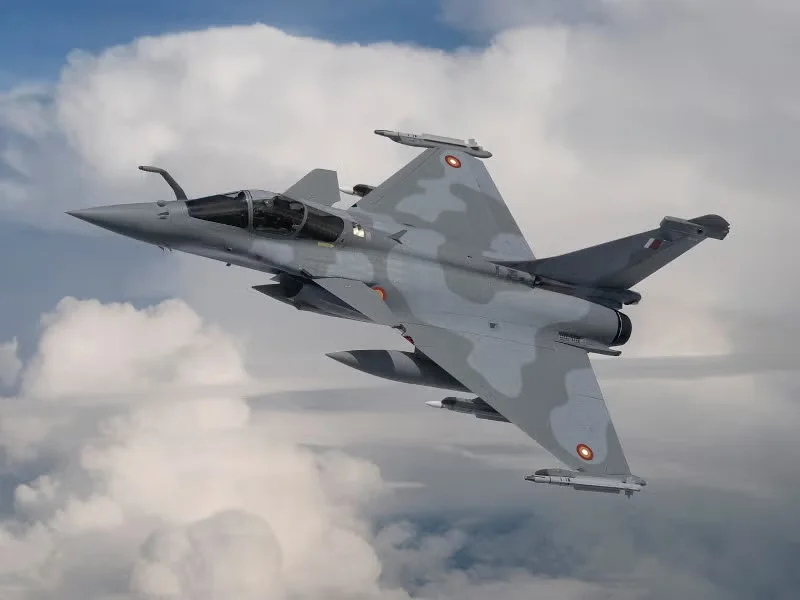
- India continues to procure and co-develop advanced platforms such as the Rafale fighter jets (including naval and marine variants), with recent agreements expanding orders and exploring co-production in India.
- The two countries inaugurated an H125 helicopter final assembly line in Karnataka, marking a step toward deeper defence industrial collaboration.
- A joint venture between Indian and French companies to manufacture HAMMER precision guided missiles in India demonstrates deeper technological integration and contributions to India’s defence industrial base.
- The renewal of the defence cooperation pact for another decade highlights long-term commitment to reciprocal deployment, joint training, and operational interoperability.
This collaboration is framed by shared strategic interests in the Indo-Pacific, maritime security, and countering destabilising influences in the region.
2. Technology, Innovation and AI
The Special Global Strategic Partnership places a renewed emphasis on joint technological development and innovation. In 2026, the two nations marked the Year of Innovation and launched initiatives like the India-France Innovation Network and joint research centres, including an Indo-French Centre for Digital Sciences and Technology and an Indo-French AI in Health hub at AIIMS, New Delhi.
These structures aim to accelerate collaboration in emerging areas such as artificial intelligence, digital health, advanced materials, sustainable technologies, and startup ecosystems.
3. Critical Minerals, Clean Energy and Nuclear Cooperation
Ensuring secure and diversified supply chains for critical minerals and metals is crucial for emerging technologies, green energy transitions, and manufacturing. India and France have agreed to deepen cooperation in this area, supporting mineral resilience and economic competitiveness.
Energy cooperation also extends to nuclear energy. France’s expertise in nuclear technologies complements India’s goal of expanding its nuclear capacity, including efforts in Small Modular Reactors (SMRs) and advanced nuclear solutions.
4. Space Collaboration
Space cooperation remains an important dimension of bilateral relations, involving satellite technology, launch services, climate monitoring, and space situational awareness. The partnership supports sovereign capabilities in space that are critical for national security and scientific research.
5. Trade, Economic and Investment Relations
Economic ties have strengthened steadily, with bilateral trade exceeding significant thresholds and both nations making strides in industrial collaboration, clean technology, and innovation. Amendments to the Double Tax Avoidance Agreement (DTAA) aim to facilitate more fluid economic engagement.
French companies have substantial investments in India across sectors such as aviation, automotive, energy, and financial services, while Indian firms are increasingly investing in France, bolstering mutual economic opportunities.
6. People-to-People Mobility and Education
Recognising the importance of human capital and mobility, India and France have introduced initiatives aimed at facilitating student mobility, including plans to increase the number of Indian students in France to 30,000 by 2030 and streamline visa procedures. Indo-French academic collaboration, particularly in research and technology, strengthens educational and cultural ties.
Shared Strategic Goals and Global Cooperation
The India-France partnership extends beyond bilateral concerns into global strategic and governance arenas:
- Both nations emphasise strategic autonomy and resist bloc politics, supporting multipolar global order.
- They work together on global climate action and sustainability, including leadership roles in the International Solar Alliance (ISA) and clean energy initiatives.
- France supports India’s aspirations for greater roles in global governance mechanisms, including backing for India’s bids in multilateral groups like the Nuclear Suppliers Group and potentially the United Nations Security Council.
- The partnership also aligns on stable Indo-Pacific frameworks and respects a rules-based maritime order.
Strategic Significance for India
1. Geopolitical and Security Imperatives
In a fluid global security environment marked by rivalry among great powers, the India-France partnership provides strategic depth in defence, intelligence cooperation, and technology sharing. France’s presence in the Indo-Pacific through Réunion, New Caledonia, and other territories reinforces India’s security outlook in the Indian Ocean region.
2. Defence Industrial Ecosystem and Atmanirbhar Bharat
The partnership supports India’s Atmanirbhar Bharat vision by facilitating co-development and co-production of defence systems, reducing reliance on imports, and fostering domestic manufacturing and technological capability.
3. Technology and Innovation Leadership
Enhanced cooperation in AI, digital sciences, space, and smart health technologies positions India advantageously in the global technology landscape. Joint innovation efforts foster research synergies, talent exchange, and knowledge creation.
4. Economic Resilience and Sustainable Development
Economic collaboration in critical minerals, clean energy, and industrial partnerships contributes to resilience against supply chain disruptions and supports India’s climate goals and sustainable growth aspirations.
Challenges and Considerations
Despite strong partnership foundations, certain challenges persist:
- Global Strategic Competition: Aligning priorities in a multipolar world while managing relations with other major powers requires diplomatic agility.
- Economic and Regulatory Barriers: Aligning regulatory environments and ensuring ease of doing business remain areas to address for deeper economic ties.
- Technological and Security Safeguards: Balancing technology transfer with safeguarding sensitive capabilities necessitates robust governance mechanisms.
Future Prospects
The India-France Special Global Strategic Partnership sets the stage for long-term collaboration aligned with Horizon 2047, a roadmap to celebrate 100 years of India’s independence through shared prosperity, innovation, and security cooperation.
Continued evolution of this partnership can strengthen global governance frameworks, promote sustainable development, and foster inclusive growth across sectors.
Conclusion
The India-France Special Global Strategic Partnership exemplifies a multi-dimensional and future-ready relationship that extends well beyond traditional diplomatic ties. It reflects a bilateral vision that is strategically autonomous, technologically forward, economically resilient, and globally responsible.