Peasant Tribal Movements In Colonial India
Content
- Introduction
- Causes of Movements
- Peasant Movements
- Tribal Movements
- Comparative Understanding
- Role in the Freedom Struggle
- Limitations
- FAQs
Introduction
Peasant and tribal movements formed a crucial dimension of India’s resistance to colonial rule. While mainstream nationalist politics developed gradually in urban centres, agrarian and forest-based communities launched early and sustained protests against exploitative land revenue systems, colonial forest laws, and socio-economic disruption. These movements were often localised but collectively they reflected deep structural discontent against colonial economic policies.
For UPSC preparation, they are significant not only as episodes of resistance but also as indicators of colonial transformation of rural society.
Causes of Peasant and Tribal Movements in Colonial India
- Economic exploitation formed the core trigger: behind most peasant and tribal uprisings during colonial rule. The British introduced new land revenue systems that demanded high and inflexible taxes. Revenue had to be paid even during crop failure, which pushed peasants into chronic debt. Many cultivators lost their land and became tenants or labourers, creating widespread agrarian distress.
- Commercialisation of agriculture intensified rural vulnerability: Colonial policies promoted cash crops such as indigo, cotton, and opium to serve British industrial interests. Peasants were often forced into contract farming and became dependent on fluctuating market prices. When profits declined, the burden fell entirely on cultivators, leading to organised resistance.
- Oppression by intermediaries further aggravated grievances: Zamindars, revenue collectors, and moneylenders exploited peasants through high rents and excessive interest rates. Legal protection often favoured these groups, while peasants lacked institutional support. Economic injustice gradually transformed into collective protest.
- For tribal communities, loss of land and forest rights was the central cause: Colonial forest laws restricted shifting cultivation, hunting, and access to forest produce. Tribal groups were displaced from traditional habitats and subjected to forced labour and administrative control. These policies threatened both livelihood and cultural identity, prompting revolts.
- Administrative and legal changes also contributed significantly: The replacement of customary systems with formal colonial laws disrupted traditional community structures. Courts and revenue institutions remained inaccessible to rural populations, deepening the sense of injustice.
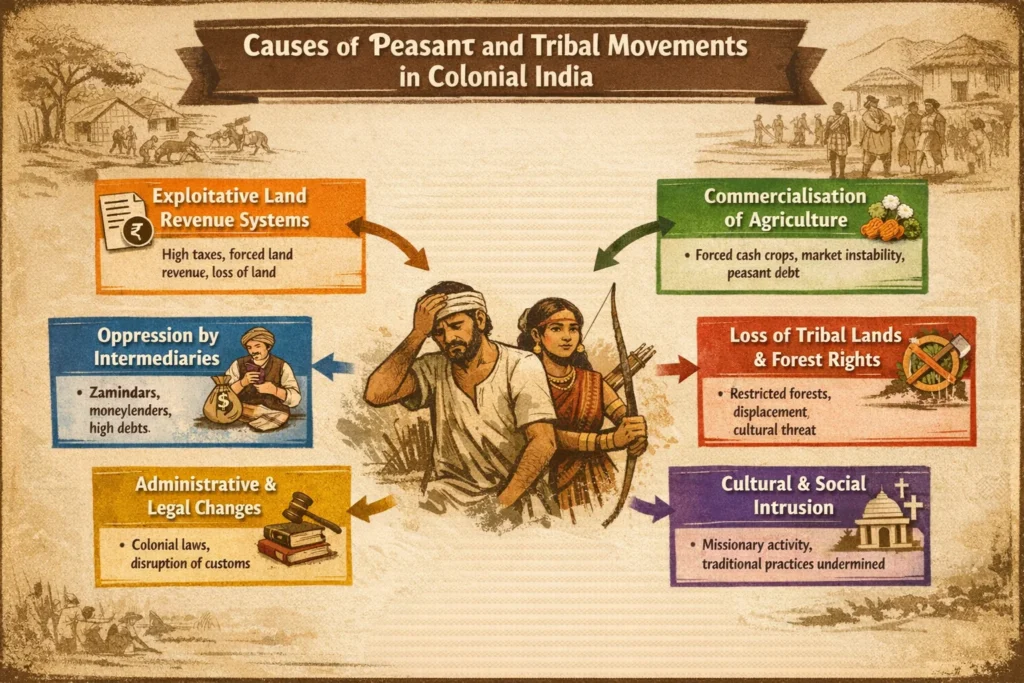
Overall, peasant movements largely emerged from agrarian exploitation, whereas tribal uprisings were driven by both economic dispossession and cultural intrusion. These movements represented resistance against colonial restructuring of rural society.
Nature and Characteristics
- Peasant uprisings were primarily directed against excessive land revenue, illegal cesses, and oppressive landlord practices.
- Many revolts demanded restoration of traditional rights rather than revolutionary transformation.
- They were usually local, spontaneous, and led by traditional leaders or religious figures. However, they contributed significantly to the evolution of anti-colonial consciousness.
Major Peasant Movements
- Indigo Revolt (1859-60) in Bengal emerged against forced indigo cultivation under exploitative European planters. Peasants refused cultivation, organised mass protests, and used legal petitions to resist oppression. The movement demonstrated organised rural resistance and forced colonial authorities to regulate indigo cultivation practices.
- Deccan Riots (1875) in western India reflected agrarian distress caused by indebtedness and moneylender exploitation. Peasants attacked moneylenders’ records and demanded relief from debt burdens. The colonial government responded with the Deccan Agriculturists Relief Act, showing how agrarian unrest shaped policy response.
- Champaran Movement (1917) marked a transition toward nationalist leadership engagement with peasant issues when Mahatma Gandhi intervened against forced indigo cultivation. It linked agrarian grievances with broader anti-colonial mobilisation.
Tribal Movements
Features
Tribal resistance differed from peasant movements in both motivation and structure. Tribal revolts often aimed to restore traditional autonomy and resist external intrusion rather than negotiate reforms within colonial systems. Their movements were deeply connected with cultural identity, sacred geography, and community governance.
Colonial forest policies transformed self-sufficient tribal economies into marginalised labour systems. Displacement, forced labour, and loss of forest rights triggered repeated uprisings across central and eastern India.
Major Tribal Movements
- Santhal Rebellion (1855-56) in present-day Jharkhand and Bengal Presidency was one of the largest tribal uprisings against moneylenders, zamindars, and colonial administration. It represented organised armed resistance rooted in defence of land and identity.
- Munda Ulgulan (1899-1900) led by Birsa Munda challenged colonial land policies and missionary influence. The movement demanded restoration of tribal land rights and social reform within the community. It resulted in legislative recognition of tribal land protection in the Chotanagpur region.
- Rampa Rebellion (1922–24) led by Alluri Sitarama Raju in the Madras Presidency emerged against forest restrictions and forced labour practices. It demonstrated guerrilla resistance against colonial authority in forest regions.
Comparative Understanding of Peasant and Tribal Movements
Before analysing their historical impact, it is useful to compare their structural features.
| Aspect | Peasant Movements | Tribal Movements |
| Primary Cause | Revenue burden, landlord exploitation, debt | Forest laws, land alienation, cultural intrusion |
| Social Structure | Agrarian cultivators integrated into revenue system | Autonomous communities outside mainstream agrarian hierarchy |
| Leadership Pattern | Local leaders, sometimes nationalist intervention | Charismatic tribal leaders with religious authority |
| Nature of Demands | Economic relief, policy reform | Restoration of autonomy and traditional rights |
| Historical Impact | Influenced agrarian policy and nationalist mobilisation | Led to protective legislation and recognition of tribal identity |
This comparison highlights that while both were anti-colonial in effect, their motivations and ideological foundations differed significantly.
Role in the Freedom Struggle
Peasant and tribal movements expanded the social base of resistance against colonial rule.
- They demonstrated that opposition to British authority was not confined to educated elites.
- These struggles exposed the exploitative character of colonial economic policy and contributed to nationalist discourse on justice and rights.
- Nationalist leaders later integrated agrarian grievances into political mobilisation strategies.
- The emergence of mass movements in the twentieth century drew strength from earlier rural resistance traditions.
Limitations of These Movements
Despite their significance, most movements remained localised and lacked sustained organisational structure. Absence of coordination across regions limited their transformative potential. Many revolts were suppressed through military force, administrative concessions, or legal regulation. Their objectives often focused on immediate grievances rather than systemic political change.
However, these limitations should be viewed in context. They represented early expressions of resistance within structurally unequal colonial conditions.
Conclusion
Peasant and tribal movements constituted a foundational layer of India’s anti-colonial resistance. Though often fragmented and region-specific, they collectively challenged the economic and administrative foundations of colonial rule. Their struggles revealed the deep social impact of imperial policies and broadened the base of India’s freedom movement. Understanding these movements enables a deeper appreciation of how resistance emerged not only in political institutions but also in fields, forests, and village communities across India.
FAQs
Q1. What were peasant and tribal movements in colonial India?
They were organised or spontaneous uprisings by peasants and tribal communities against oppressive land revenue systems, moneylenders, landlords, and colonial policies imposed by the British East India Company and later the British administration.
Q2. What were the major causes of peasant revolts?
High land revenue demands, exploitation by zamindars and moneylenders, commercialisation of agriculture, and economic distress led to widespread agrarian unrest.
Q3. Why did tribal communities launch rebellions?
Tribal revolts emerged due to forest laws, displacement from traditional lands, forced labour, and disruption of their customary socio-economic systems.
Q4. What are some important examples of these movements?
Major uprisings included the Santhal Rebellion, Indigo Revolt, and Munda Rebellion led by Birsa Munda.
Q5. What was the significance of these movements?
They exposed the exploitative nature of colonial agrarian policies and laid the groundwork for broader anti-colonial mobilisation in India.
Click on the question to see the Answers