Western Disturbances and Winter Rain in North India
Content
- Latest News
- What is a Western Disturbance?
- Mechanism of Winter Precipitation
- Impact on Weather and Climate
- Significance for Agriculture
- Other Socio‑Economic Impacts
- Conclusion
Latest News
Northern India currently experienced spells of winter rain, especially in regions such as Punjab, Haryana, Delhi, Rajasthan, Himachal Pradesh and Uttarakhand. These weather patterns have been attributed to a series of active Western Disturbances, which have influenced temperatures, brought occasional rain in the plains and enhanced snowfall in the Himalayas.
The disturbances have also led to dense fog and cold wave conditions across the northwestern plains.
What is a Western Disturbance?
- A Western Disturbance (WD) is an extra‑tropical cyclone, a low‑pressure weather system that originates over the Mediterranean region due to mid‑latitude atmospheric dynamics.
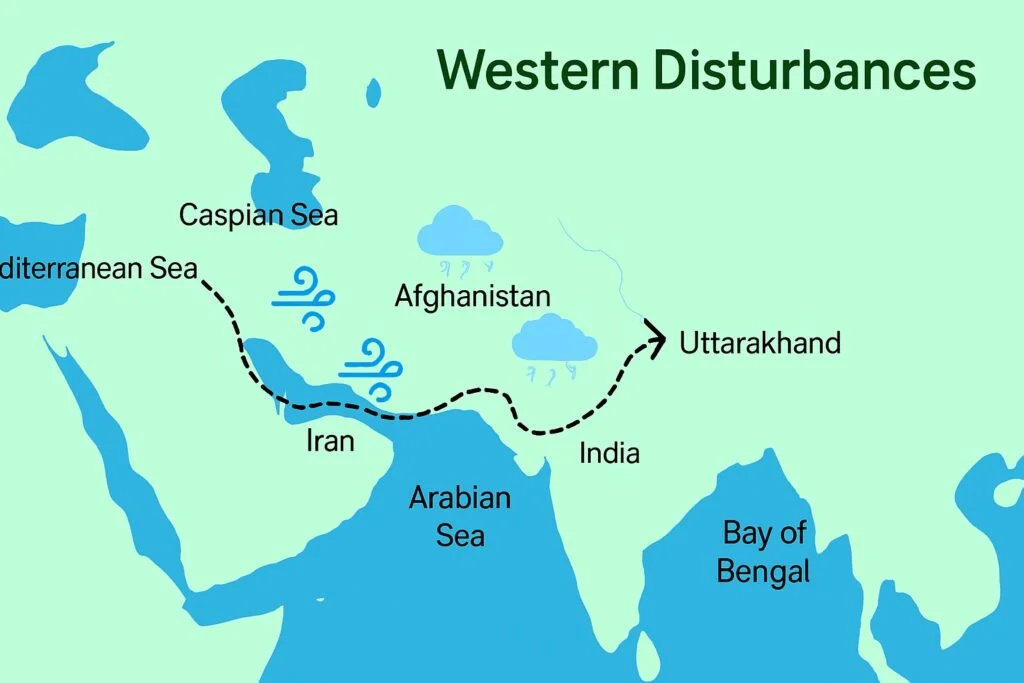
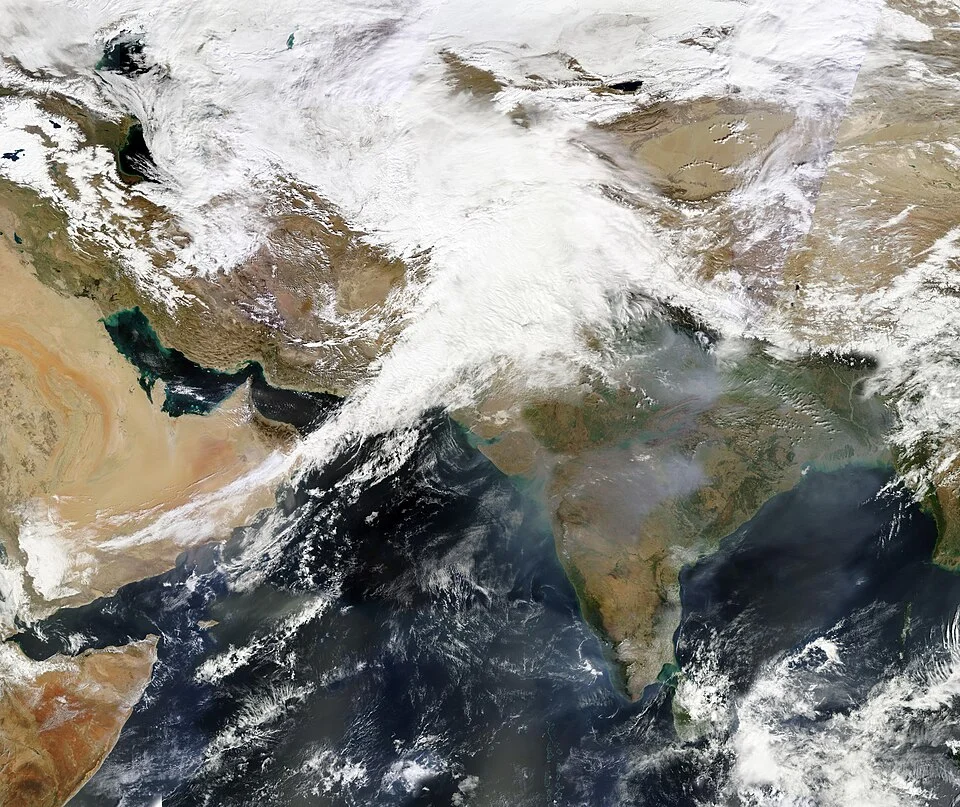
- These disturbances are embedded in the sub‑tropical westerly jet stream and travel eastward, passing through West Asia, Iran, Afghanistan and Pakistan before entering the Indian subcontinent.
- Unlike the monsoon, which is a tropical system, Western Disturbances are products of temperate atmospheric circulation.
Mechanism of Winter Precipitation
- As a Western Disturbance approaches the Indian subcontinent, it carries moisture picked up from the Mediterranean, Caspian and Black Seas. When this moisture‑laden air encounters the Himalayan barrier, it is forced to rise, a process known as orographic lift.
- This causes cooling and condensation, resulting in rainfall over the plains and snowfall in the Himalayan region.
- Seasonality and Movement: Western Disturbances are most active during December to February, though systems may begin affecting the region as early as November and occasionally linger into March. On average, 4-6 disturbances traverse towards North India each winter, contributing significantly to winter precipitation.
Impact on Weather and Climate
Western Disturbances influence North Indian weather in multiple ways:
- Rainfall and Snowfall: They are the primary source of winter precipitation in northwest India, including parts of the plains and mountains.
- Cloud Cover and Temperature: Increased cloudiness often leads to lower daytime temperatures and warmer nights relative to clear sky conditions.
- Fog Formation: The post‑disturbance period often sees dense fog, especially in the Indo‑Gangetic plains, affecting transport and daily life.
Significance for Agriculture
Winter rainfall from Western Disturbances is vital for rabi crops such as wheat, gram and mustard. Moisture during the vegetative and grain‑filling stages supports crop growth and reduces the dependence on irrigation, thereby enhancing soil moisture and agricultural productivity.
Other Socio‑Economic Impacts
- Himalayan Water Resources: Heavy snowfall replenishes the cryosphere, supporting glacial mass and base flows of perennial rivers.
- Air Quality: Rainfall helps clear particulate pollution in cities like Delhi, temporarily improving air quality.
- Hazards: Strong disturbances can bring hailstorms, avalanches and landslides in hills, and infrastructure disruptions due to fog and cold waves in plains.
Link with Climate Variability
There is emerging evidence that the behaviour and frequency of Western Disturbances are being influenced by broader climate change, with some models suggesting shifts in jet stream patterns and expanded seasonal activity. This has implications for winter precipitation patterns, glacier health, and long‑term water resources in the Himalayan region.
Conclusion
Western Disturbances are a defining feature of North India’s winter climate. They bring much‑needed precipitation that supports agriculture, contributes to snowpack and water resources, and influences temperature and air quality. At the same time, their variable nature and interaction with climate change make them a critical area of study for understanding India’s winter weather systems and associated socio‑economic impacts.