Home Rule Movement (1916-1918)
Content
- Introduction
- Background
- Causes
- Formation of Indian National Congress
- Objectives of the Indian National Congress
- Programmes and Methods
- Government Response
- Significance of the Formation of INC
- Limitations
- Conclusion
- FAQs
Introduction
The Home Rule Movement occupies an important place in the history of the Indian national movement as it revived nationalist politics after a period of political inactivity and prepared the ground for the emergence of mass movements under Mahatma Gandhi. The movement represented a significant phase in the transition from moderate constitutional politics to broader national mobilisation.
Inspired by the Irish Home Rule Movement, Indian nationalists demanded self-government for India within the British Empire. The movement emerged during the period of the First World War and aimed at achieving “Home Rule” or self-government through constitutional and peaceful methods.
The movement was led primarily by Bal Gangadhar Tilak and Annie Besant, who established separate Home Rule Leagues in different regions of India while coordinating their activities.
Background
The years following the Surat Split of 1907 witnessed a decline in the intensity of the national movement. The division between Moderates and Extremists weakened the Congress organisation. Moreover, the imprisonment of Tilak between 1908 and 1914 further reduced militant nationalist activities.
At the same time, the constitutional reforms introduced through the Indian Councils Act of 1909 failed to satisfy Indian aspirations. The reforms offered only limited representation without granting real political power to Indians.
The outbreak of the First World War in 1914 created new political circumstances. Indian leaders initially supported Britain in the war effort with the expectation that self-governing institutions would be introduced after the war. However, wartime hardships such as rising prices, economic distress, heavy taxation, and forced recruitment generated widespread dissatisfaction among the people.
The return of Tilak from Mandalay jail and the political activism of Annie Besant contributed significantly to the revival of nationalist politics.
Annie Besant famously declared:
“England’s need is India’s opportunity.”
This reflected the growing belief that wartime conditions provided an opportunity to intensify the demand for self-government
Causes for the Emergence of the Home Rule Movement
Several political and economic factors contributed to the rise of the movement.
The failure of the Government of India Act, 1909 to provide substantial constitutional reforms disappointed Indian political leaders. Educated Indians increasingly realised that constitutional concessions granted by the British were inadequate.
The national movement had entered a relatively passive phase after the imprisonment of Tilak and the split in Congress. Nationalist leaders felt the need to revive political activity and generate mass awareness.
The First World War imposed severe economic burdens on Indians. Inflation, shortages, and increased taxation worsened public hardships, creating favourable conditions for political agitation.
Another important factor was the readmission of Extremists into the Congress at the 1915 session due largely to the efforts of Annie Besant. This helped reduce divisions within nationalist politics.
Both Tilak and Besant recognised the necessity of establishing a permanent political organisation that could function throughout the year instead of limiting political activities to annual Congress sessions.
Formation
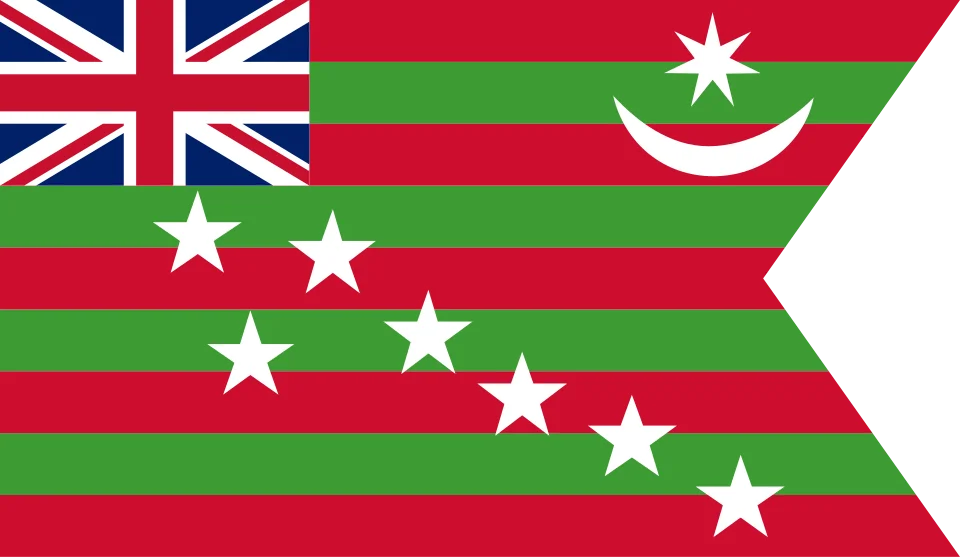
As the Congress leadership was unwilling to officially adopt the Home Rule programme immediately, Tilak and Annie Besant decided to launch independent organisations while remaining within the broader nationalist framework.
To avoid rivalry and organisational conflict, they agreed to work in separate geographical regions.
Thus, two Home Rule Leagues were established in 1916.
Tilak’s Home Rule League
Bal Gangadhar Tilak founded the Indian Home Rule League in April 1916 at Belgaum.
The headquarters of the league was established at Poona (Pune).
Tilak’s league operated mainly in Maharashtra (excluding Bombay city), Karnataka, Central Provinces, and Berar. The organisation had six branches and adopted a relatively disciplined structure.
Tilak demanded Swarajya or self-government and also supported linguistic reorganisation of provinces and education through vernacular languages.
Tilak actively travelled across different regions, delivered speeches, and mobilised public opinion in favour of self-rule.
Annie Besant’s Home Rule League
Annie Besant established the All India Home Rule League in September 1916 at Madras.
Unlike Tilak’s league, Besant’s organisation had jurisdiction over most parts of India, including Bombay city.
The league developed an extensive organisational network with nearly 200 branches across the country.
Important associates of Annie Besant included:
- George Arundale
- B. P. Wadia
- C. P. Ramaswamy Aiyar
Besant extensively used newspapers such as New India and Commonweal to spread nationalist ideas and demand self-government.
Objectives of the Movement
The primary objective of the movement was to attain self-government for India within the British Empire on the lines of dominions such as Canada and Australia.
The movement aimed to create political awareness among Indians and revive nationalist activities after years of political inactivity.
Another important objective was to unite different sections of Indian political leadership, including Moderates, Extremists, and members of the Muslim League.
The movement also attempted to bring politics beyond educated urban elites by spreading nationalist ideas to wider sections of society.
Programmes and Methods of the Movement
The Home Rule Movement primarily relied on constitutional and peaceful methods of agitation.
Public meetings, lectures, political campaigns, pamphlets, newspapers, and conferences were widely used to spread awareness regarding self-government.
Libraries, reading rooms, and local committees were established to educate people politically.
The movement also expanded nationalist politics into regions that had previously remained politically less active, such as Gujarat and Sindh.
Several prominent leaders joined the movement, including:
- Motilal Nehru
- Jawaharlal Nehru
- Muhammad Ali Jinnah
- Chittaranjan Das
- Bhulabhai Desai
- K. M. Munshi
The movement gained additional momentum after the Russian Revolution, which inspired anti-imperialist sentiments worldwide.
Government Response to the Home Rule Movement
The British government viewed the movement as a threat to colonial authority and adopted repressive measures.
Tilak faced legal restrictions and was prohibited from entering Punjab and Delhi.
In Madras, students were prevented from attending political meetings.
The most significant act of repression came in June 1917 when Annie Besant, along with B.P. Wadia and George Arundale, was arrested.
The arrest triggered widespread protests across the country and generated massive public sympathy for the movement.
Subramania Iyer renounced his knighthood in protest against the government’s actions.
The repression ultimately strengthened nationalist resolve rather than suppressing the movement.
Under increasing pressure, the British government released Annie Besant in September 1917.
Significance
The Home Rule Movement revived the national movement after nearly a decade of political inactivity following the Surat Split.
It played an important role in reuniting Moderates and Extremists within the Congress and also promoted cooperation between the Congress and the Muslim League.
The movement expanded political consciousness into new regions and attracted thousands of educated Indians into active politics.
One of its greatest achievements was the creation of an atmosphere that compelled the British government to make constitutional concessions.
In August 1917, Edwin Montagu issued the famous Montagu Declaration, which stated that the objective of British policy was the gradual development of self-governing institutions in India.
This declaration marked the first official recognition by the British government that self-government was the ultimate goal of colonial policy in India.
The movement also prepared the political foundation for the Gandhian phase of the national movement.
Limitations and Decline of the Movement
Despite its achievements, the movement gradually declined after 1918.
The organisational structure of the Home Rule Leagues remained weak and lacked strong grassroots mobilisation.
The Montagu Declaration divided nationalist opinion, as some Moderates became satisfied with the promise of future reforms.
Differences also emerged between Tilak and Besant regarding future political strategy, especially on the issue of passive resistance.
Tilak left for England in 1918 in connection with a libel case against Valentine Chirol, depriving the movement of one of its strongest leaders.
At the same time, Mahatma Gandhi introduced new methods of mass mobilisation through satyagraha movements, which soon captured the imagination of the Indian masses more effectively than the Home Rule agitation.
Consequently, the movement gradually lost momentum and faded by 1919.
Conclusion
The Home Rule Movement represented a crucial transitional phase in the Indian freedom struggle. Although it did not achieve immediate self-government, it successfully revived nationalist politics and expanded political awareness among Indians.
The movement united different strands of nationalism, popularised the demand for self-rule, and created a more assertive political atmosphere in India.
Most importantly, it laid the foundation for the emergence of mass nationalist movements under Gandhi and marked the beginning of a new era in India’s struggle for independence.
FAQs
Q1. What was the Home Rule Movement?
The Home Rule Movement was a political movement demanding self-government (Home Rule) for India within the British Empire.
Q2. Who led the Home Rule Movement in India?
The movement was led mainly by Bal Gangadhar Tilak and Annie Besant.
Q3. When was the Home Rule Movement started?
It began in 1916, during the period of the First World War.
Q4. What were the objectives of the Home Rule Movement?
The movement aimed to:
Revive nationalist activities after the split in Congress
Achieve self-government for India
Increase political awareness
Q5. How was the movement organised?
Two Home Rule Leagues were formed:
Annie Besant’s League covering other regions
Tilak’s League in western India
Click on the question to see the Answers
Visit LevelUp IAS- Click Here