American Revolution (1776)

Content
- Background
- Causes
- Major Events
- Declaration of Independence (1776)
- Major Enlightenment Thinkers
- Impacts
- Limitations
- Conclusion
- FAQs
The American Revolution (1763-1783) was one of the most significant events in modern world history. It began as a struggle of the thirteen American colonies against British colonial rule and culminated in the creation of the United States of America as an independent nation. While it originated as a war of independence, its significance extended far beyond political separation from Britain. The Revolution established the world’s first modern democratic republic based on a written constitution and popular sovereignty.
The American Revolution marked the beginning of the decline of colonial empires and inspired later democratic and nationalist movements across the world, including the French Revolution and anti-colonial struggles in Asia and Africa.
Background of the Revolution
During the eighteenth century, Britain’s North American colonies experienced considerable economic growth and developed strong local institutions. The British government generally followed a policy of Salutary Neglect, under which colonies enjoyed substantial autonomy in managing their internal affairs.
This relative freedom enabled colonial assemblies and local governments to function independently, gradually creating a strong sense of self-government among the colonists. At the same time, the spread of Enlightenment ideas emphasizing liberty, natural rights, and representative government encouraged political awareness.
The turning point came after the Seven Years’ War (1756-1763). Although Britain emerged victorious, the war imposed a heavy financial burden on the British treasury. To recover these costs, Britain sought to increase revenue from its American colonies, creating tensions that eventually led to revolution.
Causes of the American Revolution
Political Causes
One of the most important causes of the Revolution was the growing political conflict between Britain and the colonies. The colonists believed that they possessed the same rights as British citizens, including the right to participate in law-making through elected representatives.
However, the British Parliament imposed taxes and regulations without colonial representation. This led to the famous slogan “No Taxation Without Representation,” which became the rallying cry of the revolutionary movement.
The long experience of self-government under Salutary Neglect had already created expectations of political autonomy. British attempts to tighten control after 1763 were therefore viewed as an attack on colonial liberties.
Economic Causes
British colonial policy was based on Mercantilism, which aimed to maximize Britain’s economic gains from its colonies. The colonies were expected to supply raw materials and serve as markets for British manufactured goods.
Following the Seven Years’ War, Britain introduced several revenue measures such as the Sugar Act (1764) and Stamp Act (1765). These taxes were deeply unpopular because they directly affected colonial commerce and daily life.
The colonists increasingly perceived British economic policies as exploitative and harmful to their prosperity, strengthening support for resistance.
Ideological Causes
The Enlightenment greatly influenced American political thought. Philosophers such as John Locke advocated natural rights, limited government, and the social contract.
American intellectuals transformed these ideas into political action. Thomas Paine, through his famous pamphlet Common Sense (1776), openly argued for complete independence from Britain. Benjamin Franklin promoted intellectual awakening and political awareness, while Patrick Henry inspired resistance through his famous declaration, “Give me liberty, or give me death.”
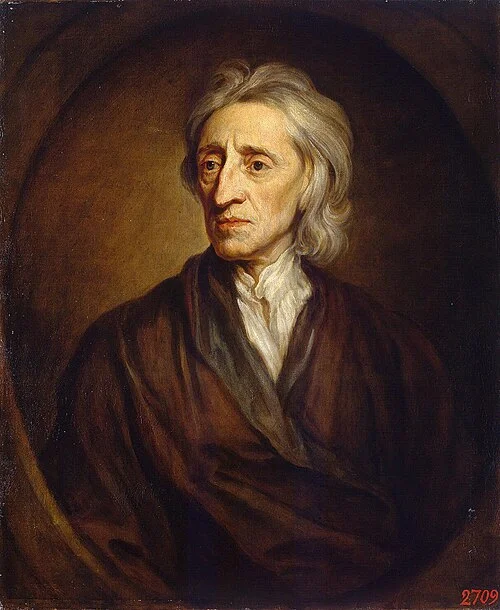
These ideas convinced many colonists that freedom and self-government were natural rights that could not be denied by an external authority.
Major Events Leading to the Revolution
Rise of Taxation and Colonial Resistance
British efforts to raise revenue began with the Sugar Act and Stamp Act. These measures were followed by the Townshend Acts (1767), which imposed duties on commodities such as tea, paper, glass, and lead.
The colonists organized widespread protests and boycotts. Groups such as the Sons of Liberty and Daughters of Liberty emerged to coordinate resistance against British policies.
Boston Massacre (1770)
Tensions between British troops and colonists escalated in Boston. During a confrontation in March 1770, British soldiers opened fire on protesters, killing several civilians.
The incident became known as the Boston Massacre and was widely used by colonial leaders to demonstrate British oppression and mobilize public opinion against British rule.
Tea Act and Boston Tea Party (1773)
To rescue the financially troubled British East India Company, Parliament passed the Tea Act (1773), granting the company special privileges in colonial tea trade.
Colonists viewed the measure as an attempt to force acceptance of British taxation. In response, on 16 December 1773, protesters led by Samuel Adams boarded British ships in Boston Harbor and dumped tea into the sea.
This dramatic act of defiance became known as the Boston Tea Party and marked a decisive escalation in colonial resistance.
First Continental Congress (1774)
In response to British punitive measures, representatives from twelve colonies met in Philadelphia in 1774.
The Congress demanded the restoration of colonial rights, removal of trade restrictions, and representation in Parliament. Although the delegates sought reconciliation, Britain rejected their demands.
Second Continental Congress (1775)
Armed conflict had already begun by the time the Second Continental Congress assembled in 1775.
The Congress adopted the Olive Branch Petition, expressing loyalty to the British Crown while seeking peaceful settlement. King George III rejected the petition and instead declared the colonies to be in rebellion.
This effectively ended hopes for reconciliation and pushed the colonies toward complete independence.
Declaration of Independence (1776)
On 4 July 1776, the Second Continental Congress adopted the Declaration of Independence, drafted primarily by Thomas Jefferson with contributions from Benjamin Franklin and John Adams.
The Declaration proclaimed that all men are created equal and possess certain inalienable rights, including life, liberty, and the pursuit of happiness. It asserted that governments derive their authority from the consent of the governed and that people have the right to overthrow tyrannical governments.
The Declaration transformed the conflict from a colonial rebellion into a revolutionary struggle for nationhood and democratic governance.
American War of Independence (1775-1783)
Following the Declaration of Independence, the colonies fought Britain under the leadership of George Washington.
A major turning point came in 1778 when France entered the war on the American side, seeking revenge for its defeat in the Seven Years’ War. French military and financial assistance significantly strengthened the colonial cause.
The decisive victory came at the Battle of Yorktown (1781), where British forces surrendered. Although minor fighting continued, effective British resistance ended with this defeat.
Treaty of Paris (1783)
The conflict formally concluded with the Treaty of Paris (1783).
Britain officially recognized the independence of the United States of America. The new nation received territory extending westward to the Mississippi River. Spain recovered Florida, while France gained several colonial possessions.
The treaty marked the successful completion of the American Revolution and the birth of a new sovereign state.
Major Thinkers
| Thinker/Leader | Contribution |
| Thomas Jefferson | Principal author of the Declaration of Independence |
| George Washington | Commander of American forces; later first President of the USA |
| Benjamin Franklin | Diplomat, intellectual, and supporter of independence |
| Thomas Paine | Author of Common Sense, advocating complete independence |
| Samuel Adams | Leader of Boston Tea Party and colonial resistance |
| Patrick Henry | Revolutionary leader known for “Give me liberty, or give me death” |
Impacts
Impact Within America
The Revolution transformed the political and economic structure of the former colonies. Loyalists who had supported Britain lost influence, weakening traditional colonial elites.
The collapse of British mercantilist restrictions opened new opportunities for trade and economic growth. Most importantly, the United States emerged as the first nation to establish a modern written constitution based on popular sovereignty.
The adoption of the U.S. Constitution (1787) and the Bill of Rights (1791) guaranteed civil liberties and limited governmental power, creating a durable democratic framework.
Global Impact
The American Revolution dealt a severe blow to Britain’s image as an invincible imperial power and demonstrated that colonial rule could be successfully challenged.
It popularized the principles of democracy, constitutionalism, republicanism, and individual rights. The Revolution inspired subsequent movements for political reform and national liberation, most notably the French Revolution (1789).
The success of the American experiment also promoted the concepts of federalism, representative government, and constitutional rule. It became a source of inspiration for anti-colonial movements across the world, including India’s freedom struggle.
Limitations of the American Revolution
Despite its revolutionary ideals, the American Revolution had certain limitations. Political equality was largely restricted to white men, while women, Native Americans, and enslaved Africans remained excluded from full rights.
Slavery continued in many parts of the United States, highlighting the contradiction between the principles of liberty and social reality. Therefore, the Revolution brought political transformation without a corresponding social revolution.
Conclusion
The American Revolution was the first successful anti-colonial revolution in modern history and a landmark event in the evolution of democratic governance. By establishing an independent republic founded on constitutionalism, popular sovereignty, and individual rights, it fundamentally altered political thought across the world. Although it had significant limitations, its enduring legacy lies in its contribution to the spread of democracy, nationalism, federalism, and the idea that legitimate government derives its authority from the consent of the people.
FAQs
Q1. What was the American Revolution?
The American Revolution was a political and military struggle fought between the thirteen American colonies and United Kingdom, leading to the creation of the United States.
Q2. When did the American Revolution take place?
The revolution began in 1775 and ended in 1783, while the Declaration of Independence was adopted on 4 July 1776.
Q3. What were the main causes of the American Revolution?
Major causes included:
Growing desire for self-government
Heavy British taxation
Lack of colonial representation in Parliament (“No taxation without representation”)
Trade restrictions imposed by Britain
Q4. What was the Declaration of Independence?
The Declaration of Independence formally announced the colonies’ separation from British rule and affirmed principles of liberty and equality.
Q5. Who were the key leaders of the American Revolution?
Prominent leaders included George Washington, Thomas Jefferson, and Benjamin Franklin.
Click on the question to see the Answers
Visit LevelUp IAS: Click here