Civil Society, GS 2
Content
- Features
- Evolution
- Types of Civil Society Organisations
- Regulatory Framework
- Role of Civil Society
- Challenges
- Way Forward
- Conclusion
- FAQs
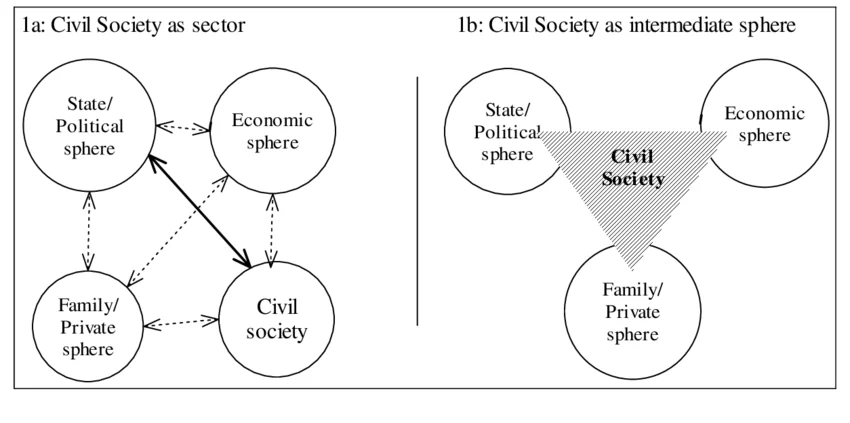
Civil Society refers to the sphere of voluntary, non-state, and non-market organisations that work for collective social welfare, public participation, and community development. According to the United Nations Development Programme (UNDP), Civil Society Organizations (CSOs) are non-state entities that do not seek profit or political power but aim to promote ethical, cultural, scientific, philanthropic, and developmental objectives. CS acts as an important bridge between the government and citizens by promoting accountability, participation, and inclusive governance.
In democratic societies, CS strengthens public awareness, safeguards rights, mobilises communities, and contributes to policy formulation and implementation. In India, civil society has become an essential component of governance, development administration, welfare delivery, and social justice.
Features of Civil Society
of the state. These organisations are generally autonomous, non-profit oriented, and based on collective action for public welfare. Their functioning is guided by values such as participation, transparency, social responsibility, and community empowerment.
Civil society organisations operate independently from the government while still engaging with public institutions to influence policies and improve service delivery. They encourage citizen participation in governance and provide platforms for people to voice concerns regarding social, economic, environmental, and political issues.
Another important characteristic is voluntarism. Membership and participation are generally voluntary, driven by shared interests and social commitment rather than coercion or profit motives. CS also promotes inclusiveness by working for marginalised communities, weaker sections, women, children, and vulnerable groups.
Evolution of Civil Society in India
The roots of CS in India can be traced to traditional concepts such as daan (charity), seva (service), and dharma (duty). Ancient Indian society witnessed community-based welfare activities through temples, religious institutions, and local associations.
During the 19th century, socio-religious reform movements played a major role in shaping modern civil society. Organisations like the Brahmo Samaj and Arya Samaj worked against social evils such as sati, child marriage, and caste discrimination while promoting education and social reform.
During the freedom struggle, Mahatma Gandhi transformed civil society through mass mobilisation, satyagraha, constructive programmes, and grassroots participation. After independence, voluntary organisations expanded their role in rural development, poverty alleviation, literacy, health, and environmental protection.
From the 1990s onwards, liberalisation, decentralisation, and globalisation further expanded the role of NGOs, advocacy groups, think tanks, and rights-based movements in governance and policy advocacy.
Types of Civil Society Organisations in India
CS in India includes diverse forms of organisations working at local, national, and international levels.
Community-Based Organizations (CBOs) function at the grassroots level and focus on local developmental issues such as sanitation, water supply, housing, and community welfare. Resident Welfare Associations are common examples in urban areas.
Non-Governmental Organisations (NGOs) are professionally managed, non-profit institutions working in fields such as education, women empowerment, health, child welfare, environment, and rural development.
Religious and Faith-Based Organisations undertake charitable activities like education, healthcare, and relief services. Institutions such as the Ramakrishna Mission have contributed significantly to social welfare.
Membership Associations include professional bodies, clubs, and trade unions that represent the interests of specific groups. Examples include the Indian Medical Association and labour unions.
Think Tanks conduct policy research and provide recommendations on governance, economics, public policy, and foreign affairs. Institutions such as the Observer Research Foundation play an important role in policy discourse.
Social Movements are citizen-led campaigns focused on public causes such as anti-corruption, environmental protection, women’s rights, and transparency. The anti-corruption movement led by Anna Hazare is an important example.
Youth and student organisations also form part of CS by promoting leadership, discipline, and social awareness among young people.
Regulatory Framework for Civil Society in India
CS organisations in India are regulated through multiple legal frameworks to ensure transparency, accountability, and proper functioning.
The Societies Registration Act, 1860 governs organisations established for literary, scientific, and charitable purposes. The Indian Trusts Act, 1882 regulates charitable and religious trusts. Section 8 of the Companies Act, 2013 provides for non-profit companies working in areas such as education, social welfare, and environmental protection.
The Foreign Contribution Regulation Act (FCRA), 2010 regulates the acceptance and utilisation of foreign funds by NGOs and CS organisations. It requires registration, designated bank accounts, and periodic renewal to ensure financial transparency and national security considerations.
Corporate Social Responsibility (CSR) provisions under the Companies Act, 2013 mandate eligible companies to spend 2% of their average net profits on social development activities, thereby increasing collaboration between corporate institutions and CS organisations.
Role in Governance & Development
It plays a multidimensional role in strengthening democracy, governance, and socio-economic development.
Policy Advocacy and Public Participation
Civil society organisations participate in policy dialogues and advocate reforms related to poverty alleviation, education, health, environment, gender justice, and social inclusion. They help represent the concerns of vulnerable communities before the government.
For example, many civil society groups actively contributed to the demand for the Right to Information Act, 2005 and the Lokpal and Lokayuktas Act, 2013.
Promoting Transparency and Accountability
Civil society acts as a watchdog against corruption, misuse of power, and administrative inefficiency. Through social audits, public campaigns, and legal activism, these organisations improve transparency in governance.
Service Delivery and Development Partnerships
Civil society organisations complement government efforts in sectors such as healthcare, education, nutrition, sanitation, and rural development. Organisations like Pratham and Asha for Education have significantly contributed to educational access and quality.
Protection of Rights and Legal Support
CSOs provide legal aid, awareness, and support to marginalised communities facing exploitation, discrimination, or denial of rights. They also support victims of domestic violence, bonded labour, and human rights violations.
Women Empowerment and Social Inclusion
Civil society organisations promote gender equality, women’s empowerment, and livelihood generation through awareness campaigns, skill development, and community mobilisation.
Environmental Protection
Environmental NGOs and grassroots movements contribute to conservation, climate awareness, sustainable development, and ecological protection. They also influence environmental policy and promote community participation in conservation activities.
Challenges Faced by Civil Society
Despite their significant contribution, civil society organisations face several challenges.
Financial constraints remain a major issue as many organisations depend heavily on grants, donations, and external funding. Declining foreign funding and strict regulatory compliance under FCRA have further increased operational difficulties.
Many organisations suffer from shortages of trained professionals, especially in remote and underdeveloped areas. Limited salaries and inadequate infrastructure discourage skilled personnel from joining the voluntary sector.
Transparency and accountability concerns have also emerged due to instances of fund misuse and weak financial management. Questions regarding credibility and monitoring affect public trust in some organisations.
The relationship between the government and civil society is sometimes marked by mistrust, bureaucratic hurdles, and excessive regulation, which can restrict collaboration and policy engagement.
Regional imbalance is another challenge, as civil society activities remain more concentrated in urban and developed regions while backward and remote areas continue to lack adequate institutional support.
Way Forward
Civil society must be strengthened as an essential pillar of participatory democracy and inclusive governance. Greater collaboration between the government, private sector, and civil society organisations is necessary for addressing complex socio-economic challenges.
Financial sustainability can be improved through diversified funding mechanisms, CSR partnerships, digital fundraising, and community participation. Capacity building in leadership, financial management, digital literacy, and policy advocacy is also essential for improving institutional effectiveness.
The government should encourage constructive engagement with civil society while ensuring accountability and transparency through balanced regulations. Increased focus on marginalised communities, gender justice, tribal rights, environmental sustainability, and grassroots participation will further strengthen democratic governance.
Conclusion
Civil society acts as an important intermediary between the state and citizens by promoting participation, accountability, social justice, and inclusive development. In India, civil society organisations have played a crucial role in policy advocacy, welfare delivery, environmental protection, women empowerment, and democratic deepening. Despite facing challenges related to funding, regulation, and institutional capacity, civil society continues to remain an indispensable force for socio-economic transformation and participatory governance in India.
FAQs
Q1. What is Civil Society?
Civil Society refers to the network of voluntary organizations, community groups, associations, NGOs, professional bodies, and citizen movements that function independently of the government and the market.
Q2. What are the main components of Civil Society?
Civil Society includes:
Charitable and voluntary organizations
Non-Governmental Organizations (NGOs)
Community-Based Organizations (CBOs)
Trade unions and professional associations
Self-Help Groups (SHGs)
Advocacy groups and social movements
Q3. What is the role of Civil Society in governance?
Civil Society contributes to governance by:
Acting as a bridge between citizens and the government
Promoting citizen participation
Ensuring transparency and accountability
Advocating policy reforms
Monitoring public service delivery
Q4. How does Civil Society strengthen democracy?
It encourages public debate, protects citizens’ rights, promotes informed participation, and helps hold governments accountable, thereby strengthening democratic institutions.
Q5. What is the relationship between Civil Society and the State?
Civil Society operates independently of the state but often collaborates with government agencies in policy implementation, welfare delivery, and social development initiatives.
Click on the question to see the Answers
Visit LevelUp IAS: Click here