Amaravati as Permanent Capital of AP

Content
- Why in News?
- Background
- Key Provisions
- Significance
- Implications
- Historical Context
- Way Forward
- Conclusion
Why in News?
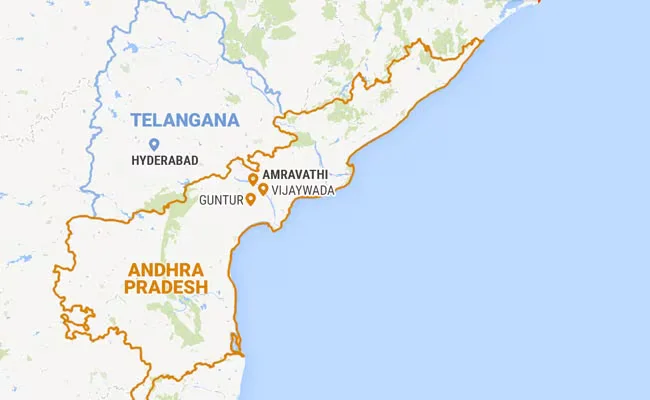
The Andhra Pradesh Reorganisation (Amendment) Bill, 2026 has been passed by the Lok Sabha, officially designating Amaravati as the sole and permanent capital of Andhra Pradesh. This move aims to provide legal and political certainty to the capital status and prevent future policy reversals.
Background
The issue of capital location in Andhra Pradesh has its roots in the bifurcation of the state in 2014 through the Andhra Pradesh Reorganisation Act, 2014, which created Telangana. Under Section 5 of the Act, Hyderabad was designated as the common capital for both states for a period not exceeding ten years.
This transitional arrangement ended on 2 June 2024, creating the need for a clearly defined permanent capital for Andhra Pradesh. Over the years, the issue became politically contentious, especially with proposals such as the “three-capital model” envisioning Visakhapatnam (executive), Kurnool (judicial), and Amaravati (legislative) which led to policy uncertainty and administrative challenges.
Key Provisions of the Amendment
The Amendment introduces a statutory change by modifying Section 5 of the 2014 Act and explicitly incorporating Amaravati as the capital. This provides a legal backing at the parliamentary level, rather than leaving the matter solely to state policy decisions.
A significant feature of the law is its retrospective effect, as it recognises Amaravati as the capital from 2 June 2024, ensuring continuity after the expiry of Hyderabad’s common capital status.
The amendment also effectively nullifies previous proposals of decentralised capitals, thereby restoring a single-capital framework for governance in Andhra Pradesh.
Constitutional and Legal Significance
This development is noteworthy as it represents a rare constitutional precedent. For the first time in independent India, Parliament has enacted a specific law to declare a particular city as the permanent capital of a state.
While the Constitution does not explicitly define the process for designating a state capital, Parliament derives its authority in this case from its powers related to state reorganisation under Article 3. The amendment strengthens the legal framework governing post-bifurcation arrangements and clarifies ambiguities left by the original Act.
Political and Administrative Implications
The formalisation of Amaravati as the sole capital brings administrative clarity and policy stability, which are crucial for long-term governance. It ensures centralisation of executive, legislative, and judicial functions, potentially improving coordination and efficiency.
From a political perspective, the move reduces uncertainty caused by shifting capital policies, thereby enhancing investor confidence and enabling sustained infrastructure development. It also resolves a long-standing debate that had implications for regional balance within the state.
Historical Context
After the bifurcation in 2014, Amaravati was identified as the capital based on its central location and developmental potential. However, the recommendations of the K.C. Siva Ramakrishnan Committee, which favoured a decentralised development model, were later invoked to justify alternative capital proposals.
The new legislation overrides these earlier recommendations and subsequent state-level policy shifts, bringing finality to the capital issue.
Way Forward
Going forward, the focus must shift towards the planned and sustainable development of Amaravati as a world-class capital city. This includes strengthening urban infrastructure, ensuring environmental sustainability, and promoting inclusive growth.
The state government must prioritise institutional development, connectivity, and investment mobilisation to transform Amaravati into an effective administrative and economic hub. At the same time, balanced regional development across Andhra Pradesh should be ensured to address concerns of regional disparities.
Conclusion
The designation of Amaravati as the permanent capital marks a significant milestone in Andhra Pradesh’s post-bifurcation journey. By providing legal certainty and administrative stability, the amendment lays the foundation for coherent governance and long-term development, making it a crucial development from a UPSC Polity perspective.
Visit LevelUp IAS- Click Here