
Current Affairs
Loggerhead Sea Turtle
Introduction
The species came into the news after Mumbai Police personnel rescued a distressed loggerhead sea turtle weighing around 100 kg from the Arabian Sea. The incident drew attention to marine wildlife protection and the threats faced by sea turtles in coastal waters.
The loggerhead sea turtle (Caretta caretta) is a marine reptile belonging to the family Cheloniidae. It is named after its relatively large head and powerful jaws, which help it crush hard-shelled prey. The species inhabits tropical and temperate waters across the Atlantic, Pacific and Indian Oceans, as well as the Mediterranean Sea.
Key Characteristics of the Loggerhead Sea Turtle
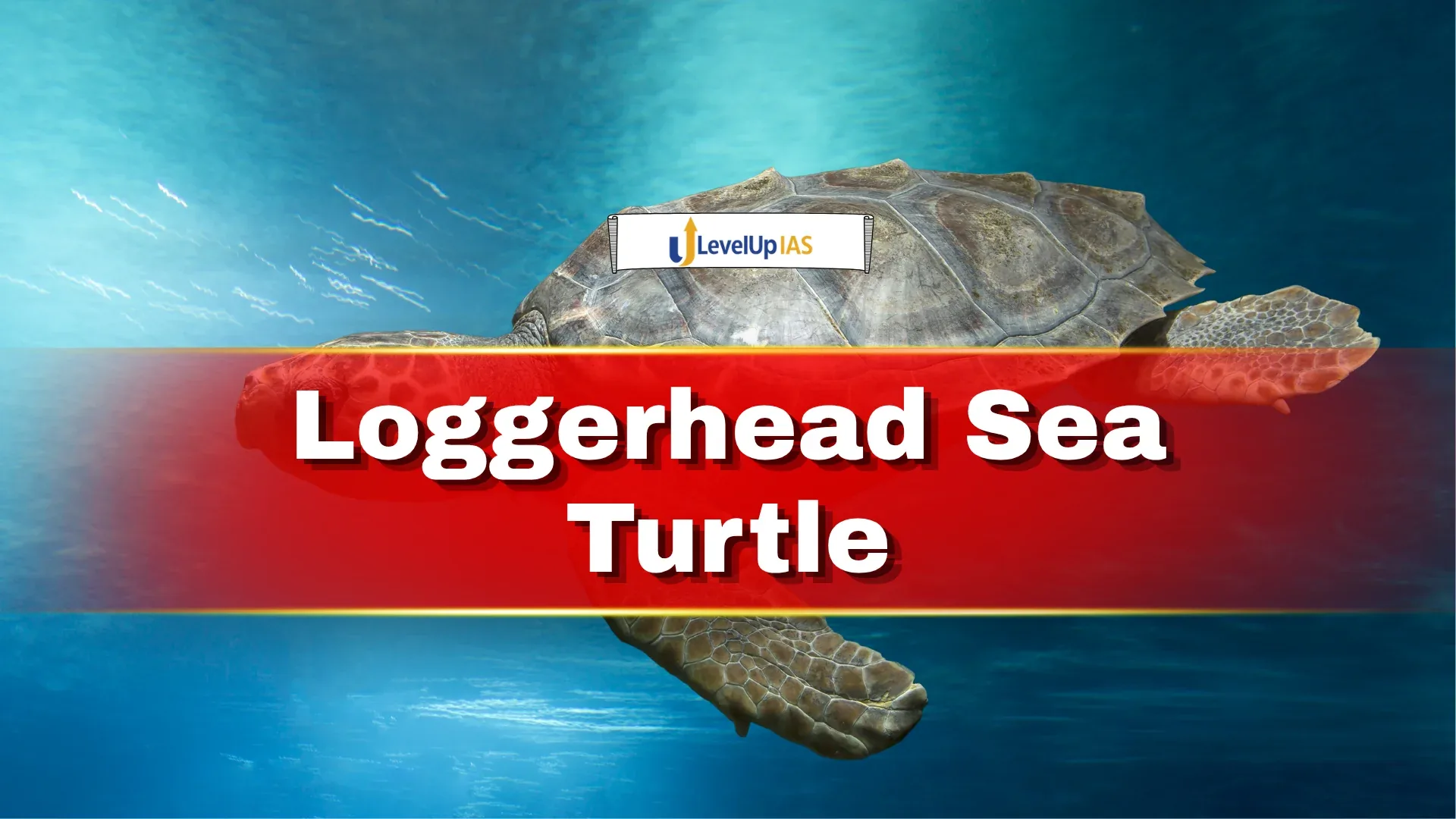
Loggerheads are large, hard-shelled sea turtles with a reddish-brown upper shell, a pale yellow underside and four flippers adapted for swimming. Adults can grow to over one metre in length and weigh around 100 kg or more.
Their powerful jaws allow them to feed on hard-shelled animals, including molluscs and crustaceans. They are long-distance migrants and use environmental cues, including the Earth's geomagnetic field, to navigate across oceans.
Loggerheads use different habitats throughout their life cycle. Hatchlings and juveniles may spend years in oceanic waters before moving towards coastal feeding grounds. Adult females return to land to lay eggs on sandy beaches, often in the general region where they hatched. They can live for several decades, with some estimates exceeding 80 years.
Habitat and Global Distribution
Loggerhead sea turtles are found in tropical and temperate marine environments worldwide, excluding the coldest seas. They occupy open oceans, continental shelf waters, bays, lagoons and other coastal habitats.
Important nesting regions include:
- Oman: Masirah Island supports one of the world's major loggerhead nesting populations.
- United States: Significant nesting occurs along the southeastern Atlantic coast, particularly in Florida, Georgia and South Carolina.
- Australia: Important nesting populations occur in parts of the country's coastal waters.
- Mediterranean Sea: Loggerheads nest along parts of the Mediterranean coastline, including Greece and Türkiye.
- Japan: The Japanese coast is a major nesting region for the North Pacific population.
Their extensive migrations mean that loggerheads frequently cross national boundaries and encounter fishing operations in multiple jurisdictions. This makes international cooperation important for their conservation.
Conservation Status
The loggerhead sea turtle is classified as Vulnerable on the IUCN Red List at the global level. However, conservation assessments differ among regional populations, with some subpopulations facing considerably greater risks.
The species is also listed under:
- Convention on Migratory Species (CMS): Appendix I and Appendix II, reflecting the need for strict protection and international cooperation.
- Convention on International Trade in Endangered Species of Wild Fauna and Flora (CITES): Appendix I, which generally prohibits international commercial trade in specimens of the species, subject to the Convention's provisions.
These international frameworks aim to reduce threats to migratory populations and regulate activities that could undermine their survival.
Major Threats
1. Bycatch in Fishing Gear
Accidental capture in fishing gear is one of the most significant threats to loggerhead sea turtles. Trawls, longlines and gillnets can injure or trap turtles, sometimes causing them to drown because they must surface to breathe.
2. Marine Pollution
Plastic bags, discarded fishing lines and other marine debris can be mistaken for food or entangle turtles. Oil pollution and other contaminants can also damage their habitats and affect their health.
3. Loss of Nesting Habitat
Coastal construction, tourism infrastructure, beach modification and erosion can reduce the availability of suitable nesting beaches. Artificial lighting near beaches may disorient hatchlings and prevent them from reaching the sea.
4. Climate Change
Rising temperatures affect sea turtle nesting environments. The temperature of the sand during incubation influences hatchling sex: warmer conditions generally produce more females, while cooler conditions produce more males. Excessively high temperatures can also reduce egg survival.
Sea-level rise, storms and coastal erosion may flood nests or destroy nesting habitat. These pressures can compound existing threats to vulnerable populations.
Conservation Measures
Effective conservation requires measures across both marine habitats and nesting beaches. Important approaches include:
- Reducing fishing-related mortality: Turtle-excluder devices, suitable fishing gear and improved fishing practices can reduce accidental capture.
- Protecting nesting beaches: Restricting harmful coastal development, controlling artificial lighting and safeguarding nests can improve hatchling survival.
- Reducing marine pollution: Better waste management and the removal of discarded fishing gear help reduce ingestion and entanglement.
- Monitoring and research: Nest surveys, tagging and satellite tracking help researchers understand migration routes and identify important habitats.
- International cooperation: Since loggerheads migrate across national waters, cooperation among countries is essential for protecting feeding grounds, migration corridors and nesting sites.
The Convention on Migratory Species and CITES provide international frameworks for cooperation and protection. Their effectiveness depends on implementation, enforcement and coordination among countries.
Conclusion
The loggerhead sea turtle is an important marine species whose long-distance migrations connect oceanic habitats, coastal feeding grounds and nesting beaches. Although it is globally classified as Vulnerable, some regional populations face more severe conservation challenges.
Reducing fishing-related deaths, protecting nesting beaches, controlling marine pollution and addressing climate change are central to its long-term survival. The rescue of a loggerhead turtle off Mumbai also highlights the importance of marine wildlife response and conservation along India's coastline.
Related reads.

West Nile Fever
18 Oct 2026 3 min

Satkosia Tiger Reserve
23 Sep 2026 2 min

EU’s Carbon Border Adjustment Mechanism (CBAM)
22 Sep 2026 4 min

ASEAN: Association of Southeast Asian Nations
16 Sep 2026 6 min

National Food Security Act (NFSA), 2013
16 Sep 2026 6 min

Borophene
15 Sep 2026 3 min
Put it into practice
Reading is step one.
Turn what you've just read into exam-ready answers with mentor-led practice and our structured test series.