
Current Affairs
Parrot Bornavirus 4 (PaBV-4)
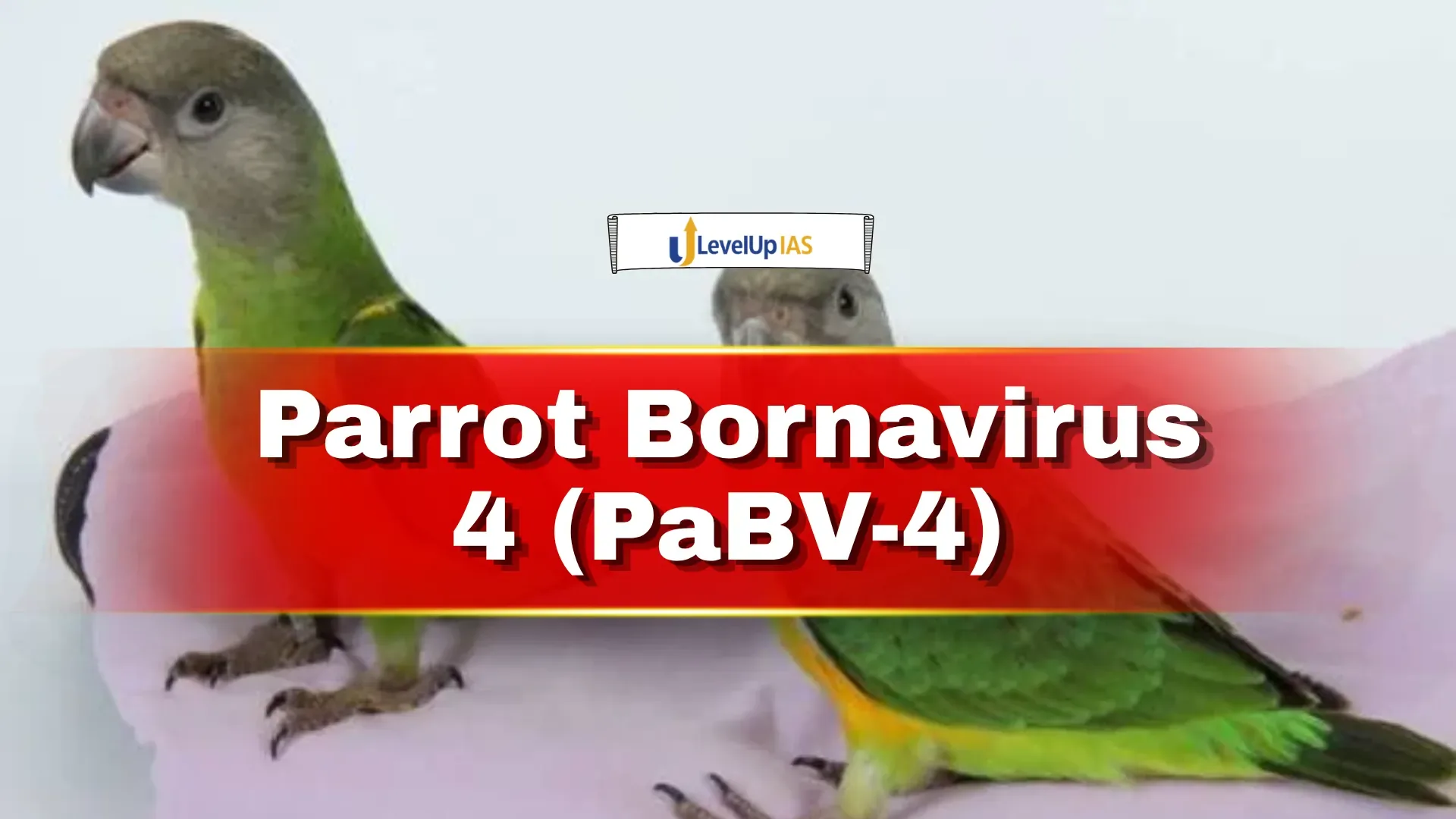
Why in News?
A team of Indian scientists has, for the first time, detected and genetically characterised Parrot Bornavirus 4 (PaBV-4) in captive parrots in India. The findings were published in the journal Scientific Reports on 15 June 2026.
The study identified the virus in captive psittacine birds and highlighted its potential threat to bird health and conservation programmes, particularly those involving endangered species dependent on captive breeding.
About Parrot Bornavirus 4 (PaBV-4)
Parrot Bornavirus 4 is an RNA virus that infects parrots and other birds belonging to the order Psittaciformes, commonly known as psittacines.
- Family: Bornaviridae
- Genus: Orthobornavirus
- Species: Orthobornavirus alphapsittaciforme
- Genome: Enveloped, single-stranded, negative-sense RNA.
- Major Disease Associated: Proventricular Dilatation Disease (PDD).
PaBV-4 is one of several parrot bornavirus variants. It is considered an important veterinary concern because of its association with a progressive disease affecting the digestive and nervous systems of birds.
Indian Study on PaBV-4
The study examined 83 captive psittacine birds belonging to 13 species. Samples were collected from five aviaries in Assam, Kolkata and Bengaluru during 2020-2024.
The birds were divided into three groups: those showing symptoms of suspected PDD, apparently healthy cage mates of affected birds and birds that had died after showing suspected clinical signs.
The major findings were:
- PaBV infection was detected in 44 out of 83 birds (53.01%).
- The infection was identified in nine psittacine species.
- Genetic analysis of the viral matrix (M) gene identified the circulating strain as PaBV-4.
- Among the 33 birds suspected of having PDD, 18 tested positive.
- Among 26 apparently healthy cage mates, five tested positive, indicating that infection can occur without visible clinical symptoms.
- Of the 24 dead birds examined, 21 tested positive.
The findings provide evidence of PaBV-4 circulation among captive parrots in India and underline the need for systematic surveillance and improved disease management in aviaries.
Proventricular Dilatation Disease (PDD)
PDD is a progressive and potentially fatal disease associated with avian bornavirus infection. It primarily affects the digestive tract and nervous system of birds.
The disease damages nerve cells and disrupts the functioning of the gastrointestinal tract. This can affect the movement and digestion of food, leading to malnutrition and severe weight loss.
Transmission of PaBV-4
The exact mechanisms of transmission of avian bornaviruses are not yet fully understood. However, the virus is believed to spread through exposure to infected birds and contaminated environments.
- Faecal-Oral Route: Viral material detected in droppings may contaminate food and water, creating opportunities for exposure.
- Contaminated Environment: Shared feeding utensils, water containers and aviary surfaces may contribute to the spread.
- Asymptomatic Carriers: Infected birds may shed the virus without showing visible symptoms, making detection and control difficult.
- Possible Vertical Transmission: Viral RNA has been detected in embryonated eggs in some studies, suggesting a possible route from parent birds to offspring. However, the importance of this route remains uncertain.
The precise contribution of different transmission routes requires further scientific investigation.
Diagnosis and Treatment
Diagnosis: PaBV infection can be detected using molecular diagnostic techniques such as Reverse Transcription Polymerase Chain Reaction (RT-PCR) and real-time RT-PCR. These methods identify viral RNA in samples such as cloacal swabs and tissues.
Treatment: There is currently no specific antiviral treatment or approved vaccine for PaBV-4. Management generally involves supportive veterinary care, nutritional support and treatment of associated complications.
Prevention and Control Measures
- Quarantine: Newly acquired birds should be kept separate and monitored before being introduced into an existing aviary.
- Regular Screening: Veterinary examination and appropriate molecular testing can help identify infected birds.
- Biosecurity: Aviaries should maintain proper sanitation and hygiene of cages, feeding equipment and water containers.
- Isolation: Infected or suspected birds should be separated from healthy birds under veterinary guidance.
- Surveillance: Systematic monitoring can help understand the distribution of the virus and prevent its spread among captive populations.
Conclusion
The detection of PaBV-4 in captive parrots in India highlights the importance of veterinary surveillance in wildlife conservation. Although the infection does not always result in visible disease, its association with Proventricular Dilatation Disease makes it a significant concern for captive bird populations. Strengthening diagnostic facilities, biosecurity and scientific research will be essential to reduce its impact on India's avian biodiversity.
Related reads.

OBC Creamy Layer
25 Nov 2026 5 min

Credit Guarantee Fund for Micro Units (CGFMU)
23 Nov 2026 4 min

Stand-Up India Scheme
23 Nov 2026 3 min

White-Rumped Vulture
21 Nov 2026 4 min

Sariska Tiger Reserve
21 Nov 2026 3 min

Foreign Contribution (Regulation) Act (FCRA)
20 Nov 2026 4 min
Put it into practice
Reading is step one.
Turn what you've just read into exam-ready answers with mentor-led practice and our structured test series.