
Current Affairs
White-Rumped Vulture
Why in News?
A captive-bred, radio-tagged White-rumped Vulture (Gyps bengalensis), released in the Mudumalai Tiger Reserve (MTR), Tamil Nadu, was recently electrocuted to death. The incident has highlighted the threats faced by endangered vultures even after captive breeding and reintroduction efforts.
About the White-Rumped Vulture
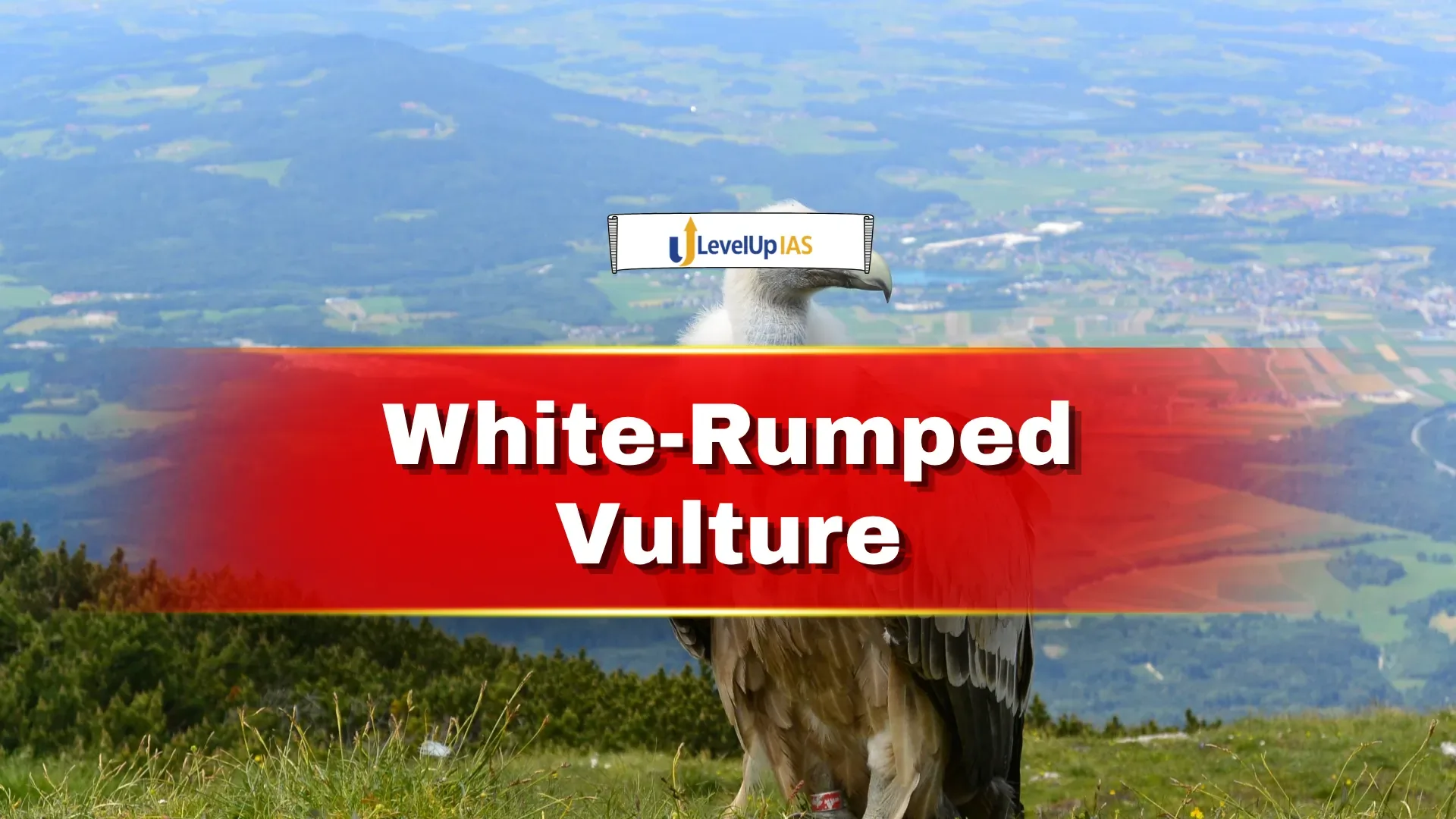
The White-rumped Vulture is a small Old World vulture native to South and Southeast Asia. It is also known as the Indian White-backed Vulture or Oriental White-backed Vulture.
- Scientific Name: Gyps bengalensis
- Family: Accipitridae
- Habitat: Primarily found in open plains, agricultural landscapes and areas near villages and cities. It is also found in hilly regions.
- Distribution: India, Pakistan, Nepal, Bangladesh, Bhutan, Myanmar, Thailand, Laos, Cambodia and southern Vietnam.
- Diet: It is a scavenger that feeds mainly on the carcasses of dead animals.
Physical Characteristics
The White-rumped Vulture has a dark body, broad wings and a relatively short tail. Its head and neck are largely unfeathered, while adults have a distinctive white neck-ruff and a white patch on the lower back and upper tail. Juveniles generally have darker brown plumage.
It is a social bird and often gathers in groups around carcasses. It usually nests in tall trees, sometimes forming breeding colonies near human settlements.
Ecological Significance
Vultures are often described as nature's sanitation workers because of their role in disposing of animal carcasses.
Their rapid consumption of dead animals helps prevent carcasses from decaying in the open, thereby limiting the spread of disease-causing organisms. They also help maintain the balance of scavenger populations and contribute to nutrient cycling.
A decline in vulture populations can result in increased availability of carcasses for other scavengers, including feral dogs and rats, potentially increasing the risk of disease transmission to humans and livestock.
Major Threats to White-Rumped Vultures
1. Veterinary Drugs: The most significant cause of the historical decline of White-rumped Vultures has been the veterinary use of diclofenac, a non-steroidal anti-inflammatory drug (NSAID) administered to livestock. Vultures feeding on carcasses of treated animals can develop kidney failure and visceral gout, leading to death.
2. Other Toxic Drugs: Veterinary drugs such as ketoprofen and aceclofenac have also been identified as harmful to vultures. The continued availability and misuse of certain toxic NSAIDs remain concerns.
3. Electrocution and Power Infrastructure: Birds may be electrocuted when they perch on unsafe electrical infrastructure or collide with power lines. The recent incident in Mudumalai highlights this threat to reintroduced vultures.
4. Habitat Loss and Food Availability: Deforestation, loss of nesting trees, poisoning of carcasses and changes in livestock disposal practices reduce the availability of safe nesting sites and food.
Conservation Status
The White-rumped Vulture has the following conservation status:
- IUCN Red List: Critically Endangered.
- Wild Life (Protection) Act, 1972: Schedule I.
The Wildlife Institute of India’s 2025 pan-India assessment recorded 945 nests, including 890 active nests, of the species across 12 States. This represented an estimated 1,780-1,890 breeding adults. The assessment also highlighted the loss of nesting populations from many historically recorded sites, indicating that the species remains highly vulnerable.
Conservation Measures in India
India has undertaken several measures to protect its vulture populations.
- Diclofenac Ban: Veterinary use of diclofenac was banned in India in 2006 to prevent poisoning of vultures through livestock carcasses. Restrictions were subsequently introduced on the sale and packaging of human diclofenac formulations to prevent their misuse in animals.
- Safe Alternatives: Meloxicam and tolfenamic acid have been identified as safer alternatives to diclofenac for veterinary use.
- Vulture Conservation Breeding Programme: Captive breeding centres have been established to increase the population of endangered vulture species and support their eventual release into the wild.
- Action Plan for Vulture Conservation (2020–2025): It focuses on eliminating toxic drugs from the food chain, monitoring wild populations, strengthening conservation breeding and protecting existing habitats.
- Vulture Safe Zones: These areas aim to maintain a safe environment around vulture populations by monitoring veterinary drug use and promoting awareness among local communities and veterinary practitioners.
Way Forward
Vulture conservation requires more than captive breeding and reintroduction. Strict enforcement of restrictions on toxic veterinary drugs, regular monitoring of livestock carcasses and promotion of vulture-safe medicines are essential.
Power infrastructure near nesting and feeding areas should be made safer through insulated wires, bird diverters and appropriate mitigation measures. Continued monitoring through radio-tagging can also help identify threats faced by released birds and improve future conservation strategies.
Conclusion
The decline of the White-rumped Vulture demonstrates how human activities can disrupt ecological balance. Although India has taken important steps through drug restrictions and captive breeding, threats such as electrocution and habitat loss continue to affect its survival. Protecting existing populations and ensuring safe conditions for reintroduced birds are essential for the long-term recovery of this species.
Related reads.

Sariska Tiger Reserve
21 Nov 2026 3 min

Foreign Contribution (Regulation) Act (FCRA)
20 Nov 2026 4 min

Burevestnik Cruise Missile
20 Nov 2026 3 min

Mombasa Declaration
20 Nov 2026 3 min

Zojila Tunnel
18 Nov 2026 3 min

Nyaya Setu AI Chatbot
18 Nov 2026 5 min
Put it into practice
Reading is step one.
Turn what you've just read into exam-ready answers with mentor-led practice and our structured test series.