Post-Independence India for UPSC: Complete Topic-wise Notes
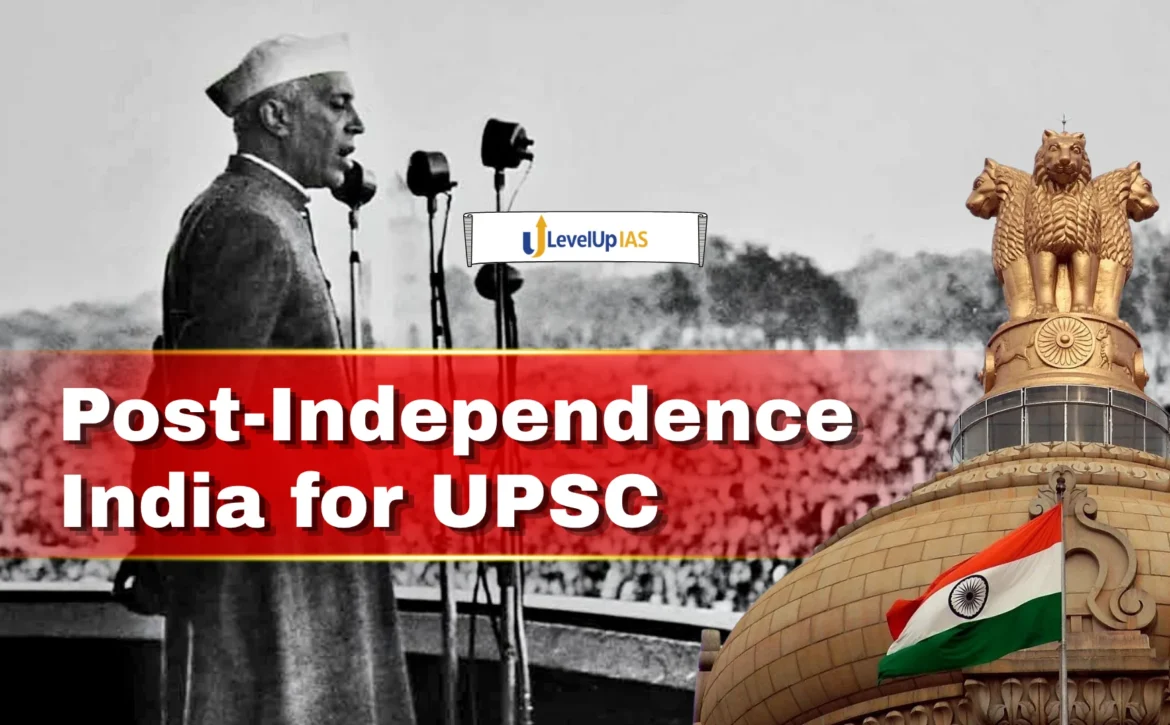
Post-Independence India is an important part of the UPSC Civil Services Examination, focusing on the political, economic, and social developments in India after 1947. This section covers nation-building, integration of princely states, constitutional consolidation, economic planning, and major reforms that shaped modern India.
This page serves as a comprehensive repository of Post-Independence India topics, providing structured access to detailed articles for systematic and effective UPSC preparation.
Challenges before India after Independence
At the time of independence, India faced multiple immediate challenges that shaped its early political and social trajectory.
Integration and Consolidation of India
After independence, India faced the challenge of unifying diverse princely states and establishing political stability.
Constitutional Consolidation and Political Developments
India adopted a democratic framework and witnessed significant political developments in the early decades after independence.
- Adoption of the Constitution and Early Challenges
- One-Party Dominance and Political Developments
- Emergency (1975-1977)
Economic Development and Planning
India adopted planned economic development to achieve growth and self-reliance.
- Planning in India (Five-Year Plans)
- Green Revolution
- Liberalization, Privatization, Globalization (1991 Reforms)
Foreign Policy and International Relations
India’s foreign policy evolved based on principles of non-alignment and strategic autonomy.
- Non-Aligned Movement (NAM)
- India’s Relations with Neighbours
Social Movements and Internal Challenges
Post-independence India witnessed various social movements and internal challenges related to identity, rights, and development.
- Linguistic Movements
- Naxal Movements
- Regionalism and Identity Politics
Visit LevelUp IAS- Click Here