
Current Affairs
12th BRICS Parliamentary Forum 2026
Why in News?
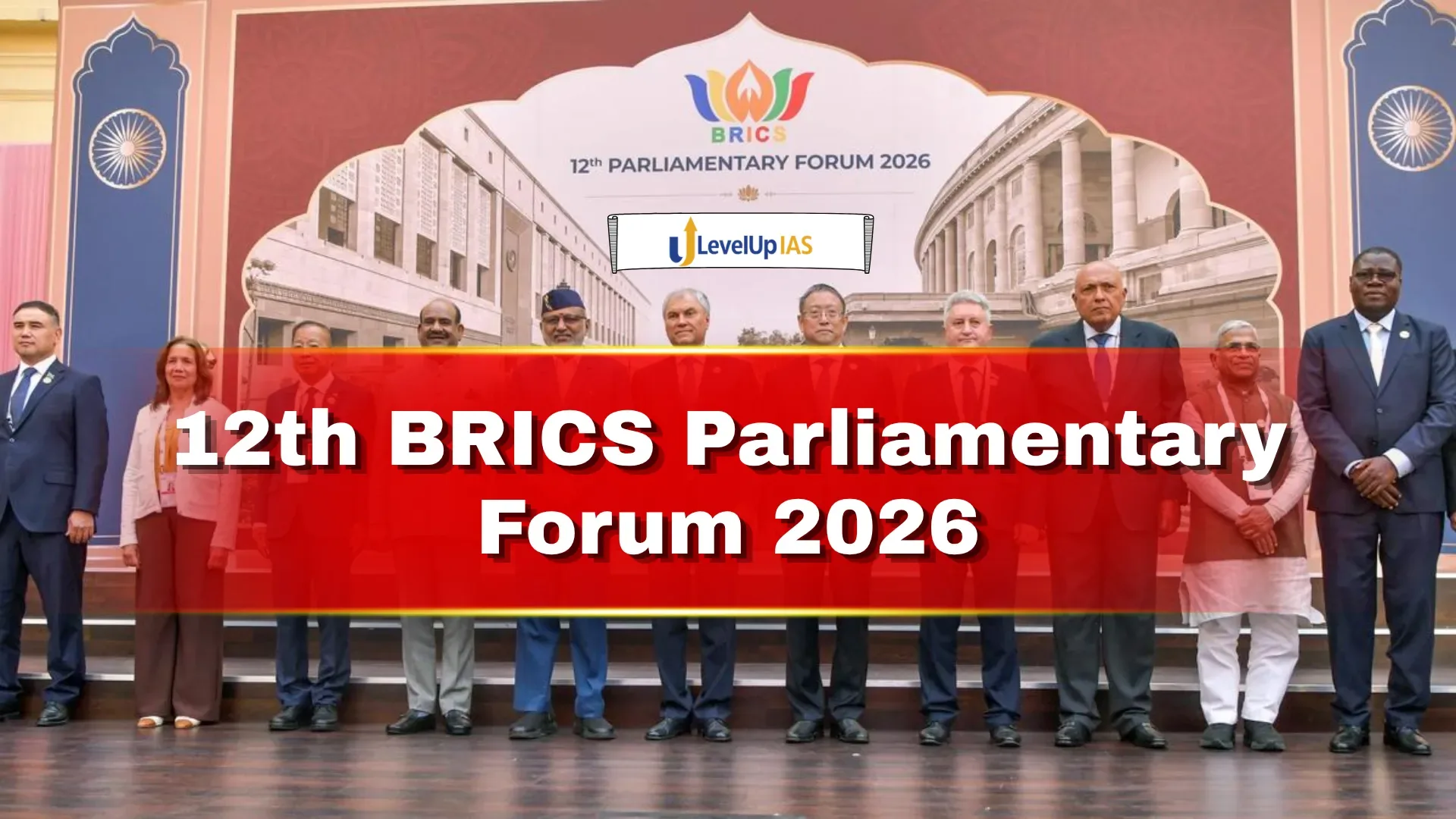
The 12th BRICS Parliamentary Forum was held in New Delhi on 26-27 October 2026. It was inaugurated by Lok Sabha Speaker Om Birla at the Central Hall of Samvidhan Sadan, bringing together presiding officers and parliamentary representatives from BRICS member countries.
The forum was organised under the theme “Fostering Parliaments for People-Centric Development” and focused on strengthening parliamentary cooperation, institutional resilience, responsible use of technology and reforms in global governance. It concluded with the adoption of a Joint Declaration.
What Is the BRICS Parliamentary Forum?
The BRICS Parliamentary Forum is an inter-parliamentary platform that brings together representatives of the legislatures of BRICS countries. It provides an opportunity to discuss common challenges, exchange legislative practices and strengthen cooperation among member countries.
The forum complements the broader BRICS framework by extending cooperation beyond governments to their legislative institutions. It also encourages parliamentary diplomacy, mutual understanding and dialogue on international issues.
The first BRICS Parliamentary Forum was held in Moscow, Russia, in 2015. The 12th edition was hosted by India as part of its BRICS Chairship in 2026.
About the 12th BRICS Parliamentary Forum
The two-day meeting brought together parliamentary leaders and representatives from the ten BRICS member countries:
- Brazil
- Russia
- India
- China
- South Africa
- Egypt
- Ethiopia
- Iran
- United Arab Emirates
- Indonesia
Representatives from partner countries also participated in the forum.
The discussions were organised around four broad themes:
1. Resilience: Strengthening Parliamentary Institutions
The session examined the role of Parliaments in building strong, accountable and resilient institutions. It highlighted the importance of effective legislative oversight, public trust and institutional capacity in addressing emerging challenges.
2. Innovation: Human-Centred Artificial Intelligence
The discussions focused on the use of Artificial Intelligence (AI) and digital technologies in parliamentary functioning. The emphasis was on ensuring that technological progress remains human-centred, inclusive and beneficial to citizens.
3. Cooperation: Reforming Global Governance
The session discussed how parliamentary cooperation can contribute to a more representative and inclusive international system. It highlighted the need for greater representation of developing countries, particularly the Global South, in global decision-making institutions.
4. Sustainability: Inclusive Development
The final session focused on the role of Parliaments in promoting sustainable development, addressing climate-related challenges and supporting the implementation of the 2030 Agenda for Sustainable Development.
A special meeting of the Chairpersons of International Affairs Committees of BRICS Parliaments was also organised to discuss parliamentary diplomacy, capacity building and the exchange of best practices.
Key Outcomes: Joint Declaration
The forum concluded on 27 October 2026 with the adoption of a Joint Declaration by consensus. Some important outcomes included:
- United Nations Reforms: Reaffirmed the need for comprehensive reform of the United Nations, including the UN Security Council, to make global governance more representative of contemporary realities.
- Greater Role for the Global South: Supported stronger representation of developing countries in international decision-making institutions.
- Counter-Terrorism: Condemned cross-border terrorism, terror financing and the provision of safe havens to terrorists, calling for zero tolerance and an end to double standards.
- Responsible Use of AI: Recognised the potential of Artificial Intelligence and digital technologies to improve parliamentary efficiency while ensuring their responsible and inclusive use.
- Sustainable Development: Reaffirmed commitment to the 2030 Agenda and the Sustainable Development Goals (SDGs).
- Peaceful Resolution of Disputes: Emphasised dialogue, mutual respect and cooperation as essential for addressing international challenges.
The declaration also reaffirmed the principles of the UN Charter, including sovereign equality, non-interference in internal affairs and peaceful settlement of disputes.
India's Role and Significance
Hosting the 12th BRICS Parliamentary Forum was an important part of India's parliamentary diplomacy during its 2026 BRICS Chairship. It provided India with an opportunity to bring together legislative representatives from major emerging economies and promote dialogue on shared international concerns.
The forum also reflected India's emphasis on strengthening multilateralism and making international institutions more representative. Its discussions on UN Security Council reform are particularly relevant to India's longstanding demand for a greater role for developing countries in global governance.
The adoption of a joint declaration by consensus also demonstrated the importance of parliamentary dialogue in maintaining cooperation despite differences in national interests and foreign policy positions.
Conclusion
The 12th BRICS Parliamentary Forum highlighted the growing importance of legislative cooperation in international relations. By focusing on institutional resilience, human-centred technology, global governance reforms and sustainable development, it sought to connect parliamentary diplomacy with the broader objectives of BRICS. The forum also reinforced India's engagement with the Global South and its support for a more inclusive and representative multilateral order.
Related reads.
Pradhan Mantri Viksit Gram Swaraj Yojana
02 Nov 2026 4 min

Uniform Civil Code (UCC)
30 Oct 2026 7 min

CosmoCube Mission
29 Oct 2026 3 min

Essential Religious Practice (ERP)
29 Oct 2026 5 min

India’s Carbon Credit Trading Scheme (CCTS)
28 Oct 2026 6 min

National Co-operative Development Corporation (Amendment) Act, 2026
27 Oct 2026 6 min
Put it into practice
Reading is step one.
Turn what you've just read into exam-ready answers with mentor-led practice and our structured test series.