
Current Affairs
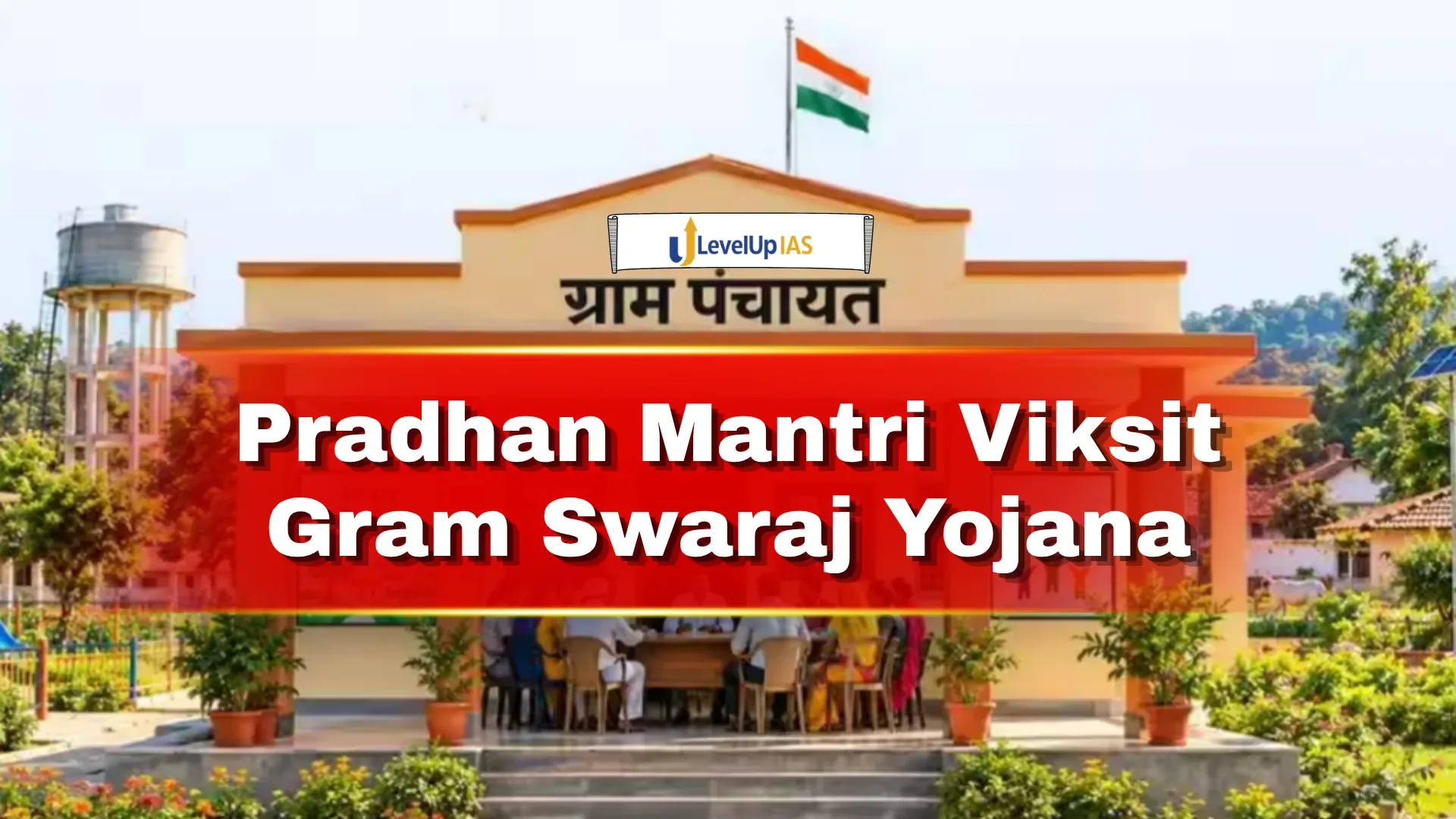
Pradhan Mantri Viksit Gram Swaraj Yojana
Why in News?
On 28 October 2026, the Union Cabinet approved the Pradhan Mantri Viksit Gram Swaraj Yojana (PM VGSY) as a Centrally Sponsored Scheme for the period 2026–27 to 2030–31. With a total outlay of ₹7,395.55 crore, the scheme aims to strengthen Gram Panchayats and other rural local bodies through better planning, digital governance, capacity building and financial accountability.
The initiative is aligned with the national vision of Viksit Bharat and seeks to make Panchayats more empowered, transparent and self-reliant institutions.
What Is the Pradhan Mantri Viksit Gram Swaraj Yojana?
PM VGSY is a rural governance initiative designed to improve the functioning of Panchayati Raj Institutions (PRIs). Its central idea is to place Gram Panchayats at the heart of local development by enabling them to identify village-level needs, coordinate government schemes and make effective use of available resources.
Rather than focusing only on the delivery of individual schemes, the initiative emphasises integrated planning based on local priorities. It will cover all States and Union Territories, including traditional rural local government institutions in areas where Panchayats do not exist.
Financial Outlay and Coverage
The scheme will operate for five years, from 2026–27 to 2030–31, in line with the period of the Sixteenth Finance Commission.
- Total outlay: ₹7,395.55 crore
- Central Government share: ₹4,869.48 crore
- State Government share: ₹2,526.07 crore
- Coverage: Over 2.55 lakh Panchayats and traditional local bodies
- Direct beneficiaries: Around 32 lakh elected representatives, Panchayat functionaries and other stakeholders
The scheme is particularly significant because the Sixteenth Finance Commission has recommended approximately ₹4.35 lakh crore in grants for Rural Local Bodies during the same period. PM VGSY aims to strengthen the institutional capacity needed to use these resources effectively.
Key Features of the Scheme
1. Gram Panchayats as Centres of Local Governance
The scheme places Gram Panchayats at the centre of village development. They will be supported in bringing together local priorities, government interventions and available financial resources. This is expected to improve coordination between different departments and ensure that development activities respond to actual village requirements.
2. Integrated Village Development Planning
The initiative will support the preparation of around 2.55 lakh Gram Panchayat Development Plans (GPDPs) every year through the eGramSwaraj portal. These plans will combine local needs with interventions and resources available through Central and State Government departments. This will help identify gaps, avoid duplication and improve the use of public funds.
3. Digital Governance
PM VGSY will build on existing e-Panchayat systems, particularly eGramSwaraj, to bring information about government schemes, beneficiaries, community assets and available resources onto a common digital platform. Better access to this information will help Panchayats plan, monitor and coordinate development activities.
4. Citizen Participation and Awareness
The scheme seeks to connect national development initiatives with local needs through Gram Sabhas, Panchayat forums and existing communication platforms. Each coordinated awareness-generation exercise aims to reach at least one crore citizens.
It will also use PANCHAM, an AI-enabled, multilingual, two-way communication platform available in 17 Indian languages, to make information about government schemes and initiatives more accessible.
5. Capacity Building
Around 32 lakh elected representatives, Panchayat functionaries and other stakeholders will receive annual capacity-building support and digital assistance. Training will focus on local planning, resource management, communication with citizens and the effective use of digital platforms. This will help representatives translate community discussions into practical development plans.
6. Financial Accountability and Self-Reliance
The scheme will support the preparation of at least 2.55 lakh online audit plans annually, with audits to be completed through the AuditOnline platform. It will also promote better accounting, public disclosure and mobilisation of Panchayats' Own Source Revenue (OSR). These measures aim to improve transparency and reduce excessive dependence on government grants.
Implementation Mechanism
The scheme will be implemented through State Governments and Union Territory Administrations. They will prepare and submit annual action plans outlining their priorities and requirements. A designated Central Empowered Committee will examine and approve these plans.
The initiative will use existing institutional, training and digital systems rather than creating permanent posts. However, need-based contractual personnel may be engaged at the State, District and Block levels to provide technical support.
Significance of the Scheme
The effectiveness of rural development depends not only on the availability of funds but also on the ability of local institutions to identify priorities and use resources properly. PM VGSY seeks to address this gap by improving the planning and administrative capabilities of Panchayats.
It can strengthen grassroots democracy by encouraging greater participation through Gram Sabhas, improve coordination among government departments and make the use of public funds more transparent. Greater financial and institutional autonomy can also help Panchayats become more responsive to local communities.
Conclusion
The Pradhan Mantri Viksit Gram Swaraj Yojana represents an effort to strengthen rural development through capable and accountable local institutions. By combining integrated planning, digital governance, citizen participation and financial transparency, it seeks to make Gram Panchayats active drivers of village development. Its success will depend on effective implementation, meaningful community participation and the ability of local bodies to convert available resources into tangible improvements in rural life.
Related reads.

Uniform Civil Code (UCC)
30 Oct 2026 7 min

CosmoCube Mission
29 Oct 2026 3 min

Essential Religious Practice (ERP)
29 Oct 2026 5 min

India’s Carbon Credit Trading Scheme (CCTS)
28 Oct 2026 6 min
National Co-operative Development Corporation (Amendment) Act, 2026
27 Oct 2026 6 min
Indian Star Tortoise
26 Oct 2026 4 min
Put it into practice
Reading is step one.
Turn what you've just read into exam-ready answers with mentor-led practice and our structured test series.