
Current Affairs
CE20 Cryogenic Engine
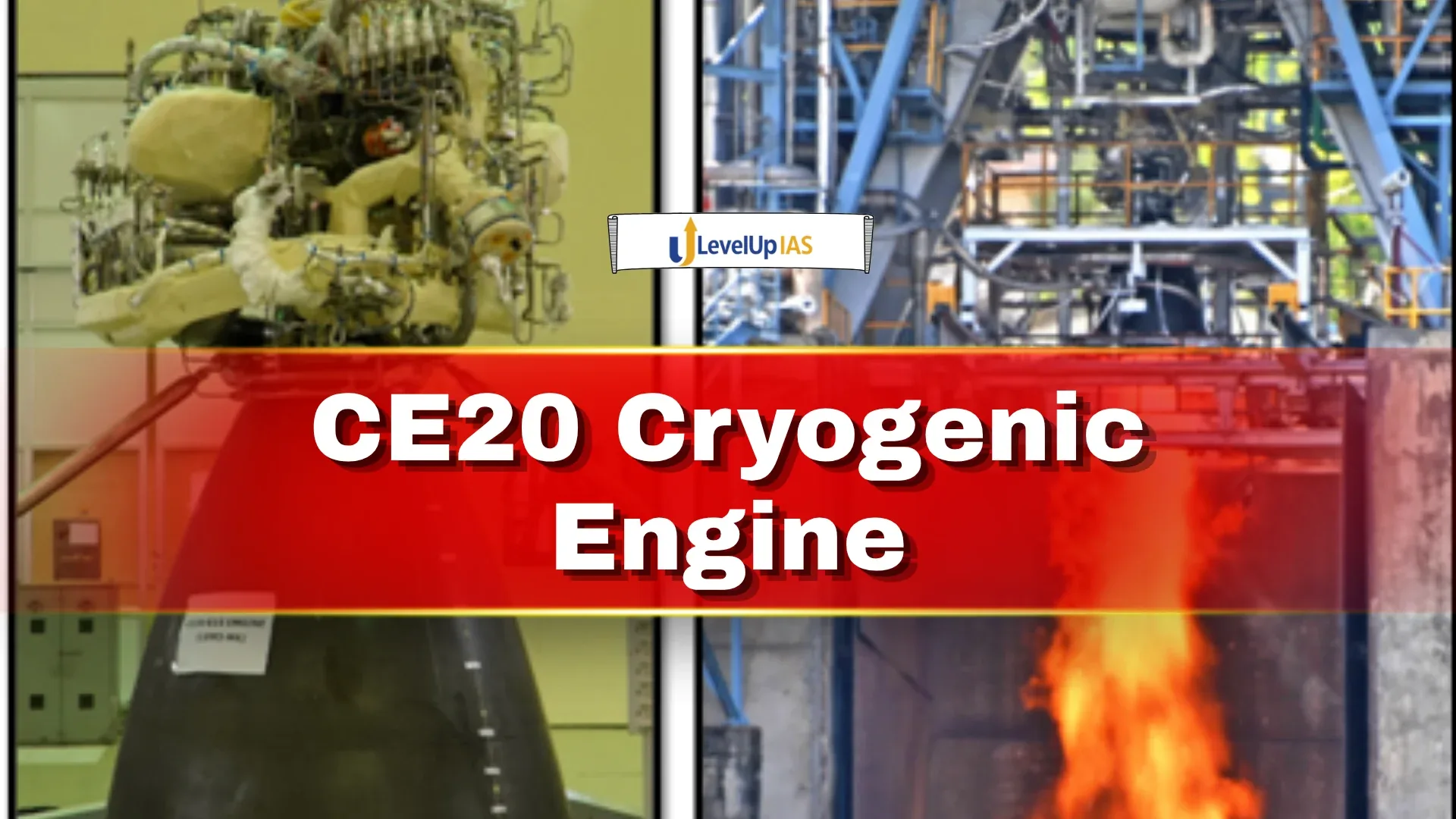
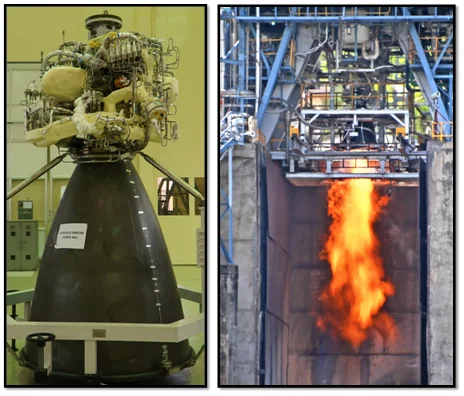
The CE20 Cryogenic Engine recently came into focus after the Indian Space Research Organisation (ISRO) successfully completed the Flight Acceptance Hot Test (FAHT) of the engine at the ISRO Propulsion Complex (IPRC), Mahendragiri, ahead of the LVM3-M7 mission. The successful test marks another milestone in India's indigenous space technology programme and reinforces the reliability of the country's heavy-lift launch capabilities.
Introduction
The CE20 is India's most powerful indigenously developed cryogenic rocket engine, designed to power the upper stage of the Launch Vehicle Mark-3 (LVM3), formerly known as GSLV Mk III. It enables the launch of heavy communication satellites, deep-space missions, and future human spaceflight missions. The development of the CE20 represents one of ISRO's greatest technological achievements, as cryogenic propulsion is among the most complex technologies in aerospace engineering and has historically remained restricted to only a few advanced spacefaring nations.
What is the CE20 Cryogenic Engine?
The CE20 is a high-thrust cryogenic engine that powers the C25 (and upgraded C32) upper stage of the LVM3 launch vehicle. It burns Liquid Hydrogen (LH₂) as fuel and Liquid Oxygen (LOX) as the oxidiser, both stored at extremely low temperatures. The combustion of these propellants produces high exhaust velocity, enabling the rocket to inject heavy payloads into Geosynchronous Transfer Orbit (GTO), Low Earth Orbit (LEO) and interplanetary trajectories.
The engine has been developed by ISRO's Liquid Propulsion Systems Centre (LPSC) and qualified through extensive testing at the ISRO Propulsion Complex (IPRC). It has successfully powered several LVM3 missions, including Chandrayaan-2, Chandrayaan-3, commercial satellite launches, and is expected to play a central role in India's Gaganyaan Human Spaceflight Mission.
Evolution of India's Cryogenic Programme
India's cryogenic journey began under difficult circumstances. During the early 1990s, international technology denial regimes prevented India from acquiring advanced cryogenic engine technology. This compelled ISRO to pursue an indigenous development programme, requiring decades of research, testing, and engineering innovation.
The CE20 emerged as the successor to the smaller CE-7.5 engine, providing significantly higher thrust suitable for heavy-lift launch vehicles. Its successful operational record has established India as one of the few countries capable of designing and manufacturing indigenous cryogenic propulsion systems, greatly enhancing the country's strategic autonomy in space technology.
Key Technical Features
One of the defining characteristics of the CE20 is its Gas-Generator Cycle, in which a small portion of the propellants is burnt separately to drive the turbopumps before combustion in the main chamber. Compared to more complex propulsion cycles, this design offers greater reliability, easier engine start-up, and improved operational stability.
The engine uses the highly efficient Liquid Hydrogen-Liquid Oxygen (LH₂-LOX) propellant combination, which provides one of the highest specific impulses among chemical rocket engines. This makes it ideal for upper-stage propulsion where maximum efficiency is essential.
The CE20 is capable of thrust throttling between approximately 19 and 22 tonnes, allowing greater flexibility for different mission profiles and ensuring precise orbital insertion. It also incorporates an innovative Nozzle Protection System (NPS) that enables safe sea-level testing of the large cryogenic nozzle without requiring expensive high-altitude vacuum facilities.
For the Gaganyaan Mission, the engine has been upgraded with human-rated safety features, including redundant systems, enhanced structural safety margins, and continuous health-monitoring mechanisms to meet the stringent reliability standards required for carrying astronauts.
Applications
The CE20 serves as the propulsion system for the upper stage of the Launch Vehicle Mark-3, India's heaviest operational launch vehicle. It provides the final acceleration required to place heavy communication satellites into precise geostationary transfer orbits.
The engine has also become indispensable for India's ambitious deep-space exploration programme. Lunar missions such as Chandrayaan-2 and Chandrayaan-3 depended on the CE20-powered LVM3 to achieve the required escape trajectory towards the Moon. Its role will become even more significant as ISRO expands its planetary exploration programme.
Equally important is its contribution to the Gaganyaan Human Spaceflight Programme, where the human-rated CE20 will safely propel Indian astronauts into Low Earth Orbit, marking a major step in India's human space exploration ambitions.
Significance for India
The successful development of the CE20 has immense technological, strategic, and economic significance. It has reduced India's dependence on foreign propulsion technologies and strengthened the vision of Atmanirbhar Bharat in the space sector.
The engine enables India to independently launch heavy satellites for communication, navigation, meteorology, defence, and scientific research, thereby enhancing national security and strategic autonomy. It has also improved India's competitiveness in the global commercial launch market by allowing ISRO to offer reliable heavy-lift launch services for international customers.
Moreover, the CE20 demonstrates India's growing capability in advanced engineering, precision manufacturing, materials science, and aerospace innovation, strengthening the country's position among leading spacefaring nations.
Flight Acceptance Hot Test (FAHT)
Before every operational mission, the CE20 engine undergoes a Flight Acceptance Hot Test, during which the actual flight engine is ignited under simulated mission conditions. The test validates parameters such as thrust generation, combustion stability, structural integrity, and control systems.
The recent successful completion of the FAHT for the LVM3-M7 mission confirms the engine's readiness for flight and significantly enhances mission reliability. Such rigorous testing reflects ISRO's emphasis on quality assurance and mission success.
Conclusion
The CE20 Cryogenic Engine is a landmark achievement in India's space programme and a symbol of the country's technological self-reliance. Developed entirely through indigenous efforts, it has enabled India to enter the exclusive group of nations possessing advanced cryogenic propulsion technology. Beyond powering heavy satellite launches and lunar missions, the engine will be central to future programmes such as Gaganyaan, advanced communication satellites, and deep-space exploration. As India expands its presence in the global space economy, the CE20 will remain a cornerstone of its launch capability and an important contributor to the country's scientific and strategic ambitions.
Related reads.

Satkosia Tiger Reserve
23 Sep 2026 2 min

EU’s Carbon Border Adjustment Mechanism (CBAM)
22 Sep 2026 4 min

ASEAN: Association of Southeast Asian Nations
16 Sep 2026 6 min

National Food Security Act (NFSA), 2013
16 Sep 2026 6 min
Borophene
15 Sep 2026 3 min

WTO Agreement on Fisheries Subsidies
14 Sep 2026 3 min
Put it into practice
Reading is step one.
Turn what you've just read into exam-ready answers with mentor-led practice and our structured test series.