
Current Affairs
Cyclosporiasis, UPSC Current Affairs
Why in News?
Recently, the U.S. Centers for Disease Control and Prevention (CDC) reported 1,645 confirmed domestic cases of cyclosporiasis since May 1, raising concerns over food-borne parasitic infections linked to contaminated fresh produce. The outbreak has once again highlighted the importance of food safety, public hygiene and disease surveillance in preventing parasitic infections.
What is Cyclosporiasis?
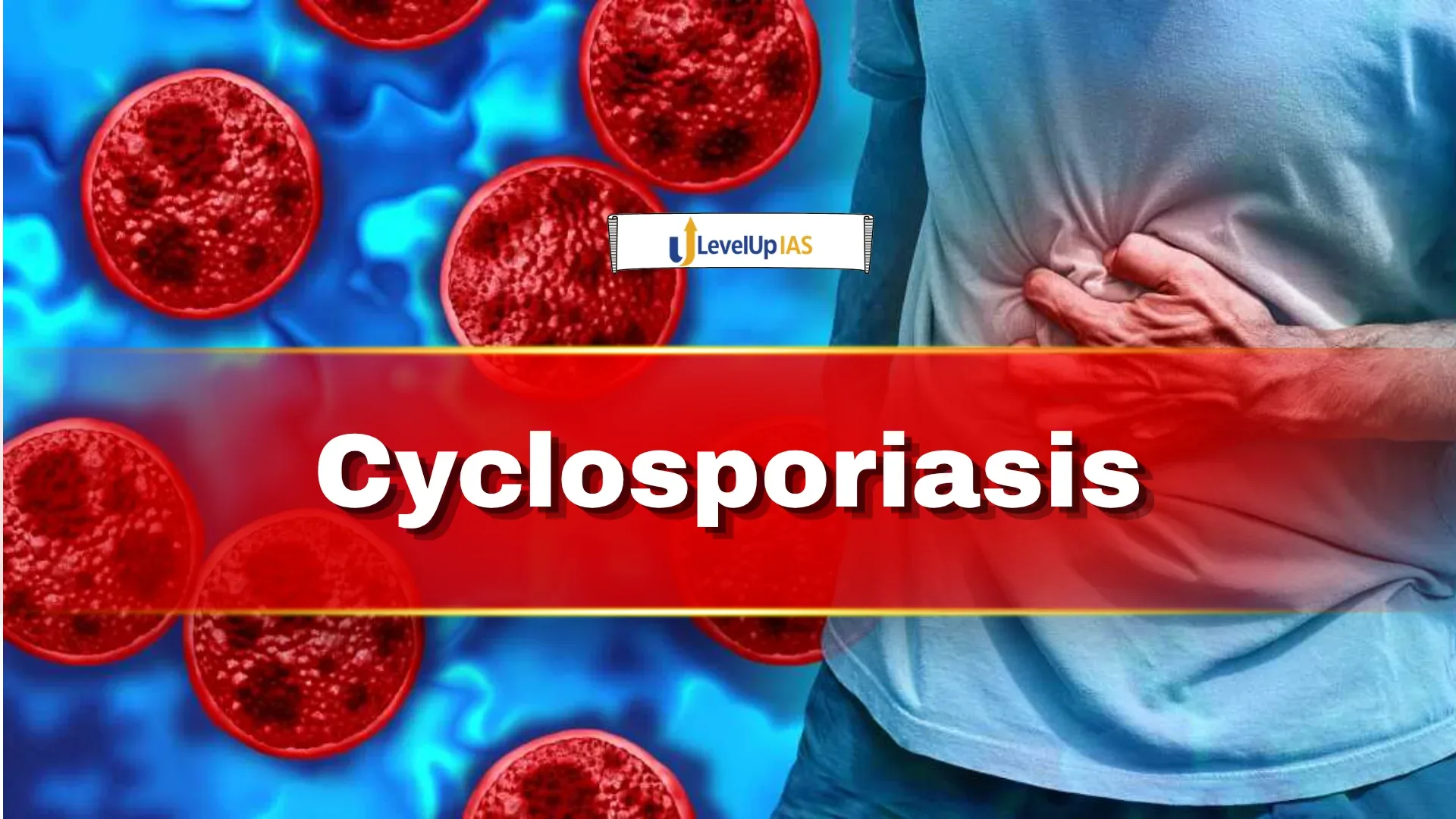
Cyclosporiasis is an intestinal infection caused by Cyclospora cayetanensis, a single-celled protozoan parasite that infects the small intestine. The parasite completes part of its life cycle inside the human body and another part in the external environment.
The disease mainly occurs after consuming raw or inadequately washed fruits and vegetables contaminated with infective parasite oocysts. Since the parasite requires several days to weeks outside the human body to mature, freshly excreted faeces cannot immediately infect another individual. This biological characteristic distinguishes cyclosporiasis from many other gastrointestinal infections.
The disease is found worldwide but is more common in tropical and subtropical regions where sanitation facilities are inadequate and fresh produce may become contaminated during cultivation, harvesting or processing.
Transmission and Sources of Infection
Cyclosporiasis spreads primarily through the faeco-oral route, where food or drinking water contaminated with faeces containing the parasite becomes the source of infection.
Fresh produce consumed without cooking is the most common vehicle of transmission because the parasite survives on the surface of fruits and vegetables. According to the CDC, outbreaks have frequently been associated with contaminated leafy greens, lettuce, spinach, basil, cilantro, parsley, raspberries and snow peas.
Contaminated irrigation water, improper food handling practices and inadequate sanitation during harvesting or packaging further increase the risk of transmission. Unlike many viral or bacterial intestinal diseases, direct person-to-person transmission does not occur, as the parasite requires environmental maturation before becoming infective.
Life Cycle of Cyclospora cayetanensis
Understanding the life cycle of the parasite helps explain both its transmission and prevention.
The parasite enters the human body through contaminated food or water and invades the epithelial cells of the small intestine. Inside the intestine, it multiplies and produces immature oocysts, which are excreted in human faeces.
These freshly excreted oocysts are non-infective. They require several days or even weeks under favourable environmental conditions to undergo sporulation, a maturation process that transforms them into infective forms.
Once sporulated oocysts contaminate food or water, they can infect another individual upon ingestion, thereby completing the transmission cycle.
Clinical Features and Symptoms
The hallmark symptom of cyclosporiasis is frequent, explosive watery diarrhoea, which may persist for several days or even weeks if left untreated.
Patients often experience abdominal cramps, bloating, nausea, fatigue, loss of appetite and unintended weight loss. Some individuals may also develop mild fever, vomiting and dehydration due to prolonged diarrhoea.
The symptoms may show a relapsing pattern, where they improve temporarily before recurring, making diagnosis difficult without laboratory confirmation.
The incubation period generally ranges from about one week after ingestion of contaminated food or water.
Risk Groups
Although anyone consuming contaminated food can contract cyclosporiasis, certain groups are particularly vulnerable.
Children, elderly individuals and people with weakened immune systems are more likely to develop prolonged illness and severe dehydration. Patients undergoing chemotherapy, organ transplant recipients, individuals living with HIV/AIDS and those receiving immunosuppressive drugs are at greater risk of complications.
Travellers visiting endemic regions also face an increased likelihood of infection, particularly when consuming raw fruits, salads or untreated drinking water.
Diagnosis and Treatment
Diagnosis is confirmed through laboratory examination of stool samples to detect Cyclospora oocysts. Since the parasite is difficult to identify under routine microscopy, specialised staining techniques or molecular diagnostic methods may be required.
The standard treatment consists of a seven to ten-day course of the antibiotic Trimethoprim-Sulfamethoxazole (TMP-SMX). The antibiotic interferes with the parasite's ability to synthesise folic acid, thereby preventing its multiplication.
Supportive treatment is equally important. Oral rehydration therapy, adequate fluid intake and electrolyte replacement help prevent dehydration resulting from prolonged diarrhoea.
Individuals allergic to sulfonamide antibiotics may require alternative management under medical supervision.
Prevention and Control
As there is currently no vaccine available against cyclosporiasis, prevention depends primarily on food hygiene and sanitation.
Safe agricultural practices, proper sewage disposal and the use of clean irrigation water are essential for preventing contamination at the source. Fresh fruits and vegetables should be thoroughly washed before consumption, although washing alone may not completely remove the parasite.
Travellers visiting endemic areas should consume safe drinking water, avoid raw salads when hygiene standards are uncertain and maintain proper hand hygiene before meals.
Food processing industries and export agencies must strengthen quality control measures, traceability systems and microbial surveillance to minimise the risk of large-scale outbreaks.
Public health authorities play an important role in early outbreak detection through epidemiological surveillance, laboratory confirmation and rapid food recall mechanisms.
Conclusion
Cyclosporiasis is an important food-borne parasitic disease caused by Cyclospora cayetanensis, primarily transmitted through contaminated food and water. Although it is readily treatable with appropriate antibiotics, delayed diagnosis and poor sanitation can lead to prolonged illness and significant public health concerns. The recent rise in reported cases underlines the need for stronger food safety regulations, improved surveillance, better sanitation infrastructure and greater public awareness. As global food supply chains continue to expand, preventing cyclosporiasis will require coordinated efforts involving governments, farmers, food industries and public health agencies to ensure safe and sustainable food systems.
Related reads.

Satkosia Tiger Reserve
23 Sep 2026 2 min

EU’s Carbon Border Adjustment Mechanism (CBAM)
22 Sep 2026 4 min

ASEAN: Association of Southeast Asian Nations
16 Sep 2026 6 min
National Food Security Act (NFSA), 2013
16 Sep 2026 6 min

Borophene
15 Sep 2026 3 min

WTO Agreement on Fisheries Subsidies
14 Sep 2026 3 min
Put it into practice
Reading is step one.
Turn what you've just read into exam-ready answers with mentor-led practice and our structured test series.