
Current Affairs
Pradhan Mantri Jan Arogya Yojana (AB-PMJAY)
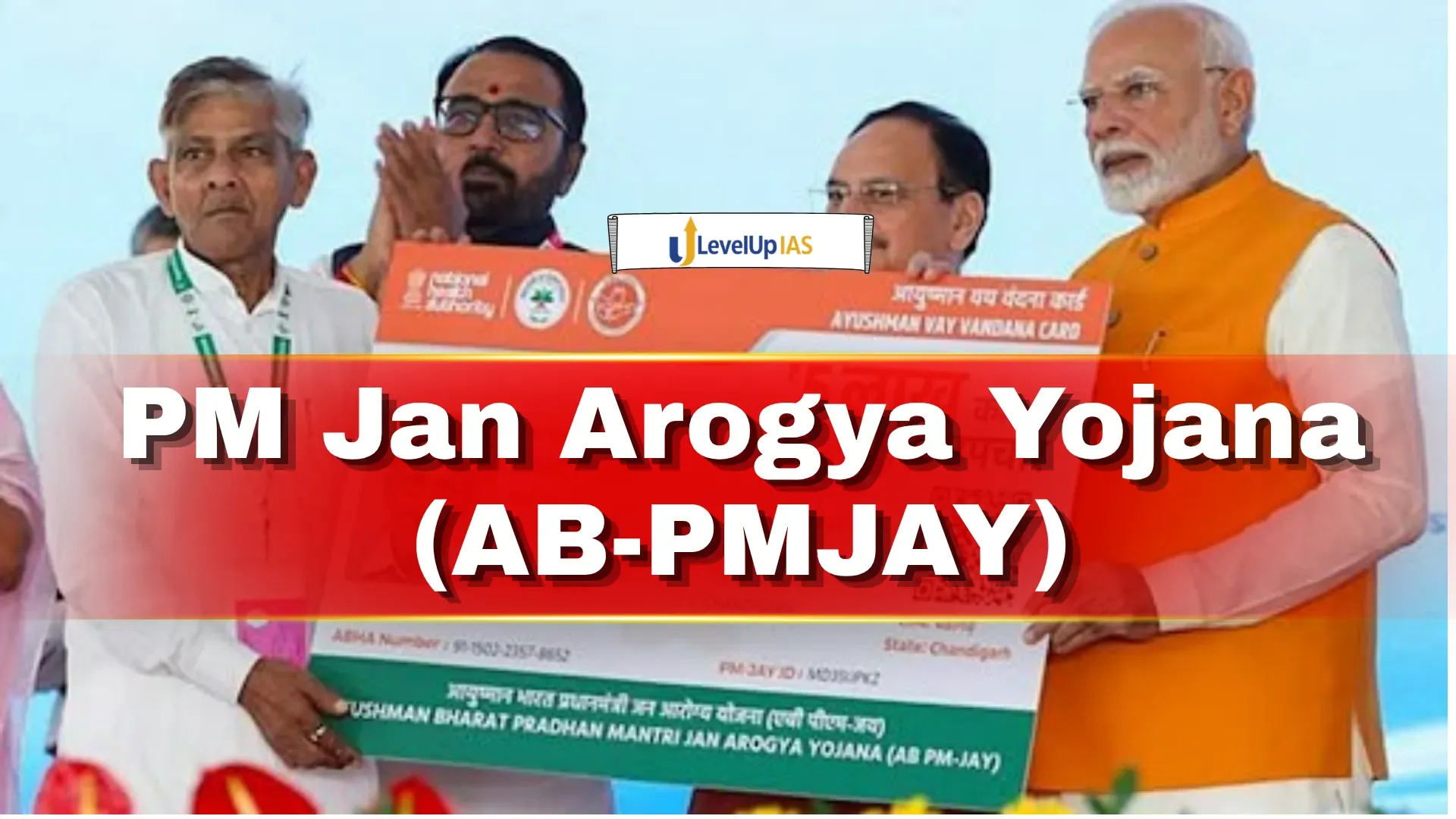
Why in News?
Ayushman Bharat-Pradhan Mantri Jan Arogya Yojana (AB-PMJAY) completed eight years in September 2026. As of 31 August 2026, the scheme had supported 13.25 crore hospital admissions worth ₹2.03 lakh crore through more than 38,000 empanelled public and private hospitals. It remains a key government initiative to improve access to hospital care and reduce the financial burden of medical treatment.
About AB-PMJAY
Ayushman Bharat-Pradhan Mantri Jan Arogya Yojana is a flagship government-funded health assurance scheme launched on 23 September 2018 in Ranchi, Jharkhand. It is implemented by the National Health Authority (NHA) under the Ministry of Health and Family Welfare.
The scheme aims to provide financial protection to economically vulnerable families by offering cashless hospitalisation for eligible medical treatments. It supports India's broader objective of achieving Universal Health Coverage (UHC), under which people should be able to access essential healthcare without facing financial hardship.
Key Features of AB-PMJAY
1. Health Cover
- Provides health cover of up to ₹5 lakh per eligible family per year.
- Covers secondary and tertiary hospitalisation.
- Operates on a family-floater basis, meaning the annual cover can be used by one or more eligible family members.
- Does not impose restrictions on family size, age or gender for eligible beneficiaries.
- Covers pre-existing diseases from the first day of enrolment, subject to the scheme's applicable provisions.
2. Cashless and Paperless Treatment
Beneficiaries can receive eligible treatment without making upfront payments at empanelled hospitals. The scheme covers eligible hospitalisation expenses according to its approved health benefit packages.
These packages include specified medical procedures, surgeries, medicines, diagnostic services, room charges and other eligible treatment-related expenses. The scheme also provides for eligible pre-hospitalisation and post-hospitalisation expenses.
3. Portability Across India
Eligible beneficiaries can access covered treatment at empanelled hospitals across India, regardless of the state in which their Ayushman card was issued. This portability is particularly useful for migrant workers and families travelling outside their home state.
4. Hospital Network
The scheme uses both public and private hospitals to expand access to treatment. Hospitals must be empanelled under the scheme, and treatment is subject to the applicable package, eligibility and authorisation requirements.
Eligibility and Beneficiaries
The original scheme targeted poor and vulnerable households, with beneficiary identification primarily linked to the Socio-Economic Caste Census (SECC) 2011 criteria for rural and urban areas. States and Union Territories may also have arrangements that expand coverage beyond the original beneficiary database.
The government has progressively expanded the scheme's reach. A major extension was approved in 2024 to include all senior citizens aged 70 years and above, irrespective of socio-economic status.
Eligible senior citizens receive a distinct Ayushman card under the expanded provision. Those belonging to families already covered by AB-PMJAY are entitled to an additional top-up cover of up to ₹5 lakh annually for eligible members aged 70 and above. This additional cover is separate from the cover available to younger family members.
Senior citizens covered by private health insurance or the Employees' State Insurance scheme can also be eligible. Those receiving benefits under other government health schemes, such as CGHS, must follow the applicable rules regarding the choice between schemes.
Significance of AB-PMJAY
1. Financial Protection
Major illnesses and hospitalisation can push households into debt or poverty. By covering eligible hospitalisation expenses, AB-PMJAY helps reduce out-of-pocket expenditure and the risk of catastrophic healthcare costs.
2. Improved Access to Healthcare
The scheme enables eligible families to access specialised treatment, including care for serious illnesses, through empanelled hospitals. It can reduce financial barriers that otherwise delay or prevent treatment.
3. Support for Vulnerable Groups
The scheme focuses on economically vulnerable households and has expanded to include all senior citizens aged 70 and above, regardless of income. This strengthens financial protection for older people, who may require more frequent medical care.
4. Greater Use of Public and Private Healthcare
By bringing public and private hospitals into a common framework, the scheme expands the range of facilities available to beneficiaries. It also creates incentives to improve access and service delivery, provided that quality and accountability are maintained.
5. Progress Towards Universal Health Coverage
AB-PMJAY is an important component of India's efforts to advance Universal Health Coverage and Sustainable Development Goal 3, which focuses on ensuring healthy lives and promoting well-being for all.
Challenges
Despite its achievements, the scheme faces several implementation challenges.
- Limited outpatient coverage: Routine outpatient consultations and many expenses incurred outside covered hospitalisation may not be included, leaving beneficiaries to bear these costs.
- Uneven hospital availability: Some regions have fewer empanelled hospitals or limited access to specialists, affecting the practical availability of treatment.
- Quality of care: Differences in infrastructure, staffing and clinical standards can affect treatment outcomes.
- Fraud and misuse: False claims, unnecessary procedures and other irregularities require effective verification, audits and monitoring.
- Awareness and access gaps: Eligible families may be unaware of their entitlements or may face difficulties completing identification and enrolment processes.
- Financial sustainability: Expanding coverage and rising treatment costs require adequate funding, timely claim settlement and efficient use of public resources.
Conclusion
AB-PMJAY is a major public health assurance initiative designed to reduce financial barriers to hospital treatment for vulnerable households. Its annual health cover, cashless treatment facilities, nationwide portability and expansion to senior citizens aged 70 and above have broadened its reach.
Sustained progress will depend on equitable hospital access, quality treatment, effective monitoring and financial sustainability. Strengthening these areas is essential to ensure that the scheme contributes meaningfully to Universal Health Coverage in India.
Related reads.

Thiksey Monastery
23 Oct 2026 4 min

Loggerhead Sea Turtle
19 Oct 2026 4 min

West Nile Fever
18 Oct 2026 3 min

Satkosia Tiger Reserve
23 Sep 2026 2 min

EU’s Carbon Border Adjustment Mechanism (CBAM)
22 Sep 2026 4 min

ASEAN: Association of Southeast Asian Nations
16 Sep 2026 6 min
Put it into practice
Reading is step one.
Turn what you've just read into exam-ready answers with mentor-led practice and our structured test series.