
Current Affairs
Indian Star Tortoise
Why in News?
In August 2026, 216 rescued Indian Star Tortoises (Geochelone elegans) were rehabilitated in Tadoba-Andhari Tiger Reserve (TATR), Maharashtra. The tortoises had been rescued from wildlife trafficking incidents in Mumbai and Thane. The initiative highlighted the importance of wildlife rescue, scientific rehabilitation and habitat-based conservation to combat illegal trade in protected species.
In September 2026, the Directorate of Revenue Intelligence (DRI) also seized 180 live Indian Star Tortoises during an anti-smuggling operation near Bengaluru, highlighting the continuing threat posed by illegal wildlife trafficking.
About the Indian Star Tortoise
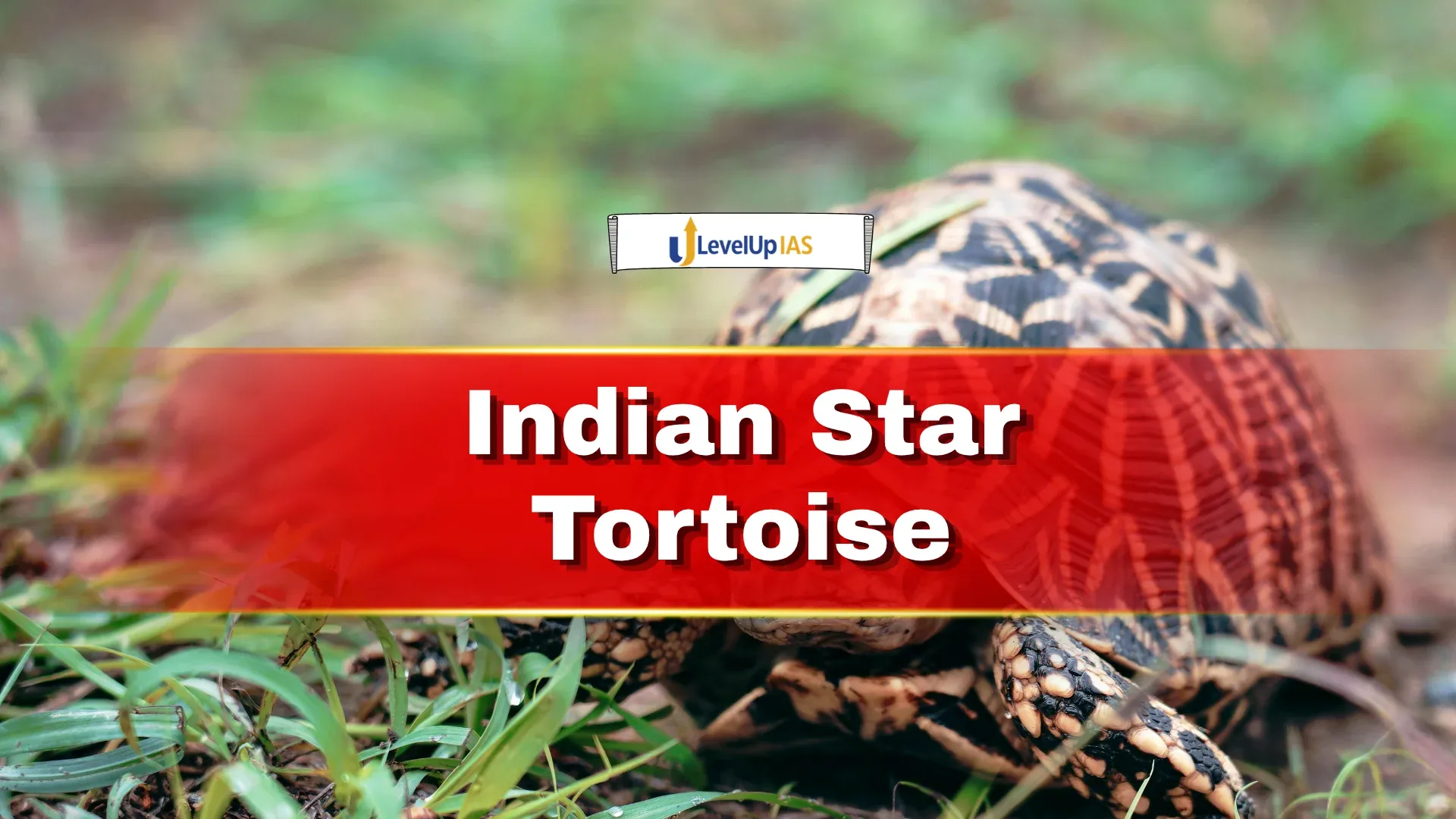
The Indian Star Tortoise is a medium-sized terrestrial reptile native to the Indian subcontinent. It is named after the distinctive star-shaped patterns on its shell, which help camouflage it among grasses and vegetation.
- Scientific name: Geochelone elegans
- Family: Testudinidae
- Habitat: Dry forests, scrublands, grasslands and semi-arid regions.
- Distribution: India, Pakistan and Sri Lanka.
- Diet: Primarily herbivorous, feeding on grasses, leaves, flowers and fallen fruits.
- Lifespan: Can live for several decades in the wild.
The species is adapted to dry environments and is also found in some human-modified landscapes, including agricultural fields and plantations.
Distinctive Features
1. Star-shaped Shell
The tortoise has a high-domed shell, known as the carapace, with yellowish radiating lines on dark-coloured shell plates. These markings create a star-like appearance and help break up its outline against surrounding vegetation.
2. Sexual Dimorphism
Females are generally larger than males. This difference in body size is an important characteristic of the species.
3. Terrestrial Lifestyle
Unlike aquatic turtles, the Indian Star Tortoise is primarily land-dwelling. It inhabits dry and semi-arid environments and is generally solitary.
4. Ecological Role
As a herbivore, it contributes to ecosystem processes through its feeding behaviour and interactions with vegetation. Like other terrestrial reptiles, it forms part of the food web in its natural habitat.
Distribution and Habitat
The Indian Star Tortoise occurs in parts of the Indian subcontinent, with populations in western and southern India and in Sri Lanka. Its distribution also extends into parts of Pakistan.
It inhabits:
- Dry deciduous and scrub forests.
- Grasslands and semi-arid landscapes.
- Coastal scrublands.
- Agricultural fields and other modified habitats within its natural range.
The availability of suitable vegetation, shelter and safe nesting areas is important for its survival. Habitat degradation and fragmentation can reduce the availability of these resources and expose tortoises to greater human disturbance.
Conservation Status
The Indian Star Tortoise is protected under national and international wildlife conservation frameworks.
- IUCN Red List: Vulnerable (VU).
- Wild Life (Protection) Act, 1972: Schedule I.
- CITES: Appendix I.
The species has been classified as Vulnerable on the IUCN Red List since 2016. It was transferred to CITES Appendix I in 2019, providing the highest level of protection against international commercial trade.
What Does CITES Appendix I Mean?
The Convention on International Trade in Endangered Species of Wild Fauna and Flora (CITES) regulates international trade in wild animals and plants to ensure that such trade does not threaten their survival.
- Appendix I: Includes species threatened with extinction. International commercial trade in specimens is generally prohibited, subject to limited exceptions and applicable permit requirements.
- Appendix II: Includes species that may not currently be threatened with extinction but require regulated trade to avoid exploitation that could threaten their survival.
- Appendix III: Includes species protected in at least one country that has sought cooperation from other CITES parties to control their trade.
The Appendix I listing of the Indian Star Tortoise reflects the international concern over its exploitation for commercial purposes.
Major Threats
1. Illegal Pet Trade
The demand for Indian Star Tortoises as exotic pets is a major threat. Their distinctive shell patterns make them attractive to wildlife collectors and the illegal pet market.
Tortoises are often captured from the wild and transported through trafficking networks. Smuggling can cause injury, dehydration, stress and mortality.
2. Habitat Loss and Fragmentation
Agricultural expansion, land-use changes and habitat degradation can reduce the availability of suitable living and nesting areas.
3. Illegal Collection
The removal of tortoises from the wild can reduce local populations and disrupt natural population structures. Slow population recovery can make the species particularly vulnerable to sustained exploitation.
4. Challenges in Rehabilitation
Rescued tortoises may suffer from poor nutrition, injuries, disease or stress caused by improper transportation and confinement. Releasing them without health assessments and suitable habitat selection may compromise their survival.
Way Forward
- Strengthen enforcement: Improve coordination among forest departments, customs, police and wildlife crime investigation agencies.
- Protect natural habitats: Conserve scrublands, grasslands and other suitable habitats within the species’ distribution range.
- Ensure scientific releases: Conduct health assessments, select ecologically suitable release sites and monitor animals after rehabilitation.
- Reduce demand: Increase awareness about the ecological and legal consequences of keeping illegally captured wildlife.
- Improve international cooperation: Strengthen intelligence sharing and enforcement against cross-border wildlife trafficking.
- Support research: Improve knowledge of population trends, habitat requirements and the long-term outcomes of rehabilitation programmes.
Conclusion
The Indian Star Tortoise is an important component of the biodiversity of the Indian subcontinent, recognised by its distinctive star-patterned shell. However, illegal pet trade, habitat degradation and wildlife trafficking threaten its survival.
The rehabilitation of rescued tortoises in Tadoba-Andhari Tiger Reserve and subsequent enforcement operations underline the need for coordinated action. Effective conservation requires not only strict enforcement of wildlife laws but also habitat protection, scientific rehabilitation and reduced demand for illegally traded animals.
Related reads.

Election Commission of India (ECI)
24 Oct 2026 7 min

18th BRICS Summit 2026
24 Oct 2026 5 min

Thiksey Monastery
23 Oct 2026 4 min

Pradhan Mantri Jan Arogya Yojana (AB-PMJAY)
23 Oct 2026 4 min
Loggerhead Sea Turtle
19 Oct 2026 4 min

West Nile Fever
18 Oct 2026 3 min
Put it into practice
Reading is step one.
Turn what you've just read into exam-ready answers with mentor-led practice and our structured test series.