
GS-I (History, Geography, Society)
Ocean Pollution
Introduction
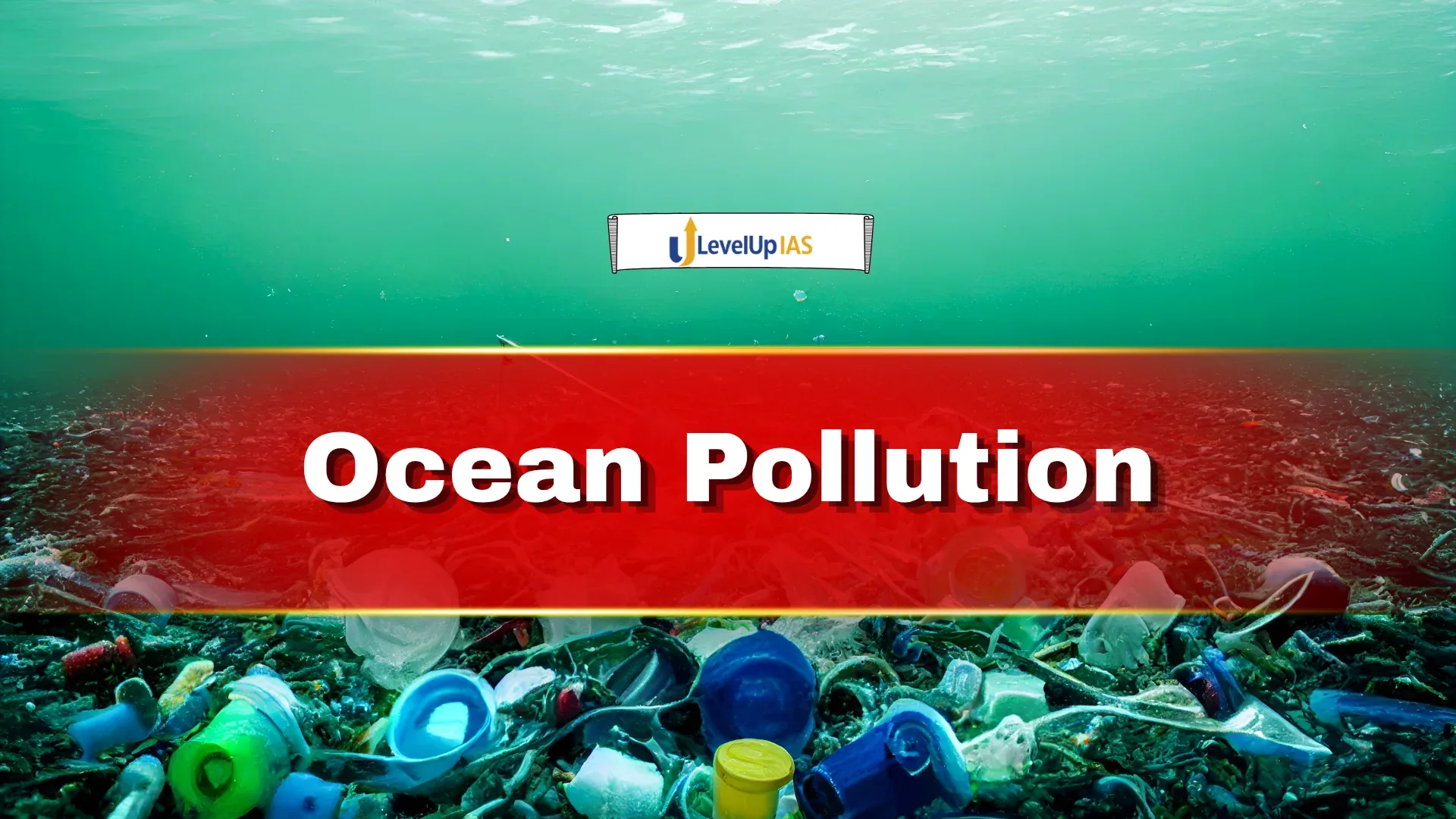
Ocean pollution refers to the introduction of harmful substances, waste or contaminants into the marine environment, adversely affecting water quality, marine organisms and human activities. It has emerged as a major environmental challenge due to industrialisation, urbanisation, intensive agriculture, maritime transport and the growing consumption of plastic products.
Oceans receive pollutants from both land-based and ocean-based activities. Rivers carry untreated sewage, industrial effluents and agricultural chemicals into the sea, while shipping, offshore industries and fishing activities contribute additional waste. According to the United Nations Environment Programme (UNEP), plastics account for at least 85% of marine litter.
Major Causes and Sources of Ocean Pollution
1. Land-Based Pollution
Land-based activities are a major source of marine pollution. Urban sewage, industrial discharge, agricultural runoff and improperly disposed solid waste enter rivers and drainage systems before reaching coastal waters.
Agricultural runoff carries fertilisers and pesticides into rivers and oceans. Excess nitrogen and phosphorus stimulate excessive algal growth, which can reduce dissolved oxygen when the algae decompose. This process, known as eutrophication, may create oxygen-depleted areas where many marine organisms cannot survive.
2. Plastic and Microplastic Pollution
Plastic bags, packaging materials, bottles, fishing nets and other discarded products accumulate in marine environments. Plastics persist for long periods and fragment into smaller particles through exposure to sunlight, waves and weathering.
Microplastics are plastic particles smaller than 5 millimetres. They can be ingested by plankton, shellfish, fish and other organisms, entering marine food webs. Larger plastic items can entangle marine animals, damage habitats and obstruct drainage systems along coastlines.
Ocean currents and rotating circulation systems called gyres concentrate floating debris in certain regions, creating accumulation zones commonly known as garbage patches. These are dispersed collections of debris rather than solid islands of rubbish.
3. Oil Pollution
Oil enters the marine environment through tanker accidents, offshore drilling, pipeline leaks, ship operations and land-based runoff. Large oil spills can spread across the sea surface, coat the feathers and fur of marine animals, damage coastal habitats and interfere with gas exchange at the water surface.
Oil pollution can also affect mangroves, salt marshes, coral reefs and fisheries. Even after the visible oil disappears, some chemical components may persist in sediments and continue to affect marine organisms.
4. Chemical and Heavy-Metal Pollution
Industrial discharge, mining, manufacturing and agricultural activities release contaminants such as mercury, lead, cadmium and persistent organic pollutants into aquatic systems. Some contaminants accumulate in the tissues of organisms and become more concentrated at higher levels of the food chain, a process known as biomagnification.
Mercury contamination, for example, can accumulate in certain predatory fish and pose risks to human health when contaminated seafood is consumed.
5. Sewage and Biological Pollution
Untreated sewage introduces pathogens, organic matter and nutrients into coastal waters. High concentrations of organic waste increase microbial decomposition, which consumes dissolved oxygen and can cause localised oxygen depletion.
Sewage contamination can also make coastal waters unsafe for swimming and shellfish harvesting, affecting public health, tourism and fishing communities.
6. Marine and Atmospheric Sources
Shipping, fishing vessels, aquaculture, offshore oil and gas operations and discarded fishing equipment contribute pollution directly at sea. Lost fishing nets, often called ghost nets, can continue trapping and killing marine organisms long after they have been abandoned.
Pollutants released into the atmosphere by industries and vehicles can also travel long distances before being deposited into oceans through rainfall or dry deposition.
Major Types of Ocean Pollution
Apart from chemical and solid-waste pollution, several other forms affect marine environments.
Thermal pollution: The discharge of heated water from power plants and industrial facilities can alter local marine temperatures, affecting oxygen availability and the survival of temperature-sensitive species.
Radioactive pollution: Radioactive substances from accidents, improper waste handling and certain industrial or research activities can contaminate marine environments. The risks depend on the substance, its concentration and exposure duration.
Noise pollution: Commercial shipping, seismic surveys and underwater construction generate noise that can interfere with the communication, navigation and feeding behaviour of marine mammals and other marine organisms.
Sediment pollution: Soil erosion, construction, dredging and mining can increase suspended sediments in coastal waters. Excess sediment reduces light penetration, may smother coral reefs and seagrass beds, and can damage fish habitats.
Effects of Ocean Pollution
1. Damage to Marine Ecosystems
Pollutants can injure or kill marine organisms and disrupt food chains. Plastic ingestion and entanglement affect turtles, seabirds, fish and marine mammals, while toxic chemicals may impair growth, reproduction and survival.
Coral reefs, mangroves, seagrass beds and estuaries are particularly vulnerable because they support diverse marine life and provide important breeding and nursery grounds.
2. Loss of Marine Biodiversity
Chemical contamination, oxygen depletion, habitat destruction and plastic pollution place pressure on marine species. Sensitive species may decline or disappear from polluted areas, reducing biodiversity and disturbing ecological relationships.
3. Threats to Human Health
Humans may be exposed to pollutants through contaminated seafood, polluted coastal water and contact with hazardous substances. Heavy metals and certain persistent chemicals can pose significant health risks, while sewage contamination can spread waterborne diseases.
The precise health effects of microplastic exposure remain an active area of research, and the risks vary according to particle characteristics, contaminants and exposure pathways.
4. Economic Losses
Ocean pollution affects fisheries, aquaculture, tourism, shipping and coastal livelihoods. Contaminated seafood can reduce market confidence, while polluted beaches and damaged coral reefs discourage tourism. Governments and coastal communities also bear the cost of waste removal, habitat restoration and pollution response.
5. Disruption of Ocean Processes
Excess nutrients can cause harmful algal blooms and oxygen-depleted zones, while sediment and chemical pollution alter coastal habitats and ecosystem functioning. These impacts can weaken the ability of marine ecosystems to support biodiversity and provide essential services.
Ocean Pollution in India
India's extensive coastline, densely populated coastal settlements, major ports and river systems create multiple pathways through which pollutants reach the sea.
Urban sewage, industrial effluents, plastic waste, agricultural runoff and fishing-related debris are important concerns in several coastal regions. Rivers transport waste from inland areas to coastal waters, demonstrating that marine pollution cannot be addressed solely through beach clean-ups.
Plastic waste threatens coastal habitats, while sewage and nutrient pollution can affect estuaries, fisheries and nearshore ecosystems. Oil spills and maritime waste also pose risks around ports and shipping routes.
Measures such as the Plastic Waste Management Rules, 2016, as amended, seek to improve plastic waste management and reduce the environmental burden of plastic products. Initiatives such as Swachh Sagar, Surakshit Sagar have also promoted public participation in coastal cleanliness. Effective implementation, adequate waste-treatment infrastructure and coordination between states and local authorities remain essential.
Measures to Control Ocean Pollution
1. Strengthening Waste Management
Waste should be segregated at source, with greater emphasis on reducing unnecessary plastics, improving collection systems, recycling suitable materials and preventing waste from entering drains and rivers. Extended Producer Responsibility can encourage producers to take responsibility for managing plastic packaging waste.
2. Treatment of Sewage and Industrial Effluents
Municipal sewage and industrial wastewater must be treated adequately before discharge. Regular monitoring, enforcement of pollution standards and improved sanitation infrastructure can reduce the entry of harmful contaminants into coastal waters.
3. Controlling Agricultural Runoff
Efficient fertiliser application, integrated pest management, vegetative buffer zones and improved soil conservation can reduce the movement of nutrients, pesticides and sediments into rivers and oceans.
4. International Cooperation
Marine pollution crosses national boundaries through ocean currents and atmospheric transport. International cooperation is therefore essential.
Important frameworks include:
- MARPOL Convention: Addresses pollution from ships, including oil, harmful substances, sewage, garbage and air pollution.
- United Nations Convention on the Law of the Sea (UNCLOS): Establishes obligations for states to protect and preserve the marine environment.
- London Convention and its Protocol: Aim to prevent marine pollution caused by dumping of wastes and other matter at sea.
These frameworks need effective implementation, monitoring and cooperation among coastal states.
5. Monitoring, Restoration and Public Participation
Satellite monitoring, water-quality testing and scientific research can help identify pollution sources and track environmental changes. Restoration of mangroves, wetlands and other coastal ecosystems can improve ecological resilience, while community participation and responsible tourism can reduce waste generation.
The broader approach should prioritise preventing pollution at its source rather than relying mainly on clean-up after waste has entered the ocean.
Conclusion
Ocean pollution is a complex geographical and environmental problem arising from the interaction of land-based activities, maritime operations and atmospheric processes. Plastic waste, oil spills, sewage, agricultural runoff and chemical contaminants threaten marine biodiversity, human health and coastal economies.
Addressing this challenge requires integrated waste management, strict pollution control, international cooperation and public participation. Protecting the oceans is essential not only for marine ecosystems but also for sustainable fisheries, climate resilience and the livelihoods of millions of people.
FAQs
1. What is Ocean Pollution?
Ocean pollution refers to the introduction of harmful substances and waste into marine environments, degrading water quality, damaging ecosystems and threatening marine organisms.
2. What are the major causes of Ocean Pollution?
Major causes include:
- Plastic waste and discarded fishing gear
- Untreated sewage and industrial effluents
- Agricultural runoff containing fertilisers and pesticides
- Oil spills and shipping waste
- Chemical pollutants and atmospheric deposition
3. What are the major types of Ocean Pollution?
The main types include plastic and marine litter pollution, chemical pollution, oil pollution, sewage pollution, nutrient pollution, thermal pollution and noise pollution.
4. Why is Plastic Pollution harmful to marine life?
Marine animals may ingest plastic or become entangled in discarded fishing gear and other debris. Microplastics can also enter marine food webs, raising concerns about ecosystem and human health impacts.
5. What is Eutrophication in marine environments?
Eutrophication occurs when excessive nutrients, particularly nitrogen and phosphorus, enter water bodies. This can trigger algal blooms, reduce dissolved oxygen and create dead zones where many marine organisms cannot survive.
Related reads.
Thermohaline Circulation
21 Oct 2026 7 min
Ocean Waves
19 Oct 2026 7 min
Decolonisation in Asia and Africa
18 Oct 2026 8 min
Temperature Distribution in Oceans
10 Oct 2026 9 min
Globalisation and Its Effects
09 Oct 2026 8 min
Tides in Oceanography
08 Oct 2026 7 min
Put it into practice
Reading is step one.
Turn what you've just read into exam-ready answers with mentor-led practice and our structured test series.