
GS-I (History, Geography, Society)
Cold War, World History
Introduction
The Cold War was a prolonged geopolitical, ideological and strategic rivalry between the United States and the Soviet Union and their respective allies after the Second World War. It broadly lasted from the late 1940s to 1991. Unlike a conventional war, the two superpowers did not engage in a direct large-scale military confrontation with each other. Instead, their rivalry was expressed through military alliances, nuclear arms competition, proxy wars, economic assistance, espionage, propaganda, technological competition and diplomatic conflicts.
The Cold War created a bipolar world order, with the United States leading the Western capitalist bloc and the Soviet Union leading the communist Eastern bloc. Its effects extended far beyond Europe, influencing Asia, Africa and Latin America, particularly during the period of decolonisation.
Background and Emergence of the Cold War
The United States and the Soviet Union had been wartime allies against Nazi Germany during the Second World War. However, their alliance was largely based on a common military enemy rather than shared political or economic interests.
The end of the war removed this common enemy and exposed deep differences between the two powers. The Soviet Union sought security through friendly or communist governments in Eastern Europe, while the United States aimed to prevent further expansion of communism and promote a liberal capitalist international order.
The division of Europe into competing spheres of influence gradually transformed wartime cooperation into strategic rivalry. The division of Germany and Berlin became particularly important symbols of the emerging conflict.
Major Causes of the Cold War
Ideological Rivalry
The fundamental difference was between capitalism and liberal democracy associated with the United States and communism and state socialism associated with the Soviet Union.
Both powers viewed the other's political and economic system as a threat. The rivalry therefore became not merely a struggle for territory or resources but also a competition over which model of political and economic organisation would shape the post-war world.
Soviet Expansion in Eastern Europe
After the Second World War, communist governments emerged across much of Eastern Europe, including Poland, Hungary, Romania, Bulgaria and East Germany. The Soviet Union viewed these states as a strategic security buffer against potential threats from the West.
The Western powers, however, interpreted Soviet consolidation in Eastern Europe as evidence of communist expansionism. This intensified mutual suspicion and contributed to the division of Europe into two competing blocs.
The Truman Doctrine and Containment
In 1947, US President Harry Truman announced the Truman Doctrine, committing the United States to support countries threatened by communist expansion.
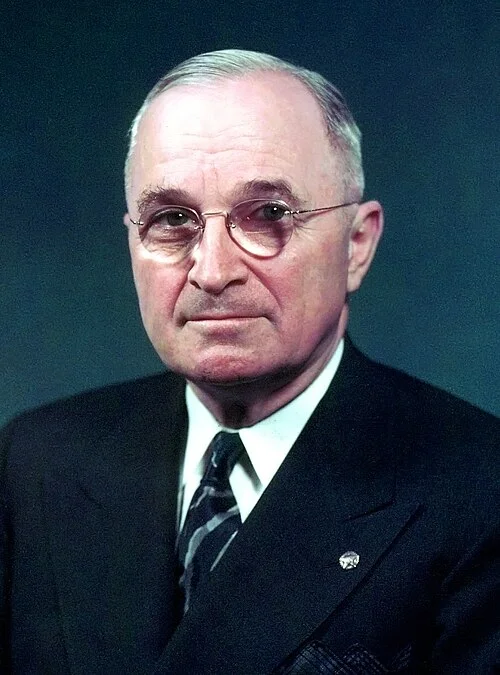
It represented the broader American policy of containment, aimed at limiting the expansion of Soviet influence rather than directly overthrowing communist governments everywhere.
Marshall Plan
The United States launched the Marshall Plan in 1947 to provide economic assistance for the reconstruction of war-torn European countries.
Apart from its economic objectives, the programme also had strategic significance because the United States believed that economic recovery and political stability would reduce the appeal of communism in Western Europe. The Soviet Union opposed the plan and prevented Eastern European countries under its influence from participating.
Nuclear Arms Race
The United States' use of atomic bombs against Japan in 1945 and the Soviet Union's successful development of its own atomic bomb in 1949 initiated an intense nuclear competition.
Both sides accumulated increasingly powerful nuclear weapons. The resulting doctrine of Mutually Assured Destruction (MAD) meant that a direct nuclear war could potentially destroy both sides. This paradoxically discouraged direct confrontation while keeping the international system under constant tension.
Germany and Berlin
Germany was divided into occupation zones after the Second World War. The western zones eventually developed into West Germany, while the Soviet-controlled zone became East Germany.
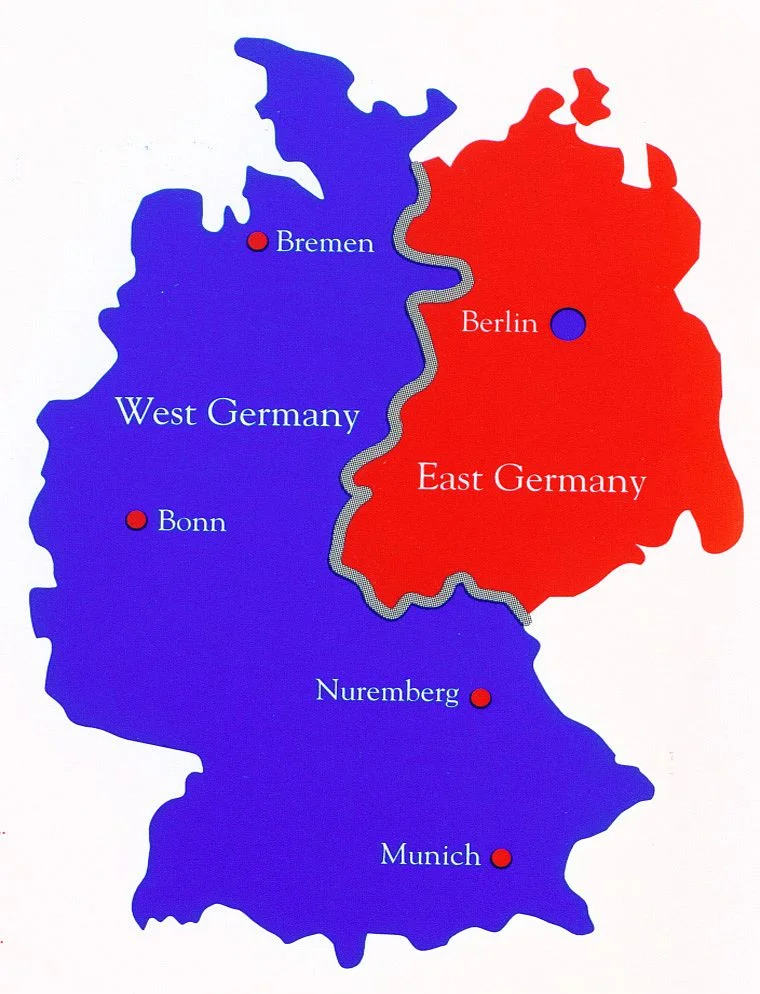
Berlin, although located within Soviet-occupied territory, was also divided between the Allied powers. The Berlin Blockade of 1948-49 and the subsequent construction of the Berlin Wall in 1961 made the city a central symbol of Cold War rivalry.
Formation of Rival Blocs
The Cold War institutionalised the division of Europe through competing military and economic arrangements.
The North Atlantic Treaty Organization (NATO) was established in 1949 under US leadership as a collective defence alliance of Western countries.
In response, the Soviet Union and its Eastern European allies established the Warsaw Pact in 1955.
The two alliances reinforced the bipolar structure of international politics.
The rivalry was also economic. Western Europe was increasingly integrated into the US-led economic order, while the Soviet Union promoted economic cooperation among socialist states through institutions such as Comecon.
Major Events of the Cold War
Berlin Blockade and Airlift, 1948-49
The Soviet Union blocked land and water access to West Berlin in 1948. In response, the United States and its allies organised the Berlin Airlift, supplying the population by air.
The Soviet Union eventually lifted the blockade. The crisis demonstrated that Berlin could become a major flashpoint between the two superpowers.
Korean War, 1950-53
The Korean War was one of the earliest major proxy conflicts of the Cold War. North Korea invaded South Korea in 1950. The United States and UN forces supported South Korea, while China intervened on the side of North Korea.
The war ended with an armistice in 1953, leaving Korea divided around the 38th parallel.
Cuban Missile Crisis, 1962
The Cuban Missile Crisis was the most dangerous confrontation of the Cold War. The United States discovered Soviet nuclear missile installations in Cuba, leading to a tense confrontation between Washington and Moscow.
The crisis ended through negotiations, with the Soviet Union removing its missiles from Cuba and the United States providing assurances regarding Cuba. The episode demonstrated the dangers of nuclear brinkmanship and encouraged greater efforts at crisis management.
Vietnam War
Vietnam became another major arena of Cold War competition. The communist North Vietnam received support from the Soviet Union and China, while the United States supported South Vietnam.
The conflict ended in 1975 with the fall of Saigon and the subsequent reunification of Vietnam under communist rule.
Space Race
The Cold War extended beyond military and political competition into science and technology. The Soviet launch of Sputnik in 1957 marked a major early achievement, while the United States' Apollo 11 Moon landing in 1969 demonstrated its technological capabilities.
The Space Race became a powerful symbol of ideological and technological competition between the two superpowers.
Détente and Changing Dynamics
The intensity of Cold War rivalry periodically declined. The 1970s witnessed a phase of détente, or relaxation of tensions, between the United States and Soviet Union.
The two sides engaged in negotiations on nuclear weapons, including the Strategic Arms Limitation Talks (SALT). The Helsinki Accords of 1975 also encouraged cooperation and addressed security and human rights issues in Europe.
However, détente did not end the underlying rivalry. Competition continued in different regions, and tensions intensified again towards the end of the 1970s.
End of the Cold War
The Cold War began to unravel decisively during the 1980s.
A major turning point came with the rise of Mikhail Gorbachev as Soviet leader in 1985. He introduced Perestroika, aimed at restructuring the Soviet economy and political system, and Glasnost, which promoted greater openness and freedom of discussion.
Gorbachev also pursued improved relations with the West and reduced Soviet intervention in Eastern Europe. Communist governments across Eastern Europe subsequently weakened and collapsed.
The Berlin Wall fell on 9 November 1989, becoming a powerful symbol of the collapse of the division of Europe. Germany was reunified in 1990.
Finally, the Soviet Union dissolved in December 1991, bringing the Cold War era to an end.
Consequences of the Cold War
The end of the Cold War produced major changes in the international system.
First, the bipolar world order came to an end, leaving the United States as the dominant global superpower and contributing to the emergence of a unipolar moment.
Second, several countries in Eastern Europe and the former Soviet space experienced political democratisation and economic liberalisation.
Third, German reunification and the subsequent expansion of Western institutions transformed the political geography of Europe.
Fourth, the end of superpower rivalry created greater space for international cooperation but also exposed new challenges, including ethnic conflicts, regional wars, terrorism and state fragmentation.
India and the Cold War
India did not formally join either Cold War bloc. Instead, under Jawaharlal Nehru, India adopted a policy of Non-Alignment and became an important participant in the Non-Aligned Movement (NAM).
Non-alignment did not mean complete neutrality or isolation. India sought to preserve strategic autonomy, oppose colonialism and racial discrimination, support peaceful coexistence and avoid becoming part of military alliances dominated by either superpower.
India nevertheless maintained significant relations with both sides. Over time, India-Soviet relations became particularly close in areas such as defence, technology and diplomacy, especially from the 1960s onwards.
Thus, the Cold War also shaped India's foreign-policy choices and its efforts to create greater political and economic space for newly independent countries.
Conclusion
The collapse of the Soviet Union in 1991 ended the bipolar structure that had defined the post-Second World War international system. The legacy of the Cold War continues to influence contemporary debates on alliances, nuclear deterrence, great-power rivalry, European security and the nature of the international order.
FAQs
1. What was the Cold War?
The Cold War was a prolonged geopolitical, ideological and strategic rivalry between the United States and the Soviet Union and their respective allies after the Second World War. It was called “cold” because the two superpowers generally avoided a direct full-scale war with each other.
2. When did the Cold War begin?
The Cold War emerged in the aftermath of World War II, particularly from the late 1940s. The Truman Doctrine (1947), Marshall Plan (1947) and division of Europe into competing blocs were major developments in its early phase.
3. What were the main causes of the Cold War?
Major causes included:
- Ideological rivalry between capitalism and communism
- US-USSR competition for global influence
- Disagreements over the political future of post-war Europe
- Soviet expansion of influence in Eastern Europe
- US policy of containment
- Mutual distrust and the emerging nuclear arms race
4. What were the major military alliances during the Cold War?
The two major military blocs were:
- NATO (1949) - led by the United States
- Warsaw Pact (1955) - led by the Soviet Union
These alliances reinforced the bipolar structure of international politics.
The Cuban Missile Crisis of 1962 was a major confrontation between the US and USSR after the Soviet Union deployed nuclear missiles in Cuba. The crisis brought the two superpowers close to nuclear conflict before a negotiated settlement was reached.
Related reads.

The Mughal Art and Architecture
07 Oct 2026 9 min

Rock-Cut Architecture in India
06 Oct 2026 7 min

Buddhist Architecture: Stupas, Chaityas and Viharas
06 Oct 2026 6 min
Indian Independence Act, 1947
05 Oct 2026 6 min

Modern Indian Literature
29 Sep 2026 6 min

Coastal Landforms
28 Sep 2026 8 min
Put it into practice
Reading is step one.
Turn what you've just read into exam-ready answers with mentor-led practice and our structured test series.