
GS-I (History, Geography, Society)
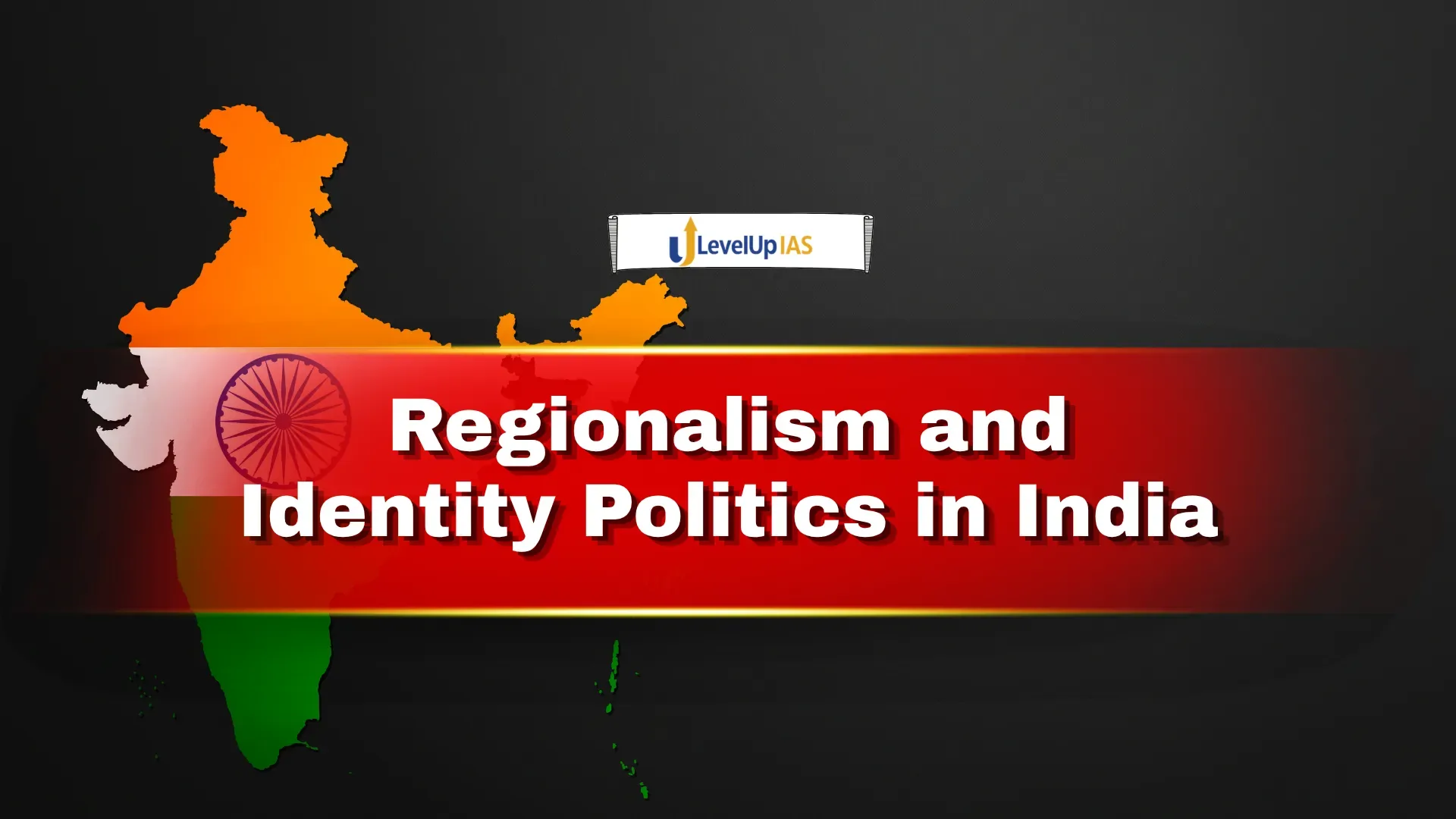
Regionalism and Identity Politics in India
Introduction
India is characterised by enormous diversity in language, religion, ethnicity, culture and geographical conditions. After independence, these differences became important factors in shaping political demands and regional movements. While the Constitution established a common national framework, different communities continued to assert their distinct identities and seek greater political and economic recognition.
Regionalism refers to a sense of attachment to a particular geographical region and the promotion of its interests, sometimes even at the expense of broader national interests. Identity politics, on the other hand, refers to political mobilisation based on shared identities such as language, religion, caste, ethnicity, tribe or community.
Both have played an important role in shaping India's post-independence political and social development.
Historical Background
Regional identities in India existed long before independence. During British rule, administrative boundaries, unequal economic development and colonial policies contributed to the growth of regional consciousness. Linguistic and cultural organisations also emerged to demand recognition of distinct regional identities.
The Indian National Congress had supported the idea of linguistic provinces during the freedom struggle and reorganised its provincial committees along linguistic lines in 1920. However, after Partition in 1947, national leaders became cautious about reorganising states on linguistic or ethnic grounds, fearing that it could encourage separatist tendencies and weaken national unity.
Despite these concerns, regional aspirations gradually became a major force in post-independence politics.
Major Causes of Regionalism and Identity Politics
1. Linguistic and Cultural Differences: Language is one of the strongest markers of regional identity in India. Communities have often demanded administrative recognition and political representation based on their linguistic and cultural distinctiveness. The demand for a separate Andhra state and the Dravidian movement in Tamil Nadu are important examples.
2. Economic Imbalances: Unequal distribution of resources, investment, employment opportunities and infrastructure between regions creates feelings of neglect and deprivation. Such disparities have contributed to movements for separate statehood, including Telangana and Jharkhand.
3. Ethnic and Tribal Identity: Distinct tribal traditions, customs, languages and historical experiences have encouraged demands for autonomy and political recognition, particularly in Northeast India. Movements for Nagaland, Mizoram and Bodoland reflect these aspirations.
4. Geographical and Historical Factors: Physical isolation, difficult terrain and differences in historical experiences contribute to a distinct regional consciousness. The Himalayan and northeastern regions, for example, have specific geographical and cultural characteristics that influence their political demands.
5. Political Factors: Regional parties and political leaders often mobilise people around regional grievances, cultural identity and demands for greater autonomy. Competition for political power and representation can further strengthen regional sentiments.
6. Administrative Neglect: Perceived discrimination, inadequate representation and weak delivery of public services can create dissatisfaction with the state or central government. This may develop into demands for greater autonomy or separate statehood.
Major Forms of Regionalism in India
Regionalism in post-independence India has taken different forms depending on the nature of demands and the identity of the groups involved.
Linguistic Regionalism: It involves demands for recognition and political representation based on language. The movements for Andhra, Maharashtra, Gujarat and Punjab are examples.
Ethnic Regionalism: It arises from the assertion of a distinct ethnic or tribal identity. The Naga, Mizo and Bodo movements illustrate this form of regional mobilisation.
Economic Regionalism: It develops when a region believes that it is economically neglected or that its resources are being exploited without adequate local benefits. The Telangana and Jharkhand movements had important economic and developmental dimensions.
Political Regionalism: It involves demands for greater autonomy, administrative powers or separate statehood. Regional political parties have played a significant role in expressing such demands.
Major Regional Movements in Post-Independence India
1. Linguistic Reorganisation of States
The demand for linguistic states became one of the earliest major expressions of regionalism after independence.
The immediate turning point was the fast unto death undertaken by Potti Sriramulu in 1952, demanding a separate state for Telugu-speaking people from the Madras Presidency. Following his death on 15 December 1952, widespread protests compelled the government to create Andhra State on 1 October 1953.
This development encouraged similar demands across the country. The government appointed the States Reorganisation Commission in 1953, chaired by Justice Fazl Ali, with H.N. Kunzru and K.M. Panikkar as members. The Commission submitted its report in 1955 and recommended reorganisation by considering linguistic and cultural homogeneity alongside administrative and economic viability.
The States Reorganisation Act, 1956, implemented along with the Seventh Constitutional Amendment, reorganised the country into 14 states and 6 Union Territories. It marked a major step towards accommodating linguistic identities within the Indian Union.
2. Dravidian Movement in Tamil Nadu
The Dravidian movement emerged in southern India, particularly in the Madras Presidency, as a movement against perceived Brahmin dominance, caste inequalities and the imposition of Hindi. It was influenced by the Self-Respect Movement led by E.V. Ramasamy (Periyar).
The Dravida Munnetra Kazhagam (DMK), founded in 1949 under C.N. Annadurai, initially advocated a separate Dravida Nadu. However, the party later abandoned the demand for secession and entered electoral politics.
The anti-Hindi agitations of 1965 strengthened regional political mobilisation. In 1967, the DMK came to power in Madras State, marking a major shift in Indian politics. In 1969, Madras State was officially renamed Tamil Nadu.
3. Punjab Reorganisation Movement
The Punjabi Suba movement demanded a separate Punjabi-speaking state. The demand was closely connected with linguistic and religious identities and was led by the Akali Dal.
Following prolonged political mobilisation, the Punjab Reorganisation Act, 1966 led to the creation of Punjab and Haryana as separate states, while Chandigarh became a Union Territory and the joint capital of both states.
The movement demonstrated how linguistic demands could overlap with religious and political identities.
4. Regional Movements in Northeast India
Northeast India witnessed several movements based on ethnic identity, autonomy and concerns over political and cultural recognition.
The Naga movement developed around the demand for a separate political identity and greater self-determination. Nagaland became a separate state in 1963.
Similarly, the Mizo movement, led by the Mizo National Front under Laldenga, emerged in the context of political grievances and the 1959 famine. Mizoram eventually became a Union Territory in 1972 and attained statehood in 1987.
Meghalaya was created as a full-fledged state in 1972 following demands by the Khasi, Garo and Jaintia communities for greater political autonomy.
These developments reflected the importance of accommodating ethnic and tribal identities through constitutional and administrative arrangements.
5. Demand for Smaller States
From the late 20th century onwards, regional movements increasingly focused on economic development, administrative efficiency and political representation rather than language alone.
In 2000, three new states were created:
- Chhattisgarh: Carved out of Madhya Pradesh.
- Jharkhand: Carved out of Bihar.
- Uttarakhand: Carved out of Uttar Pradesh; initially named Uttaranchal.
The demand for a separate Telangana, rooted in concerns over regional development, employment and political representation, gained momentum over several decades. Telangana was finally formed on 2 June 2014, following the bifurcation of Andhra Pradesh.
Identity Politics in India
Identity politics has influenced political mobilisation beyond geographical regionalism. It involves the assertion of social, cultural and community identities to secure representation, rights and access to resources.
In India, caste-based mobilisation has played a significant role in demanding social justice and political representation. The emergence of backward-class movements and the implementation of the Mandal Commission recommendations in 1990 transformed the country's political landscape.
Similarly, tribal movements have sought protection of customary practices, land rights and cultural autonomy. Religious and linguistic identities have also influenced electoral politics, social movements and debates over minority rights.
Identity-based mobilisation has enabled historically marginalised groups to participate more actively in democratic processes. However, when political mobilisation encourages exclusion, discrimination or hostility towards other communities, it can create social divisions.
Impact on Indian Politics and Society
Regionalism and identity politics have had both constructive and challenging consequences for Indian democracy.
On the positive side, they have strengthened democratic participation by giving regional and marginalised communities a platform to express their demands. Linguistic reorganisation helped accommodate cultural identities within the constitutional framework, while the creation of smaller states brought administration closer to several regional populations.
Regional parties have also strengthened India's federal structure by ensuring that regional concerns receive greater attention in national politics. Identity-based movements have contributed to debates on social justice, representation, tribal rights and equitable development.
However, excessive regionalism can encourage inter-state disputes over water, boundaries and resources. It may also promote regional discrimination, linguistic intolerance, ethnic tensions and demands for secession. Identity-based political competition can further deepen divisions when communities are mobilised against one another.
Constitutional and Institutional Mechanisms
The Indian Constitution provides several mechanisms to accommodate regional and cultural diversity.
- Article 3: Empowers Parliament to form new states and alter their boundaries, areas or names.
- Article 29: Protects the interests of citizens having distinct language, script or culture.
- Article 30: Provides minorities with the right to establish and administer educational institutions.
- Fifth and Sixth Schedules: Provide special administrative arrangements for Scheduled Areas and tribal areas.
- Article 371 and related provisions: Provide special provisions for certain states to address their specific historical, cultural and administrative circumstances.
These constitutional arrangements help reconcile regional aspirations with national unity.
Conclusion
Regionalism and identity politics have been enduring features of India's post-independence development. They reflect the country's social and cultural diversity and the desire of different communities for recognition, representation and equitable development. India's experience demonstrates that regional identities need not conflict with national unity. Their constructive accommodation through democratic participation, cooperative federalism, constitutional safeguards and balanced development remains essential for strengthening national integration.
FAQs
1. What is regionalism in India?
Regionalism refers to a sense of attachment to a particular region based on shared language, culture, history, economic interests or geographical identity. It may lead to demands for regional development, autonomy or separate statehood.
2. What is identity politics?
Identity politics refers to political mobilisation based on shared identities such as caste, religion, language, ethnicity, tribe or region to seek recognition, representation and rights.
3. What are the major causes of regionalism in India?
- Regional economic inequalities.
- Linguistic and cultural differences.
- Uneven development and resource distribution.
- Political and administrative neglect.
- Ethnic and tribal identities.
- Historical and geographical factors.
4. What was the significance of linguistic reorganisation of states in India?
The States Reorganisation Act, 1956, reorganised states primarily on linguistic lines. It helped accommodate regional identities within the constitutional framework and strengthened India's federal structure.
5. What was the Dravidian Movement?
The Dravidian Movement emerged in Tamil Nadu against caste-based inequalities, social discrimination and perceived northern domination. It promoted social justice, regional identity and linguistic rights.
Related reads.
India’s Relations with Neighbouring Countries (1947-1964)
08 Nov 2026 8 min
Naxal Movement in India: Origins, Evolution and Impact
05 Nov 2026 6 min
Indian Sculpture (Ancient to Medieval)
03 Nov 2026 11 min

Non-Aligned Movement (NAM)
02 Nov 2026 8 min

Coral Reefs
22 Oct 2026 7 min

Ocean Pollution
21 Oct 2026 7 min
Put it into practice
Reading is step one.
Turn what you've just read into exam-ready answers with mentor-led practice and our structured test series.