
GS-I (History, Geography, Society)
Indian Sculpture (Ancient to Medieval)
Indian sculpture is one of the oldest and most diverse forms of artistic expression in the subcontinent. It developed alongside religious beliefs, social practices, political developments and architectural traditions. From the terracotta figurines of the Indus Valley Civilisation to the bronze images of the Cholas and intricately carved medieval temples, Indian sculpture reflects changing artistic techniques and cultural influences.
Unlike purely decorative art, Indian sculpture often carried religious, philosophical and symbolic meanings. Human figures, animals, deities and narrative scenes were used to communicate ideas associated with Hinduism, Buddhism and Jainism.
1. Features of Indian Sculpture
Although Indian sculpture evolved differently across regions and periods, certain characteristics remained important:
- Religious and spiritual themes: A large number of sculptures depict Hindu deities, Buddhist figures, Jain Tirthankaras and episodes from religious texts.
- Symbolism: Multiple arms, distinctive postures, hand gestures (mudras) and attributes represent the powers and qualities of deities.
- Human representation: Sculptors developed idealised human forms, often emphasising graceful movement, balanced proportions and expressive faces.
- Integration with architecture: Sculptures became an essential part of temples, stupas, pillars, gateways and cave complexes.
- Material diversity: Stone, bronze, terracotta, wood and ivory were used according to regional availability and artistic requirements.
- Narrative representation: Sculptures frequently portrayed stories from the Jataka tales, Ramayana, Mahabharata and Puranas.
2. Indus Valley Civilisation (2600-1900 BCE)
The Indus Valley Civilisation provides some of the earliest evidence of sculptural traditions in India. Its artists worked with bronze, stone, terracotta and other materials, producing human figures, animals and objects of everyday life.
Important examples include:
Dancing Girl: Discovered at Mohenjo-daro, this bronze figure is made using the lost-wax technique. Its confident posture, ornaments and naturalistic treatment demonstrate the technical skill of Harappan metalworkers.
Priest-King: A steatite figure discovered at Mohenjo-daro, it depicts a bearded male figure wearing a patterned robe. The figure is notable for its carefully modelled face and decorative details, although its actual identity and status remain uncertain.
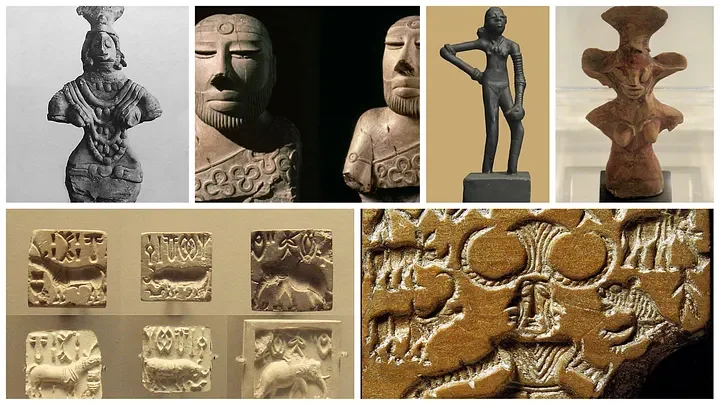
Terracotta Figurines: Numerous human and animal figurines have been discovered at Harappan sites. These provide insights into the material culture, artistic practices and possible religious beliefs of the civilisation.
Animal Figures and Seals: Representations of bulls, elephants, rhinoceroses and other animals appear on seals and terracotta objects. The famous unicorn-like animal is among the most frequently depicted motifs.
3. Mauryan Period (322-185 BCE)
The Mauryan period marked a major development in Indian stone sculpture. Royal patronage, particularly under Emperor Ashoka, encouraged the construction of pillars, stupas and other monuments.
Mauryan sculpture is known for its polished stone surfaces, monumental scale and symbolic representation.
Important features include:
- Polished sandstone: The distinctive Mauryan polish, often called the 'mirror-like polish', is visible on pillars and sculptural works.
- Animal capitals: Lions, bulls, elephants and horses were carved on pillar capitals.
- Yaksha and Yakshi figures: These large figures reflect popular religious beliefs and local traditions.
- Religious symbolism: Ashokan pillars and stupas helped communicate Buddhist ideas and royal messages.
Important Examples:
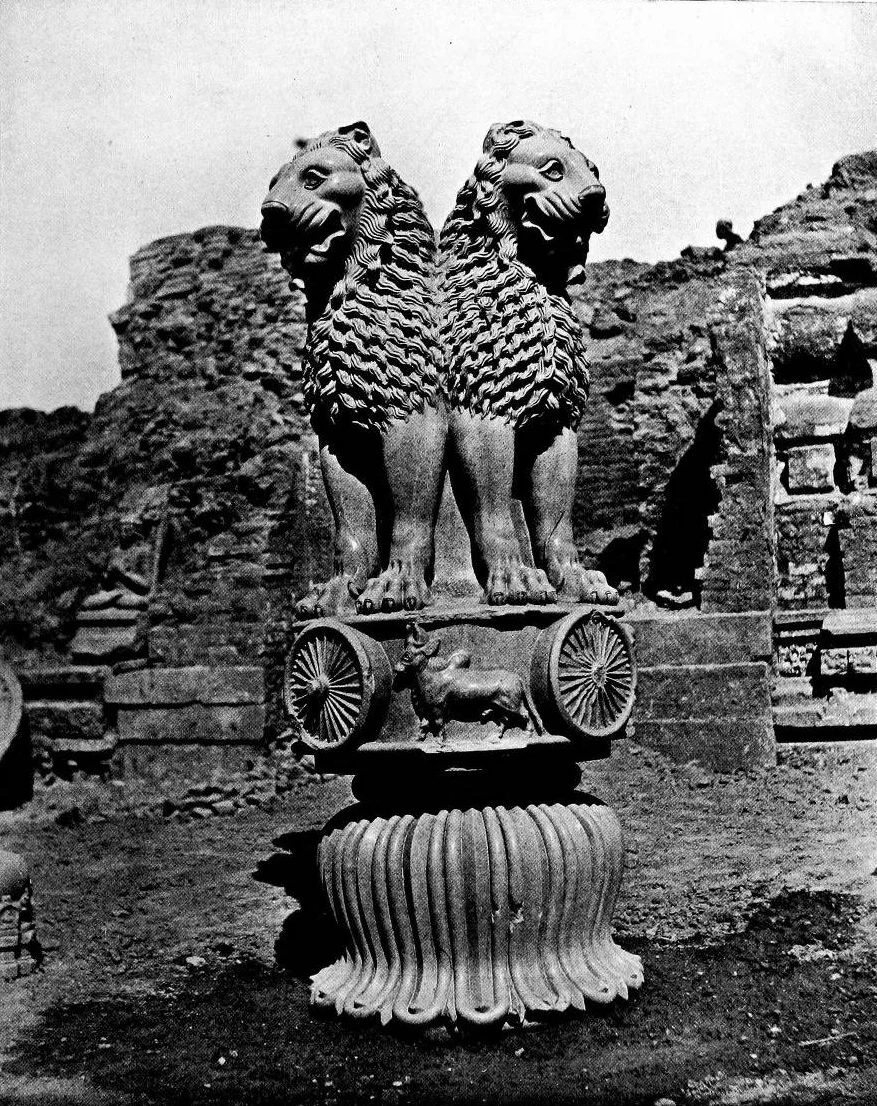
Lion Capital of Sarnath: Consists of four back-to-back lions standing above a circular abacus decorated with animals and the Dharma Chakra. It was adopted as the National Emblem of India.
- Rampurva Bull Capital: An example of Mauryan animal sculpture known for its naturalistic treatment.
- Didarganj Yakshi: A life-size female figure from Bihar, famous for its polished surface and detailed ornamentation. Its precise dating and attribution remain debated.
- Ashokan Pillars: Their capitals represent an important combination of sculpture, symbolism and imperial communication.
4. Post-Mauryan Sculpture
Following the decline of the Mauryan Empire, several regional dynasties, including the Shungas, Satavahanas and Kushanas, contributed to the development of Indian sculpture.
This period witnessed the expansion of Buddhist art, especially through the decoration of stupas and the emergence of distinct sculptural schools.
A. Shunga School
The Shunga period (185-73 BCE) is associated with the development of Buddhist architectural and sculptural traditions.
Its important characteristics include narrative reliefs, decorative railings, gateways, lotus motifs and representations of everyday life.
Important Examples:
- Bharhut Stupa: Famous for its carved railings, medallions and narrative panels depicting Jataka stories.
- Sanchi Stupa: Its gateways (Toranas) contain detailed reliefs illustrating the life of Buddha, Jataka tales and scenes from Buddhist tradition.
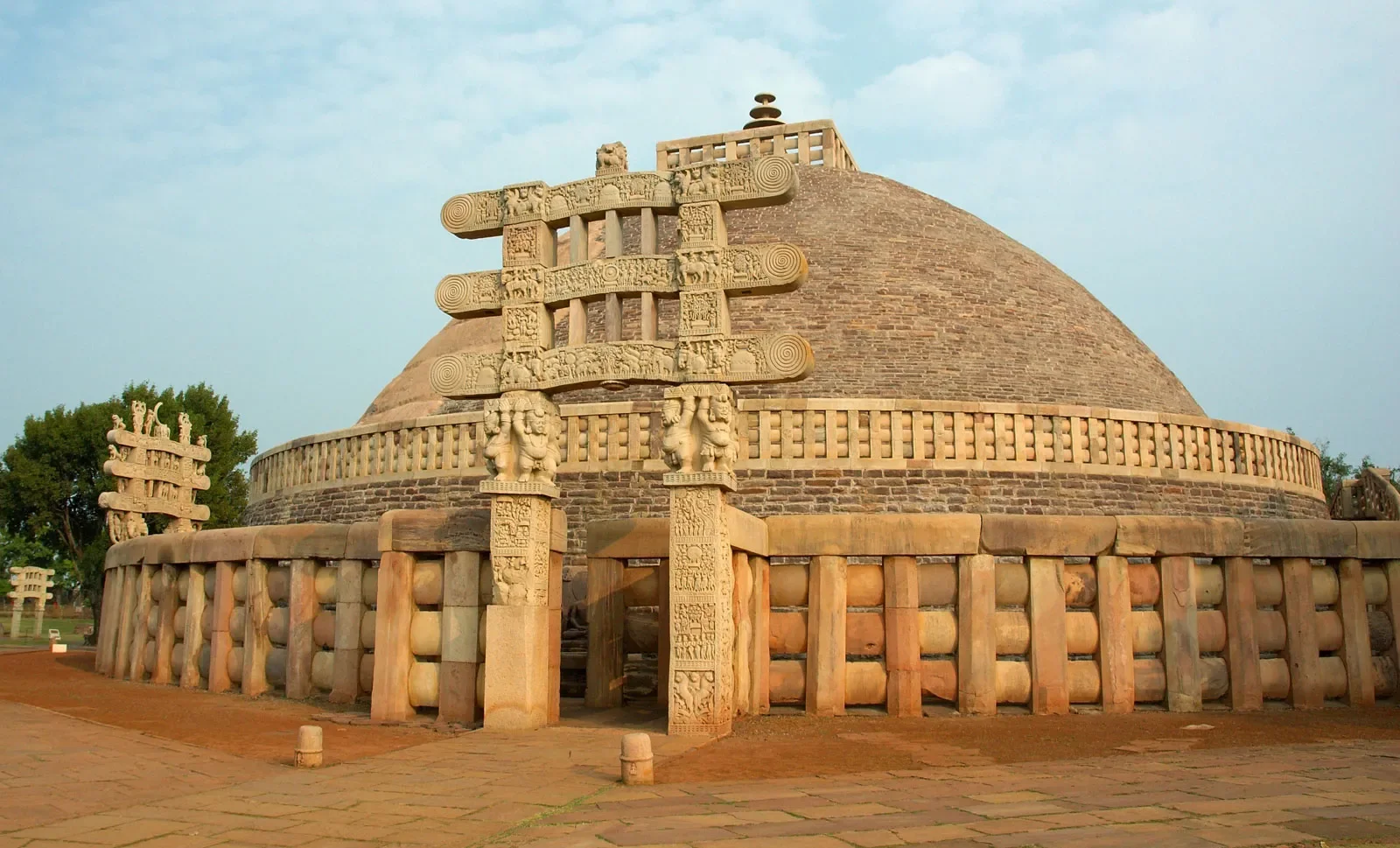
An important feature of early Buddhist sculpture was the aniconic representation of Buddha. Instead of depicting Buddha in human form, artists used symbols such as the Bodhi tree, empty throne, footprints and Dharma Chakra.
B. Satavahana and Amaravati School
The Amaravati School developed in the lower Krishna Valley, particularly around the Amaravati Stupa, under Satavahana and later regional patronage.
Its main features include:
- Use of white limestone, often described as white marble in older accounts.
- Graceful human figures with slender bodies and dynamic postures.
- Elaborate narrative reliefs depicting Buddhist stories.
- Complex compositions showing movement and interaction between figures.
- Depiction of Buddha initially through symbols and later in human form.
The Amaravati Stupa is an important example of this tradition. Its sculptural style also influenced Buddhist art in Sri Lanka and Southeast Asia.
5. Kushana Period: Gandhara and Mathura Schools
The Kushana period (particularly the 1st-3rd centuries CE) witnessed the development of two major centres of Buddhist sculpture: Gandhara and Mathura. Both played an important role in establishing the tradition of depicting Buddha in human form.
A. Gandhara School
The Gandhara School flourished in the region covering parts of present-day Pakistan and Afghanistan. Its development was influenced by the cultural interactions resulting from the region's contact with Greek, Roman, Persian and Central Asian traditions.
Its major features include:
- Use of grey schist stone and stucco.
- Wavy hair, sharp facial features and detailed drapery.
- Naturalistic modelling influenced by Greco-Roman artistic traditions.
- Buddha depicted with features such as an ushnisha and elongated earlobes.
- Extensive representation of Buddha and Bodhisattvas.
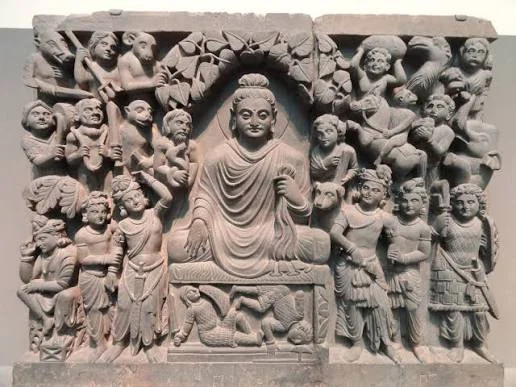
The school is often called Greco-Buddhist art because classical artistic techniques were applied to Buddhist themes. However, its imagery also reflects local and Central Asian influences.
B. Mathura School
The Mathura School developed around the city of Mathura in present-day Uttar Pradesh. It flourished under the Kushanas and continued to influence Indian sculpture in later centuries.
Its important features include:
- Use of spotted red sandstone.
- Strong, broad-shouldered human figures.
- Indigenous artistic style with comparatively less foreign influence.
- Buddha represented in a powerful and spiritually expressive form.
- Sculptures of Jain Tirthankaras and Hindu deities alongside Buddhist images.
The Mathura School played a significant role in developing the iconography of Hindu, Buddhist and Jain traditions.
Difference Between Gandhara and Mathura Schools
Gandhara School | Mathura School |
| Developed in present-day Pakistan and Afghanistan. | Developed in Mathura, Uttar Pradesh. |
| Strong Greco-Roman and Central Asian influences. | Primarily indigenous Indian artistic tradition. |
| Grey schist and stucco were commonly used. | Spotted red sandstone was commonly used. |
| Figures show detailed drapery and wavy hair. | Figures generally have simpler drapery and a robust build. |
| Buddhist themes were dominant. | Buddhist, Jain and Hindu images were produced. |
6. Gupta Period (4th-6th Century CE)
The Gupta period is often regarded as a classical phase in the development of Indian sculpture. Earlier traditions, particularly Mathura and Amaravati, influenced Gupta artists, who developed a refined style combining physical grace with spiritual expression.
Its major features include:
- Smoothly modelled bodies and balanced proportions.
- Calm facial expressions and a sense of inner spirituality.
- Thin, transparent or closely clinging garments.
- Delicately carved halos around Buddha images.
- Greater emphasis on idealised beauty and restrained ornamentation.
Important Examples:
- Sarnath Buddha: Known for its serene expression, refined features and delicate treatment of drapery. It represents the spiritual ideal of Gupta sculpture.
- Mathura Buddha: Combines physical strength with spiritual calm and reflects the continuing influence of the Mathura tradition.
- Dashavatara Temple, Deogarh: Its sculptural panels, including the depiction of Vishnu reclining on Shesha, are important examples of Gupta-era religious art.
- Udayagiri Caves: The monumental Varaha relief depicting Vishnu in his boar incarnation rescuing the Earth is a notable example of Gupta-period sculpture.
7. Early Medieval Indian Sculpture
From around the 7th century onwards, sculpture became increasingly integrated with temple architecture. Regional kingdoms developed distinctive styles, and temple walls, pillars, ceilings and entrances were decorated with images of deities, celestial beings, animals and narrative scenes.
A. Pallava School
The Pallavas (6th-9th centuries CE) made major contributions to South Indian rock-cut and structural temple architecture.
Their sculptures are known for narrative compositions, mythological themes and finely carved figures.
Important Examples:
- Mahabalipuram: The famous relief known as Descent of the Ganga or Arjuna's Penance depicts a large composition of gods, sages, animals and other figures.
- Shore Temple: An important structural temple complex featuring Shaivite and Vaishnavite sculptures.
- Kailasanatha Temple, Kanchipuram: Known for its sculptural panels and depictions of Shiva in different forms.
B. Chola School
The Chola period (9th-13th centuries CE) is particularly famous for its bronze sculptures. Chola artists perfected the lost-wax casting technique, producing images known for their proportion, balance and graceful movement.
The most celebrated example is Nataraja, representing Shiva as the cosmic dancer.
The Nataraja image contains several symbolic elements:
- Damaru: Represents creation and the rhythm of the universe.
- Flame: Symbolises destruction and transformation.
- Abhaya Mudra: Assures protection and fearlessness.
- Dwarf figure (Apasmara): Represents ignorance.
- Ring of fire: Symbolises the cosmic cycle of creation and destruction.
Chola bronze images were not merely decorative objects. They were also used in temple rituals and processions.
C. Chalukya School
The Chalukyas developed important sculptural traditions in the Deccan region. Their temples show a combination of northern and southern architectural features.
Important centres and examples:
- Badami: Famous for its rock-cut cave temples and sculptures of Vishnu, Shiva and other deities.
- Aihole: Known for early structural temples and experimentation in temple design.
- Pattadakal: Features both Nagara and Dravida architectural traditions. The Virupaksha and Mallikarjuna temples are important examples.
D. Rashtrakuta School
The Rashtrakutas (8th-10th centuries CE) are known for their monumental rock-cut architecture and elaborate sculptural compositions.
Important Examples:
- Kailasa Temple, Ellora: A remarkable monolithic rock-cut temple dedicated to Shiva. It was excavated from a single rock mass and contains elaborate sculptural panels.
- Elephanta Caves: Famous for the monumental three-faced image of Shiva, commonly known as Trimurti or Maheshmurti. It represents different aspects of Shiva.
E. Pala-Sena School
The Pala and Sena dynasties (8th-12th centuries CE) patronised sculpture in Bengal and Bihar. The tradition was closely associated with Buddhist institutions such as Nalanda and Vikramashila.
Its main characteristics include:
- Use of black basalt and other dark stones.
- Elaborate jewellery, decorative details and ornamental back-slabs.
- Sculptures of Buddha, Bodhisattvas, Tara and Hindu deities.
- Continued development of bronze and stone images.
Pala sculpture also influenced Buddhist artistic traditions in Nepal and Tibet.
F. Hoysala School
The Hoysala rulers (11th-14th centuries CE) encouraged highly detailed temple sculpture in Karnataka.
Its important features include:
- Use of chloritic schist, commonly called soapstone, which allowed fine carving.
- Star-shaped temple plans and richly decorated exterior walls.
- Detailed representations of gods, goddesses, dancers, animals and mythological scenes.
- Intricate ornamentation and narrative friezes.
Important Examples:
- Chennakesava Temple, Belur.
- Hoysaleswara Temple, Halebidu.
- Keshava Temple, Somanathapura.
G. Vijayanagara School
The Vijayanagara Empire (14th-17th centuries CE) continued the tradition of integrating sculpture with temple architecture.
Its sculptural features include:
- Pillars decorated with horses, warriors and mythological figures.
- Large monolithic statues.
- Elaborate carvings in temple halls and gateways.
- Use of sculpture to depict religious narratives and royal imagery.
Important examples include the Sasivekalu Ganesha and Kadalekalu Ganesha monolithic statues at Hampi.
8. Sculpture in Medieval Indo-Islamic Architecture
With the establishment of the Delhi Sultanate and later Mughal rule, Indian architectural decoration underwent significant changes. In many Islamic religious structures, figural representation was generally avoided, particularly in mosques and other religious settings. Consequently, decorative art relied heavily on geometric patterns, calligraphy and floral motifs.
Important features included:
- Calligraphy: Quranic verses and inscriptions used as architectural decoration.
- Geometric designs: Repeated patterns and interlocking shapes carved into stone.
- Floral motifs: Stylised flowers, leaves and vines used on walls and arches.
- Jali work: Intricately carved stone screens allowing light and ventilation.
- Pietra Dura: Decorative inlay work using coloured and semi-precious stones, especially prominent under the Mughals.
The Mughal period, particularly under Shah Jahan, witnessed the refinement of marble carving and inlay work. Examples can be seen in the Taj Mahal and other Mughal monuments. Regional traditions, including Rajput architecture, also interacted with Indo-Islamic decorative styles.
Conclusion
From the symbolic art of the Indus Valley and Mauryan pillars to the refined Gupta Buddha images, Chola bronzes and elaborate medieval temple carvings, Indian sculpture reflects the continuity and diversity of the country's cultural history. Its regional schools developed distinct styles while sharing common religious and artistic traditions. For the study of Indian art and culture, sculpture remains an important source for understanding the evolution of religious ideas, architectural forms, technology and social life.
FAQs
1. What is the origin of Indian sculpture?
Indian sculptural traditions date back to the Indus Valley Civilisation (2500-1900 BCE), which produced bronze, stone and terracotta figures. Important examples include the Dancing Girl of Mohenjo-daro and the Priest-King sculpture.
2. What are the main features of Mauryan sculpture?
Mauryan sculpture (4th-2nd century BCE) is characterised by:
- Highly polished sandstone, known as Mauryan polish.
- Monumental pillars with animal capitals.
- Yaksha and Yakshi figures.
- Influence of royal patronage, particularly under Ashoka.
Important examples: Lion Capital of Sarnath, Didarganj Yakshi and the Rampurva Bull Capital.
3. What were the major features of Shunga and Satavahana sculpture?
These traditions (2nd century BCE-2nd century CE) developed narrative and decorative relief sculpture, particularly around Buddhist stupas.
- Shunga School: Bharhut Stupa, Sanchi Stupa and Bodh Gaya.
- Satavahana School: Amaravati Stupa and its elaborate narrative reliefs.
- Depictions included Jataka tales, Buddhist symbols, floral designs and scenes from everyday life.
4. What are the major features of the Gandhara School of sculpture?
The Gandhara School flourished mainly under Kushana patronage in the northwestern Indian subcontinent.
Its important features include:
- Greco-Roman artistic influence.
- Grey schist and stucco as major materials.
- Wavy hair, realistic facial features and detailed drapery.
- Naturalistic representation of the Buddha.
- Depiction of Buddha's life and Bodhisattvas.
It is particularly known for its distinctive Buddha images.
5. How was the Mathura School different from the Gandhara School?
The Mathura School developed an indigenous Indian style, particularly under the Kushanas.
- Used red sandstone, often with distinctive spots.
- Featured robust bodies and broad shoulders.
- Depicted Buddha, Jain Tirthankaras and Hindu deities.
- Used symbolic and indigenous artistic traditions.
Related reads.

Non-Aligned Movement (NAM)
02 Nov 2026 8 min

Coral Reefs
22 Oct 2026 7 min

Ocean Pollution
21 Oct 2026 7 min

Thermohaline Circulation
21 Oct 2026 7 min

Ocean Waves
19 Oct 2026 7 min

Decolonisation in Asia and Africa
18 Oct 2026 8 min
Put it into practice
Reading is step one.
Turn what you've just read into exam-ready answers with mentor-led practice and our structured test series.