
GS-I (History, Geography, Society)
Indian National Movement III (1930-1947)
Introduction
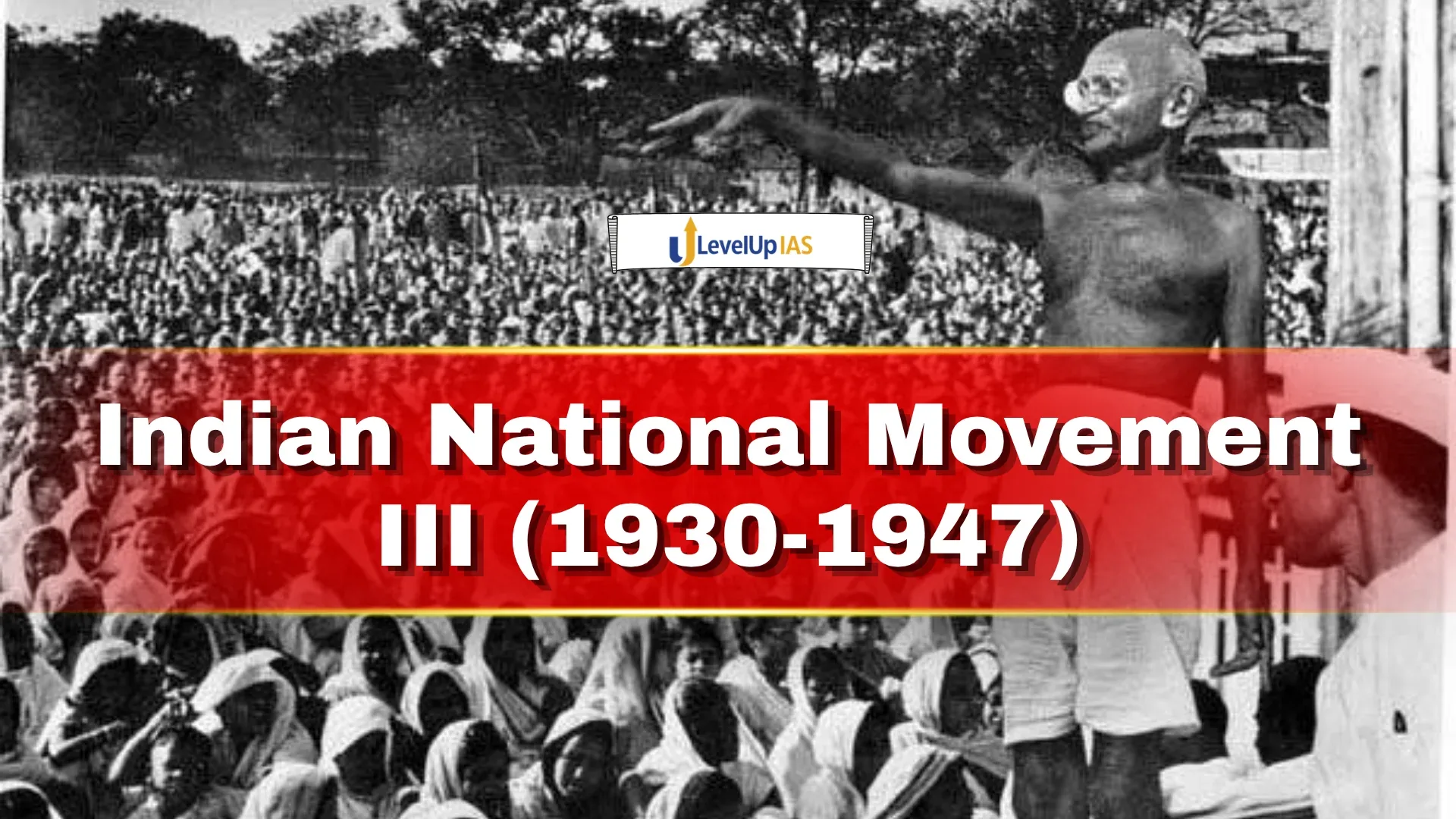
The period between 1930 and 1947 marks the final and most decisive phase of the Indian National Movement. During these seventeen years, the struggle for independence transformed from a demand for constitutional reforms into an uncompromising demand for complete freedom. This period witnessed mass civil disobedience, constitutional negotiations, revolutionary activities, the impact of the Second World War, the emergence of communal politics, and finally the transfer of power accompanied by the partition of the Indian subcontinent.
Unlike the earlier phases of the freedom struggle, this period combined mass movements, constitutional developments, international events, and political negotiations. While Mahatma Gandhi continued to lead nationwide movements based on non-violence, leaders such as Subhas Chandra Bose explored alternative methods, including armed struggle. Simultaneously, the British government attempted to resolve the constitutional deadlock through various proposals and missions, which ultimately culminated in the Indian Independence Act, 1947.
Civil Disobedience Movement (1930-1934)
The Civil Disobedience Movement represented the second nationwide mass movement under Mahatma Gandhi after the Non-Cooperation Movement. The Lahore Session of the Indian National Congress in 1929 had declared Purna Swaraj (Complete Independence) as India's objective, and 26 January 1930 was observed as Independence Day across the country.
The movement formally began with the historic Dandi March. On 12 March 1930, Mahatma Gandhi, accompanied by 78 volunteers, started a 240-mile march from Sabarmati Ashram to Dandi. On 6 April 1930, Gandhi broke the Salt Law by producing salt from seawater, symbolically challenging British authority. Although salt was a simple commodity, the issue united people across regions because it affected every section of society.
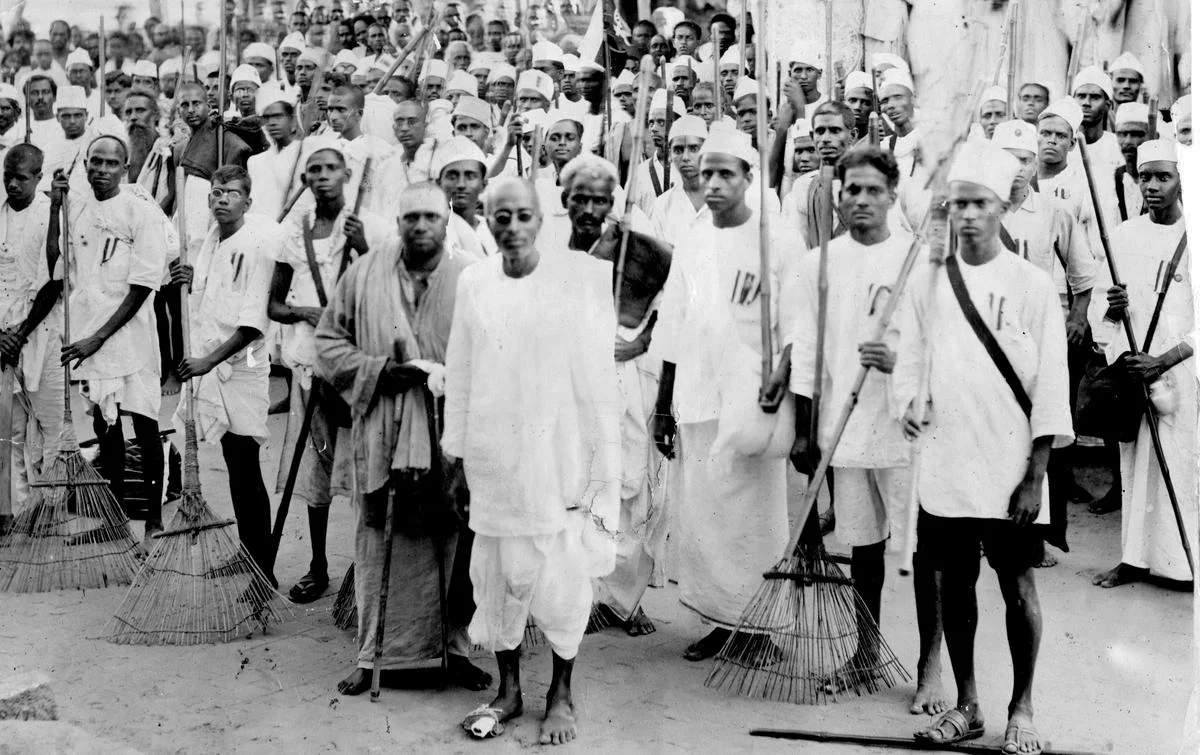
Soon the movement spread throughout India. People refused to pay taxes, boycotted foreign goods, picketed liquor shops, resigned from government jobs, and violated colonial laws. In different regions, the movement assumed diverse forms. In the North-West Frontier Province, Khan Abdul Ghaffar Khan mobilized the Khudai Khidmatgars (Red Shirts), while in Tamil Nadu and Kerala, campaigns against salt laws gained momentum. Women also participated in unprecedented numbers, making the movement socially inclusive.
The British administration responded with severe repression. Thousands of leaders and volunteers, including Gandhi, were arrested. Peaceful demonstrations were lathi-charged, newspapers were censored, and public meetings were prohibited. Despite this suppression, the movement demonstrated the growing inability of the colonial government to govern without coercion.
Although the Civil Disobedience Movement was suspended in 1931 and finally withdrawn in 1934, it significantly strengthened nationalist consciousness. It transformed the Congress into a genuine mass organisation and established that the demand for complete independence had become irreversible.
Gandhi-Irwin Pact and the Round Table Conferences
To reduce political tensions, the British Government initiated negotiations with Indian leaders through the Round Table Conferences held in London between 1930 and 1932.
The First Round Table Conference (1930) was attended by representatives of the princely states, minority communities, and British officials. However, since the Congress had boycotted the conference, it failed to produce any meaningful outcome.
In March 1931, negotiations between Mahatma Gandhi and Lord Irwin resulted in the Gandhi-Irwin Pact. Under the agreement, the Congress agreed to suspend the Civil Disobedience Movement and participate in the Second Round Table Conference. In return, the government released political prisoners who had not been convicted of violent offences and permitted peaceful picketing and limited salt production for domestic use.
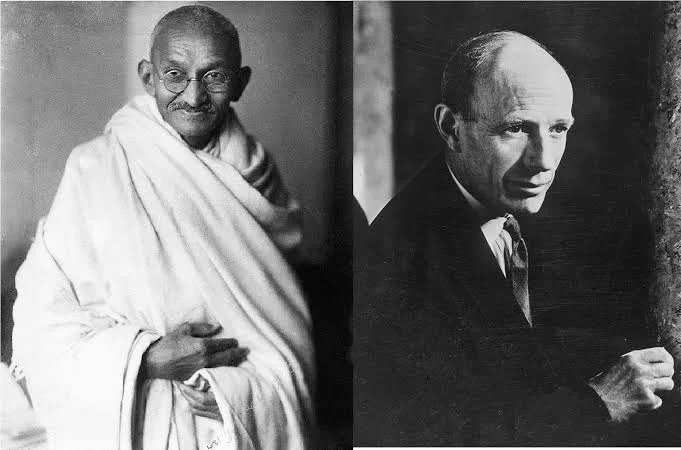
The Second Round Table Conference (1931) was attended by Gandhi as the sole representative of the Congress. However, the conference failed because discussions became dominated by the issues of minority representation and separate electorates rather than responsible government. The British Government continued to encourage communal divisions, making consensus impossible.
The Third Round Table Conference (1932) was held without Congress participation and merely formalized constitutional proposals that eventually became the basis of the Government of India Act, 1935.
Although these conferences failed to resolve India's constitutional problems, they exposed the widening gap between British intentions and Indian aspirations.
Communal Award and the Poona Pact
One of the most controversial constitutional developments during this period was the Communal Award announced by British Prime Minister Ramsay MacDonald in August 1932. The Award extended separate electorates to various minority communities, including the Depressed Classes (Scheduled Castes).
Mahatma Gandhi strongly opposed separate electorates for the Depressed Classes, believing that they would permanently divide Hindu society. While imprisoned in Yerwada Jail, he undertook a fast unto death against the proposal.
The crisis was resolved through negotiations between Dr. B.R. Ambedkar and Gandhi, resulting in the Poona Pact (1932). Instead of separate electorates, the Pact provided reserved seats for Scheduled Castes within the general electorate while increasing their political representation.
The Poona Pact became an important milestone because it shaped the future policy of political reservation, which later found constitutional recognition after independence.
Government of India Act, 1935
The Government of India Act, 1935 was the most comprehensive constitutional reform introduced by the British before independence. It incorporated many recommendations emerging from the Round Table Conferences.
The Act proposed an All-India Federation consisting of British Indian provinces and princely states, although the federation never came into existence because the princely states refused to join.
It abolished provincial dyarchy and introduced provincial autonomy, allowing elected ministries to function with greater executive authority. At the Centre, however, dyarchy was proposed but never implemented.
The Act also established the Federal Court of India, introduced the Reserve Bank of India, expanded the provincial legislatures, and considerably widened the franchise, although only about 14% of the population gained voting rights.
Despite these reforms, the Act was criticised because real authority remained with the British Governor-General and provincial Governors, who retained extensive discretionary powers. Consequently, the Congress rejected the Act as inadequate, although it decided to participate in elections under its provisions.
Many provisions of the Act, including the office of Governor, Public Service Commissions, and the Federal Court, later influenced the Constitution of independent India.
Provincial Elections of 1937 and Congress Ministries
The elections held in 1937 under the Government of India Act, 1935 marked an important political milestone. The Indian National Congress secured an impressive victory and formed ministries in several provinces, including Madras, Bombay, Bihar, the United Provinces, the Central Provinces, and Orissa.
Congress ministries introduced significant reforms in education, rural development, labour welfare, prohibition, and civil liberties. Political prisoners were released, restrictions on the press were relaxed, and efforts were made to improve local governance.
However, the Muslim League performed poorly outside Muslim-majority provinces, highlighting its limited political influence at that time. This setback prompted Muhammad Ali Jinnah to intensify efforts to mobilize Muslims under the League's leadership.
The experience of provincial governance demonstrated the administrative capabilities of Indian leaders and prepared them for future responsibilities.
Second World War and Constitutional Deadlock
The outbreak of the Second World War in September 1939 fundamentally altered India's political situation. Without consulting Indian representatives, the British Government declared India a participant in the war.
The Congress protested against this unilateral decision and demanded a clear commitment regarding India's independence after the war. When the British refused, Congress ministries resigned from all provinces in 1939.
In contrast, the Muslim League observed 22 December 1939 as the "Day of Deliverance", celebrating the resignation of Congress governments. This widened the political divide between the Congress and the League.
During the war, Britain made several constitutional proposals, including the August Offer (1940), which promised expansion of the Viceroy's Executive Council and the right of Indians to frame their Constitution after the war. Since it did not promise immediate self-government, the Congress rejected it.
Mahatma Gandhi subsequently launched the Individual Satyagraha (1940-41) to assert India's right to free expression without obstructing the war effort. Vinoba Bhave became the first satyagrahi, followed by Jawaharlal Nehru and many others.
Cripps Mission and the Quit India Movement
In March 1942, the British Government sent Sir Stafford Cripps to India with constitutional proposals. The Cripps Mission offered Dominion Status after the war and the right of 328 provinces to opt out of the proposed Union.
Both the Congress and the Muslim League rejected these proposals. The Congress opposed the postponement of independence, while the League insisted on the recognition of Pakistan.
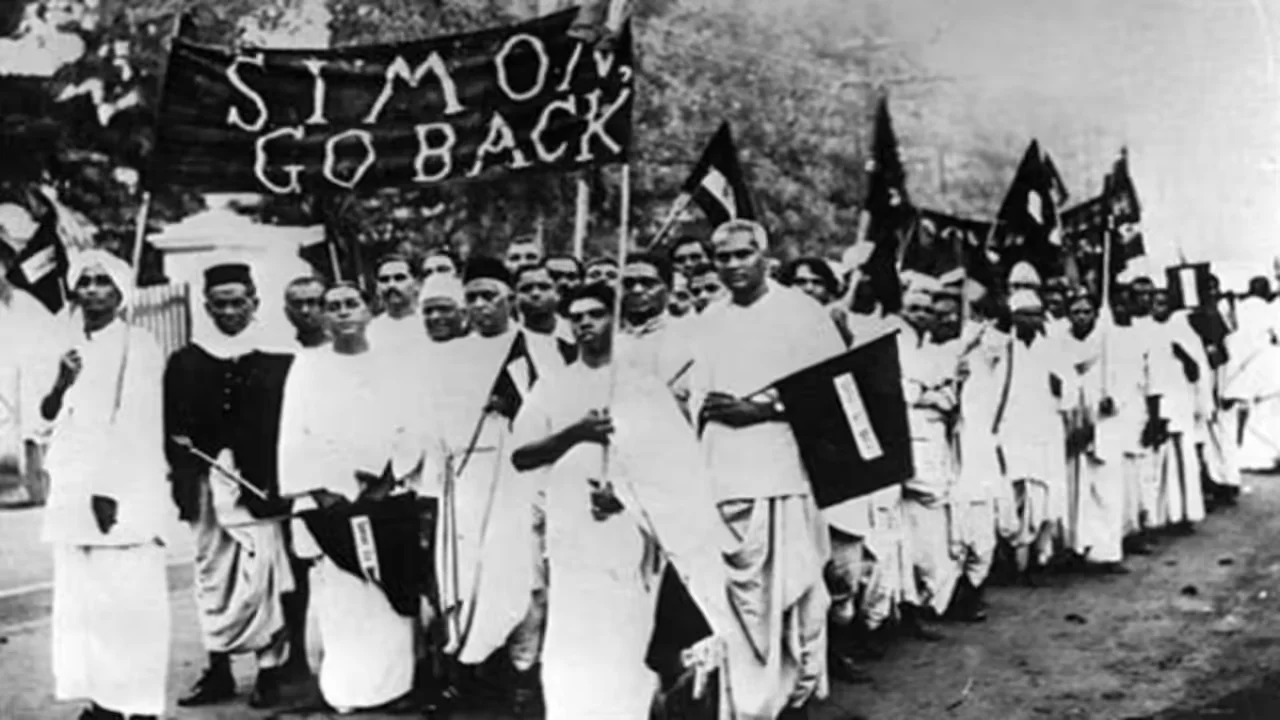
The failure of the Cripps Mission convinced the Congress that British rule had become incompatible with India's interests. Consequently, the Quit India Movement was launched on 8 August 1942 after the Bombay Session of the Congress adopted the famous Quit India Resolution. Gandhi's call of "Do or Die" inspired one of the largest popular uprisings in colonial India.
The British immediately arrested almost all senior Congress leaders. With leadership imprisoned, the movement assumed a spontaneous character. Students, peasants, workers, and ordinary citizens attacked communication networks, disrupted administration, and established parallel governments in places like Ballia, Satara, and Tamluk.
Although the movement was brutally suppressed, it fundamentally weakened British authority. It demonstrated that the colonial government could no longer command the consent of the Indian people and made the continuation of British rule increasingly untenable.
Subhas Chandra Bose and the Indian National Army
While Gandhi pursued non-violent resistance, Subhas Chandra Bose sought independence through armed struggle. After escaping from India in 1941, he reached Southeast Asia and assumed leadership of the Indian National Army (INA).
Bose proclaimed the Provisional Government of Free India (Azad Hind Government) in 1943 and popularised slogans such as "Jai Hind", "Give me blood, and I will give you freedom," and "Delhi Chalo."
Although the INA's military campaign eventually failed, the INA Trials held at the Red Fort generated widespread public sympathy. The trials united Indians across political and communal lines and significantly weakened the morale of the British Indian armed forces.
The Royal Indian Navy Revolt of 1946, inspired partly by nationalist sentiments, further convinced the British Government that maintaining colonial rule through military force had become impossible.
Towards Independence (1945-1947)
After the war, Britain made renewed attempts to resolve the constitutional crisis. The Wavell Plan and the Shimla Conference (1945) failed because of disagreements between the Congress and the Muslim League regarding political representation.
The Cabinet Mission (1946) proposed a united federal India with a weak Centre and grouped provinces. While initially accepted, disagreements over its interpretation soon led to its collapse.
An Interim Government headed by Jawaharlal Nehru assumed office in September 1946. However, political tensions continued to rise.
On 16 August 1946, the Muslim League observed Direct Action Day, leading to widespread communal violence beginning in Calcutta and spreading to other parts of India. The deteriorating law-and-order situation strengthened demands for partition.
In February 1947, Lord Louis Mountbatten was appointed the last Viceroy of India. His Mountbatten Plan (3 June 1947) accepted partition as the practical solution to the political deadlock.
The Indian Independence Act, 1947, passed by the British Parliament, created two independent dominions India and Pakistan effective from 15 August 1947. The Act ended British sovereignty over India and transferred legislative authority to the Constituent Assemblies of the two dominions.
Significance of the Final Phase of the National Movement
The period from 1930 to 1947 represents the culmination of India's long struggle against colonial rule. It combined constitutional negotiations, mass civil resistance, revolutionary nationalism, and international developments into a unified movement for freedom.
This phase witnessed the emergence of democratic institutions, strengthened political participation, and prepared Indian leaders for governance. It also laid the foundations of independent India's constitutional framework through debates on federalism, representation, civil liberties, and minority rights.
However, independence came at the enormous human cost of Partition, which resulted in unprecedented communal violence, mass migration, and long-term geopolitical tensions. Despite this tragedy, the Indian National Movement successfully established the principles of democracy, secularism, constitutionalism, and representative government, which continue to define the Republic of India.
The period remains one of the most significant chapters in modern Indian history, illustrating how sustained popular mobilisation, political leadership, and constitutional evolution ultimately brought an end to nearly two centuries of British colonial rule.
FAQs
Q1. What is covered under the Indian National Movement (1930–1947)?
This phase covers the final 17 years of India's freedom struggle, including the Civil Disobedience Movement, Round Table Conferences, Government of India Act 1935, Quit India Movement, Indian National Army, Cabinet Mission, Mountbatten Plan, Partition, and Independence.
Q2. What was the Civil Disobedience Movement?
The Civil Disobedience Movement was launched by Mahatma Gandhi in 1930 to openly violate unjust colonial laws. The Salt March from Sabarmati to Dandi became its most iconic event.
Q3. What was the Gandhi-Irwin Pact?
Signed in March 1931, the Gandhi-Irwin Pact led to the suspension of the Civil Disobedience Movement. Gandhi agreed to attend the Second Round Table Conference, while the government agreed to release many political prisoners and permit peaceful picketing.
Q4. What was the significance of the Government of India Act, 1935?
The Act introduced provincial autonomy, expanded the franchise, and proposed an All-India Federation. The federal part was never implemented, but provincial autonomy became an important constitutional development.
Q5. What was the Quit India Movement?
The Quit India Movement was launched by the Indian National Congress in August 1942 following the failure of the Cripps Mission. Gandhi gave the famous call of “Do or Die”, demanding an immediate end to British rule.
Related reads.

Ocean Currents
26 Sep 2026 7 min

Ancient Indian Literature
26 Sep 2026 6 min

Salinity Distribution in Oceans
25 Sep 2026 6 min

Folk Theatre of India
25 Sep 2026 5 min

Indian Classical Music
24 Sep 2026 7 min

Indian Classical Dance Forms
23 Sep 2026 6 min
Put it into practice
Reading is step one.
Turn what you've just read into exam-ready answers with mentor-led practice and our structured test series.