
GS-I (History, Geography, Society)
Rock-Cut Architecture in India
Introduction
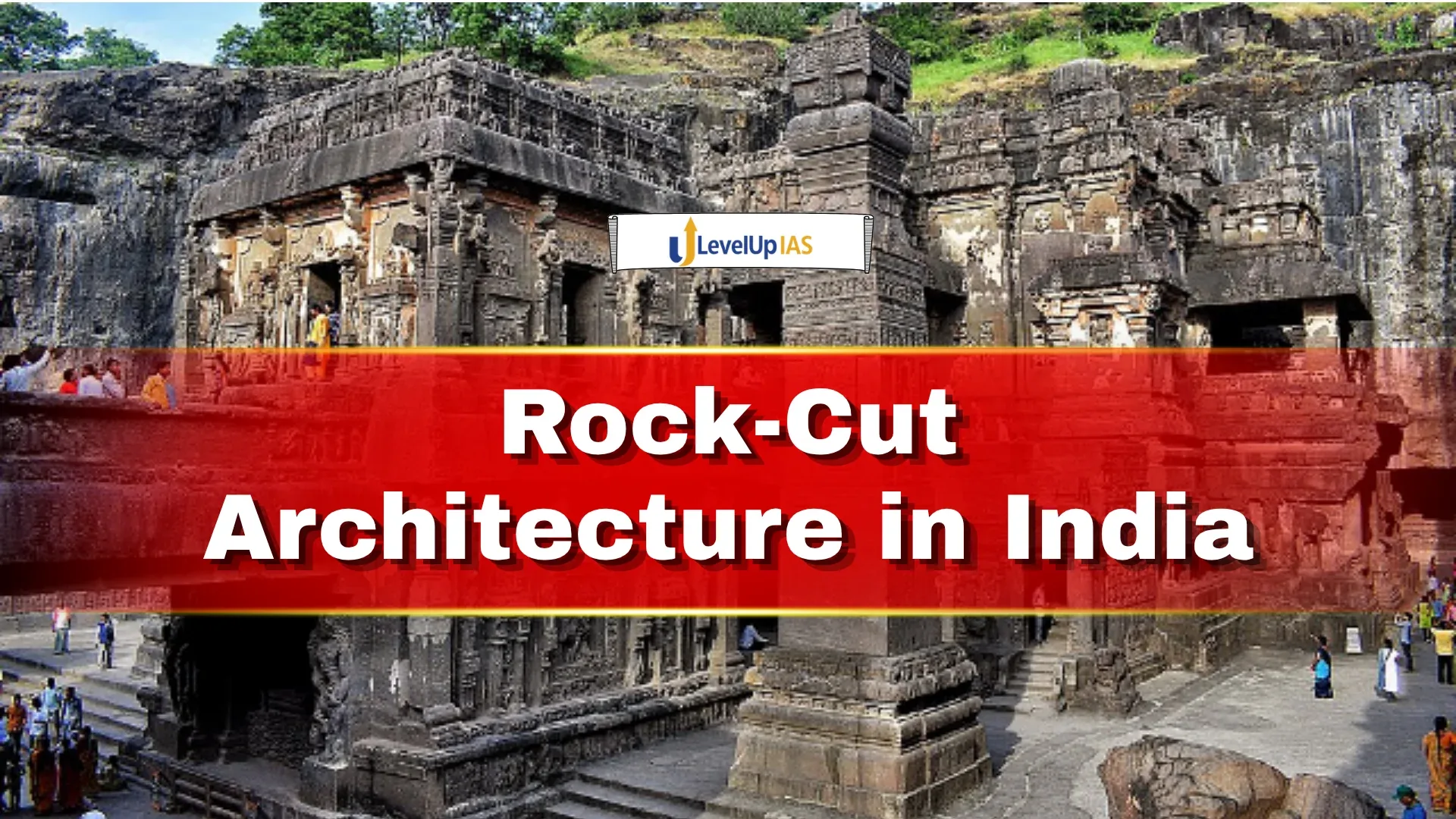
Rock-cut architecture refers to structures created by excavating and carving directly into a natural rock mass rather than assembling separate building materials such as stone or brick. India possesses one of the world's richest traditions of rock-cut architecture, extending from the Mauryan period to the medieval age. These monuments include caves, monasteries, prayer halls, temples, monolithic structures and large rock reliefs.
The tradition developed alongside the growth of Buddhism, Jainism and Hinduism and reflects not only religious beliefs but also advances in engineering, craftsmanship and artistic expression. From the polished interiors of the Barabar Caves to the monumental Kailash Temple at Ellora, Indian artisans transformed natural rock into highly complex architectural spaces.
Evolution of Rock-Cut Architecture
The earliest phase of artificial rock-cut architecture in India is associated with the Mauryan period. The Barabar Caves in Bihar, dating to the 3rd century BCE, represent some of the earliest surviving examples. Several caves were dedicated to the Ajivikas, a religious sect that received patronage under Ashoka and his successors. Their interiors are notable for their exceptionally smooth, highly polished granite surfaces and simple geometric forms. The nearby Nagarjuni Caves, associated with Ashoka's grandson Dasharatha, belong to the same broader tradition.
After the Mauryan period, rock-cut architecture expanded considerably. Buddhist communities established caves along important trade routes, particularly in the western Deccan. Sites such as Bhaja, Karla, Bedse, Nasik and Kanheri developed as religious and monastic centres supported by rulers, merchants, guilds and devotees.
During this phase, artisans increasingly reproduced architectural features of earlier wooden structures in stone. Carved beams, rafters, pillars and arched forms suggest that rock-cut architecture did not develop in isolation but adapted existing structural traditions to the medium of rock.
By the 5th-6th centuries CE, the tradition entered another important phase, represented by sites such as Ajanta and Ellora. Architectural planning became more elaborate, while sculpture, painting and religious imagery were integrated into the excavated spaces. Hindu and Jain communities also increasingly adopted rock-cut techniques, producing monuments of considerable architectural complexity.
Major Forms of Rock-Cut Architecture
Rock-cut architecture in India developed into several forms according to religious and functional requirements.
Caves and Monastic Complexes
Some excavated caves served as residential and meditation spaces for monks. Buddhist viharas generally contained a central hall surrounded by cells, while larger complexes could include shrines, prayer spaces, courtyards and inscriptions.
The Kanheri Caves near Mumbai are an important example of an extensive Buddhist monastic complex. With more than a hundred caves developed over several centuries, the site contains residential cells, prayer halls, water-management features and inscriptions recording donations.
Chaitya Halls
Chaitya-grihas were prayer and assembly halls, generally characterised by an apsidal end containing a stupa. Pillars separated the central nave from the side aisles and provided a path for circumambulation.
The Karla Chaitya in Maharashtra is one of the finest surviving examples. Its large hall, tall pillars and elaborate entrance demonstrate the architectural sophistication achieved by early Buddhist rock-cut builders. Other important examples occur at Bhaja and Bedse.
Rock-Cut Temples
Rock-cut techniques were later adapted to create temples dedicated to Hindu and Jain deities. Unlike simple excavated caves, these monuments were often designed to reproduce the appearance and spatial organisation of structural temples, including pillars, mandapas, shrines and sculptural programmes.
The Badami Cave Temples of Karnataka, associated with the Early Chalukyas, contain Hindu and Jain imagery and demonstrate the development of rock-cut temple architecture in the Deccan.
Monolithic Temples
A particularly remarkable development was the creation of monolithic temples, in which an entire architectural structure was carved out of a single mass of rock.
The most celebrated example is the Kailash Temple at Ellora (Cave 16). Commissioned during the reign of Rashtrakuta ruler Krishna I in the 8th century CE, the temple was excavated vertically from the basalt rock and carved into the form of a complete Hindu temple complex. Its courtyards, pillars, sculptures and architectural elements demonstrate extraordinary planning and execution.
Major Rock-Cut Sites in India
Barabar Caves, Bihar
The Barabar Caves represent the earliest major surviving phase of artificial rock-cut architecture in India. Dating to the Mauryan period, they are particularly famous for their highly polished granite interiors and simple architectural forms. Their inscriptions also provide important evidence about religious patronage during the Mauryan age.
Ajanta Caves, Maharashtra
The Ajanta Caves comprise a group of Buddhist rock-cut monuments excavated into a basalt cliff along the Waghora River. They developed in two broad phases, beginning around the 2nd century BCE and receiving major additions during the 5th–6th centuries CE under the Vakatakas.
.webp)
Ajanta combines viharas, chaitya-grihas, sculpture and mural paintings. Its paintings depict Jataka narratives, scenes from the life of the Buddha and aspects of contemporary society. The site therefore provides evidence not only of Buddhist religious traditions but also of the social and cultural life of ancient India.
Ellora Caves, Maharashtra
Ellora represents an exceptional example of religious coexistence within a single monumental complex. Its 34 caves include Buddhist, Hindu and Jain monuments, reflecting the development of different religious traditions between approximately the 5th and 11th centuries CE.
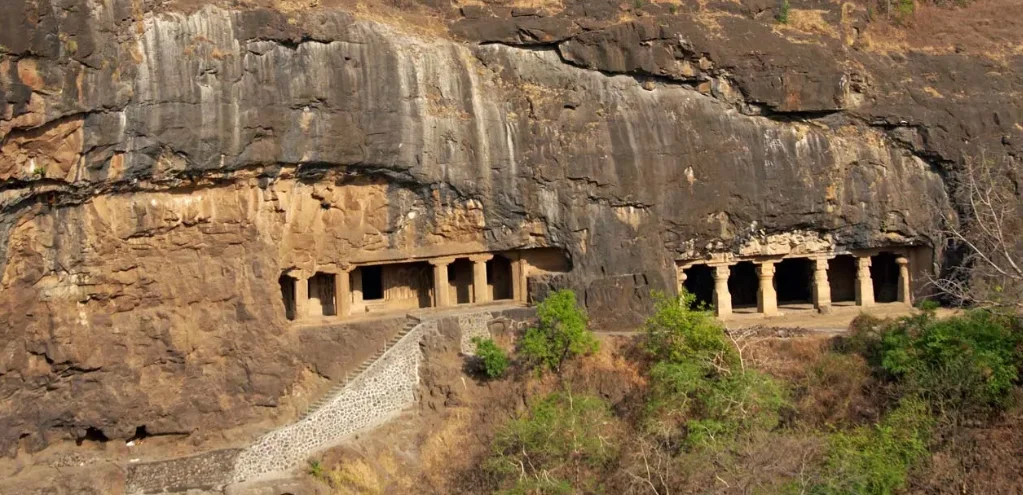
The Buddhist caves include monasteries and shrines, while the Hindu group contains some of the most elaborate rock-cut temples, culminating in the Kailash Temple. The Jain caves contain finely carved images and architectural details associated with Jain religious traditions.
Elephanta Caves, Maharashtra
The Elephanta Caves, located on an island near Mumbai, are primarily associated with Shaivism. Their monumental sculptures include representations of Shiva in different aspects. The famous Trimurti or Maheshmurti is the central sculptural attraction, while the cave's pillared halls and shrine illustrate the sophistication of Hindu rock-cut architecture.
.webp)
Other Important Examples
Other significant sites include the Udayagiri and Khandagiri Caves of Odisha, associated largely with Jain traditions; the Bagh Caves of Madhya Pradesh, known for their Buddhist paintings; the Udayagiri Caves of Madhya Pradesh, particularly associated with Gupta-period Hindu sculpture; and the Pancha Rathas at Mahabalipuram, where the Pallavas created monolithic architectural forms from individual rock masses.
Rock-Cut Architecture and Religious Diversity
One of the most important features of India's rock-cut tradition is its religious diversity. Although Buddhism played a major role in the early development of cave architecture, the technique was subsequently adopted extensively by Hindu and Jain traditions.
The same broad architectural tradition therefore produced Buddhist monasteries at Ajanta and Kanheri, Hindu monuments at Elephanta and Badami, and Jain monuments at Ellora and Udayagiri-Khandagiri. This demonstrates how architectural techniques could be adapted to different religious requirements and iconographic traditions.
Architectural and Cultural Significance
Rock-cut monuments are significant because they preserve several aspects of India's historical development within a single architectural form. Their inscriptions provide information about rulers, donors, religious communities and economic networks, while sculptures and paintings reveal changing artistic styles and religious ideas.
The location of many Buddhist caves along ancient trade routes also demonstrates the relationship between commerce, mobility and religious institutions. Merchant groups frequently supported cave construction, while monasteries provided spaces for residence, worship and interaction.
From an artistic perspective, rock-cut architecture also preserves evidence of architectural traditions that may have originally been executed in perishable materials such as wood. In this sense, these monuments are valuable records of otherwise lost architectural practices.
Conclusion
Indian rock-cut architecture represents a remarkable synthesis of engineering, religion, sculpture and architectural design. Beginning with the polished Mauryan caves of Barabar, the tradition expanded through Buddhist chaityas and viharas in the western Deccan and eventually produced sophisticated Hindu and Jain monuments.
Sites such as Ajanta, Ellora, Elephanta, Karla, Badami and Udayagiri-Khandagiri demonstrate the diversity of this tradition, while the Kailash Temple at Ellora represents one of its most extraordinary achievements. Taken together, these monuments reveal the evolution of Indian architectural thought over more than a millennium and provide an important window into the country's religious, artistic, social and technological history.
FAQs
1. What is rock-cut architecture?
Rock-cut architecture refers to structures excavated directly into natural rock formations rather than being constructed by assembling separate building materials. It includes caves, temples, monasteries, prayer halls and sculptures.
2. When did rock-cut architecture develop in India?
Early examples date to the Mauryan period, particularly the Barabar Caves of Bihar. The tradition expanded significantly during the Buddhist, Satavahana, Gupta, Chalukya, Pallava and Rashtrakuta periods.
3. What are the major types of rock-cut architecture?
Indian rock-cut architecture broadly includes:
- Buddhist caves - chaityas and viharas
- Hindu cave temples
- Jain caves
- Rock-cut monasteries and sculptural complexes
4. What are the Barabar Caves?
The Barabar Caves in Bihar are among the earliest surviving examples of Indian rock-cut architecture. Dating mainly to the Mauryan period, some caves were dedicated to the Ajivikas during the reign of Emperor Ashoka and his successors.
5. What is the significance of Ajanta Caves?
The Ajanta Caves in Maharashtra are primarily associated with Buddhism. They contain chaityas, viharas, sculptures and celebrated Buddhist murals, particularly depicting Jataka stories and episodes from the Buddha's life.
Related reads.

Buddhist Architecture: Stupas, Chaityas and Viharas
06 Oct 2026 6 min

Indian Independence Act, 1947
05 Oct 2026 6 min

Modern Indian Literature
29 Sep 2026 6 min

Coastal Landforms
28 Sep 2026 8 min

Medieval Indian Literature
28 Sep 2026 8 min

Ocean Currents
26 Sep 2026 7 min
Put it into practice
Reading is step one.
Turn what you've just read into exam-ready answers with mentor-led practice and our structured test series.