
GS-I (History, Geography, Society)
The Mughal Art and Architecture
Introduction
The Mughal period (1526-1857) occupies an important place in the history of Indian art and culture. Mughal rulers introduced and patronised artistic traditions that brought together Persian, Central Asian and Indian influences, creating a distinctive cultural synthesis. This interaction was visible not only in monumental architecture but also in painting, gardens, decorative arts, music and literature.
Evolution of Mughal Architecture
Mughal architecture did not emerge as a completely new tradition. It developed through the interaction of Timurid and Persian traditions with Indian architectural practices, including elements inherited from the Delhi Sultanate and regional Hindu and Rajput traditions.
Babur and Humayun
The early Mughal rulers did not leave behind the large architectural legacy associated with their successors. Babur, who ruled India for a relatively short period, was particularly interested in gardens. He encouraged the development of the Charbagh, or four-part garden, based on Persian and Central Asian traditions.
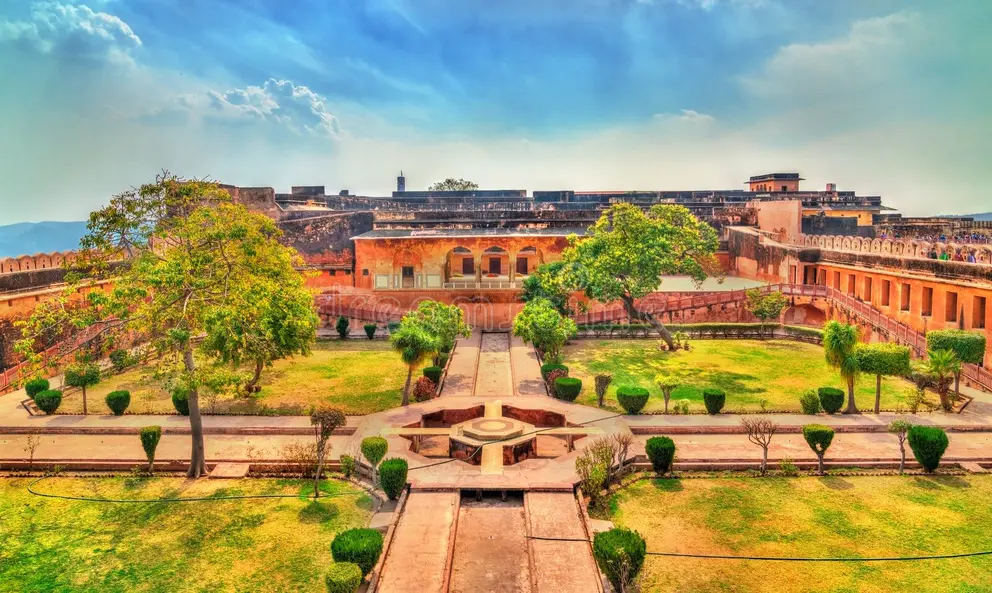
The reign of Humayun witnessed an important architectural development after his death. His tomb in Delhi, commissioned by his widow Hamida Banu Begum and designed by the Persian architect Mirak Mirza Ghiyas, became one of the earliest great examples of Mughal garden-tomb architecture in India.
Built largely of red sandstone with white marble elements, the monument stands on a high platform and is surrounded by a geometrically planned Charbagh. Its large dome, symmetrical layout and combination of Persian planning with Indian architectural features established a model that influenced later Mughal architecture.
The Sur Interlude and its Influence
The short-lived Sur dynasty also contributed significantly to the architectural background from which mature Mughal architecture emerged. The Purana Qila in Delhi and the tomb of Sher Shah Suri at Sasaram demonstrate important developments in fort and funerary architecture.
Sher Shah's tomb, located in the middle of a large water body and approached through a causeway, combines monumental scale with a carefully planned setting. These developments influenced the architectural environment inherited by the Mughals.
Akbar: Synthesis and Experimentation
The reign of Akbar (1556-1605) marked a major phase in the development of Mughal architecture. His buildings were generally characterised by massive forms, extensive use of red sandstone, elaborate carving and the incorporation of Indian architectural elements.
Agra Fort
The Agra Fort was extensively rebuilt under Akbar using red sandstone. Its architecture incorporated features associated with Rajput and other Indian traditions, including pillars, brackets, balconies and chhatris.
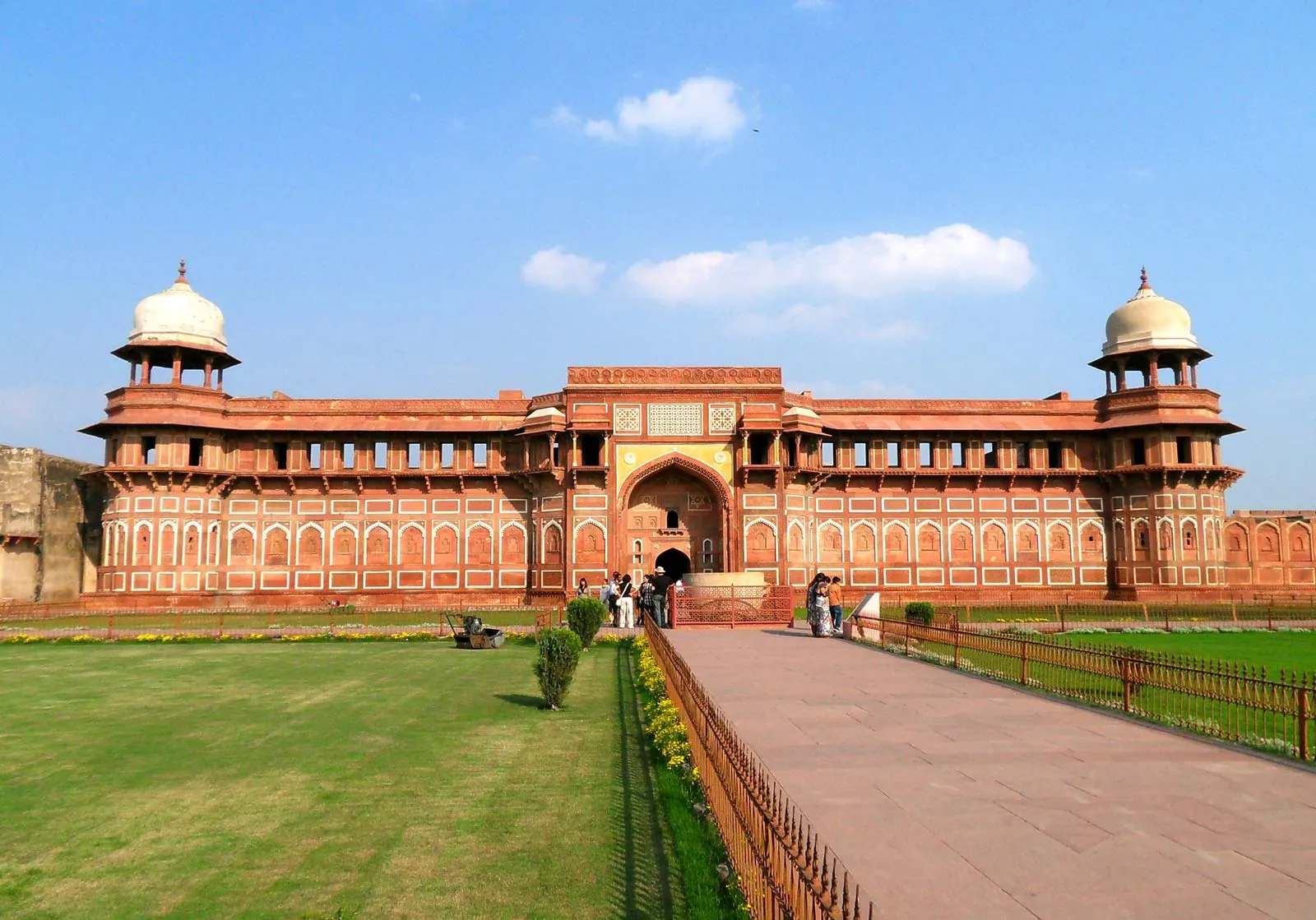
The monument illustrates the broader character of Akbar's architectural policy: Persian and Islamic planning was combined with techniques and decorative forms employed by Indian craftsmen.
Fatehpur Sikri
Akbar's new capital at Fatehpur Sikri represents one of the most ambitious architectural projects of his reign. Constructed largely in red sandstone, the complex contains palaces, audience halls, religious buildings and residential structures.
Important buildings include the Buland Darwaza, Diwan-i-Khas, Panch Mahal and Jama Masjid. The complex displays a combination of arches and domes with trabeate construction, carved pillars, brackets, chhatris and projecting balconies.
The Buland Darwaza, constructed of red sandstone with marble decoration, is particularly notable for its monumental scale and elaborate ornamentation. Fatehpur Sikri therefore provides one of the clearest examples of the syncretic character of Mughal architecture.
Jahangir
Jahangir (1605-1627) was more strongly associated with painting and the appreciation of nature than with large-scale architectural construction. Nevertheless, architecture during his period became increasingly refined and decorative.
The Tomb of Akbar at Sikandra, begun during Akbar's reign and completed under Jahangir, contains several distinctive architectural elements and reflects the continuing experimentation of the period.
The most significant monument associated with this phase is the Tomb of Itimad-ud-Daulah at Agra, commissioned by Nur Jahan for her father. It is particularly important because it was among the earliest major Mughal monuments to make extensive use of white marble, delicate inlay work and fine jali screens.
The monument represents an important transition from the massive red-sandstone architecture of Akbar towards the lighter and more refined marble architecture associated with Shah Jahan.
Shah Jahan: The Classical Phase
The reign of Shah Jahan (1628-1658) is generally regarded as the high point of Mughal architecture. Architectural design became more formal, symmetrical and refined, with extensive use of white marble, pietra dura, delicate floral ornamentation, jali work, bulbous domes and slender minarets.
Taj Mahal
The Taj Mahal at Agra, built as the mausoleum of Mumtaz Mahal, represents the culmination of Mughal funerary architecture. Its composition is based on strong symmetry and a central axis.
.jpeg.webp)
The principal mausoleum stands on a raised platform, with a large central dome surrounded by four minarets. The extensive use of white marble, floral motifs, calligraphic decoration and pietra dura, or coloured stone inlay, gives the monument its distinctive character.
The Taj Mahal also represents the culmination of a longer architectural evolution. Elements such as the garden setting, elevated platform, symmetrical planning and monumental dome had already appeared in earlier Mughal architecture.
Red Fort and Shahjahanabad
Shah Jahan established the new imperial city of Shahjahanabad in Delhi, centred on the Red Fort.
The Red Fort contained important structures such as the Diwan-i-Aam and Diwan-i-Khas, along with palaces and gardens. The complex demonstrates the relationship between architecture, imperial authority and urban planning.
Shah Jahan also commissioned the Jama Masjid in Delhi, one of the most prominent mosques of the period. Its large courtyard, imposing gateway, domes and minarets illustrate the mature Mughal style.
Aurangzeb and the Later Mughal Phase
Architectural patronage became comparatively restrained during the reign of Aurangzeb. Nevertheless, important structures were constructed during and around his period.
The Bibi ka Maqbara at Aurangabad, built as the tomb of Dilras Banu Begum, is often compared with the Taj Mahal because of its marble-clad mausoleum and garden setting. The Badshahi Mosque at Lahore, commissioned during Aurangzeb's reign, is another important example of late Mughal architecture.
The later decline of imperial patronage did not result in the disappearance of Mughal architectural traditions. Instead, Mughal techniques and decorative vocabulary continued to influence regional and Indo-Islamic architectural traditions.
Major Features of Mughal Architecture
Mughal architecture developed a distinctive vocabulary through the combination of different traditions.
Charbagh: Geometrically divided gardens with water channels and pathways became an important feature of Mughal tombs and palaces.
Domes and Minarets: Large domes, often bulbous in form, were combined with slender minarets and smaller cupolas.
Pietra Dura: Coloured stones were inlaid into marble surfaces to create floral and geometric designs, reaching a high level of refinement under Shah Jahan.
Jali Work: Perforated stone screens provided ventilation and filtered light while adding decorative value.
Calligraphy: Quranic verses and other inscriptions were incorporated into architectural surfaces, particularly gateways and mausoleums.
Chhatris and Brackets: Indian architectural elements such as chhatris, carved brackets and projecting balconies were incorporated into Mughal structures, particularly during Akbar's period.
Thus, Mughal architecture cannot be understood simply as an imported Persian or Central Asian style. It developed through sustained interaction between foreign traditions and indigenous Indian craftsmanship.
Mughal Painting
Painting was another major achievement of the Mughal period. Mughal miniature painting developed through the interaction of Persian artistic traditions with existing Indian painting practices.
Humayun played an important role in introducing Persian-trained artists to the Mughal court. Two notable masters, Mir Sayyid Ali and Abd al-Samad, came to India during his reign and contributed to the development of the imperial atelier.
Akbar's Painting
Under Akbar, Mughal painting developed on a large scale. The imperial workshop employed numerous Indian and Persian artists and produced illustrated manuscripts.
Important works included illustrated versions of the Hamzanama, Akbarnama and Razmnama, the Persian translation of the Mahabharata.
Artists such as Basawan and Daswanth became prominent figures of Akbar's court. Mughal painting during this period was characterised by detailed narrative scenes, multiple figures, vibrant colours and a combination of Persian conventions with Indian artistic elements. European artistic influences also entered the Mughal court during this period through contact with Portuguese missionaries.
Jahangir's Painting
Mughal painting reached a high degree of refinement under Jahangir, who possessed a strong personal interest in painting and natural history.
The period witnessed an increased emphasis on portraiture, individual expression, studies of plants and animals, and detailed observation of nature. The painter Ustad Mansur became particularly famous for his representations of birds, animals and plants.
Compared with Akbar's narrative-oriented manuscripts, Jahangir's period placed greater emphasis on individual portraits and naturalistic studies.
Shah Jahan and Aurangzeb
Shah Jahan continued imperial patronage of painting, particularly in illustrated manuscripts and court scenes. However, the character of painting gradually changed.
Under Aurangzeb, imperial patronage declined considerably. Many artists consequently moved to regional courts, contributing to the development of painting traditions in Rajasthan, the Punjab Hills, the Deccan and other regions.
Thus, the decline of the Mughal atelier also indirectly contributed to the spread and diversification of miniature painting across India.
Music and Performing Arts
The Mughal court also played an important role in the development and patronage of Indian classical music.
The reign of Akbar is particularly associated with Tansen, one of the most celebrated musicians in Indian history. According to the Ain-i-Akbari, Tansen was among the leading musicians patronised by Akbar.
Jahangir and Shah Jahan also continued the tradition of royal patronage of music. Although Aurangzeb is popularly portrayed as being completely opposed to music, the historical picture is more complex. Musical scholarship and practice continued during his reign, including the production of works on Indian classical music, while members of the royal family and nobles continued to provide patronage.
Mughal Gardens and Horticultural Tradition
Gardens formed an integral part of Mughal visual culture. The Charbagh arrangement divided gardens into four sections using intersecting pathways and water channels.
Gardens were not merely decorative spaces. They represented an idealised landscape associated with order, harmony and paradise. Mughal rulers developed gardens around tombs, palaces and important urban centres.
The Shalimar Gardens associated with Jahangir and Shah Jahan are among the best-known examples of Mughal horticultural achievement.
Conclusion
Mughal art and architecture represent one of the most significant phases in India's cultural history. From the garden-tomb tradition of Humayun and the experimental red-sandstone architecture of Akbar to the refined marble monuments of Shah Jahan, Mughal architecture underwent a remarkable evolution.
The enduring importance of Mughal art lies in its ability to demonstrate how different cultural traditions can interact to produce new artistic languages. Its monuments, paintings, gardens, literature and music continue to form an essential part of India's architectural and cultural heritage.
FAQs
1. What are the main features of Mughal architecture?
Mughal architecture is characterised by domes, arches, minarets, large gateways, decorative inlay work, geometric designs, gardens and extensive use of red sandstone and marble. It combined Persian, Central Asian and Indian architectural traditions.
2. How did Mughal architecture evolve under different rulers?
Mughal architecture developed progressively:
- Babur and Humayun: Persian and Central Asian influences.
- Akbar: Greater synthesis of Indian and Islamic traditions.
- Jahangir: Greater emphasis on decoration and refined ornamentation.
- Shah Jahan: Extensive use of white marble, symmetry and intricate ornamentation.
- Aurangzeb: Relatively restrained architectural patronage compared with earlier Mughal rulers.
3. What are the important monuments built during Akbar's reign?
Important examples include:
- Agra Fort
- Fatehpur Sikri
- Buland Darwaza
- Akbar's Tomb at Sikandra
Akbar's architecture is particularly noted for its use of red sandstone and synthesis of diverse regional traditions.
4. What is the significance of Fatehpur Sikri?
Fatehpur Sikri was developed by Akbar as an imperial city. Important structures include the Buland Darwaza, Jama Masjid, Panch Mahal and Diwan-i-Khas. Its architecture reflects a synthesis of Persian, Central Asian and Indian elements.
5. What are the major features of Shah Jahan's architecture?
Shah Jahan's architecture is known for white marble, strict symmetry, large domes, slender minarets, pietra dura decoration and refined ornamental work. The Taj Mahal is its most celebrated example.
Related reads.

Cold War, World History
07 Oct 2026 8 min

Rock-Cut Architecture in India
06 Oct 2026 7 min

Buddhist Architecture: Stupas, Chaityas and Viharas
06 Oct 2026 6 min

Indian Independence Act, 1947
05 Oct 2026 6 min

Modern Indian Literature
29 Sep 2026 6 min

Coastal Landforms
28 Sep 2026 8 min
Put it into practice
Reading is step one.
Turn what you've just read into exam-ready answers with mentor-led practice and our structured test series.